


Eating behavior dimensions and 9-year weight loss maintenance: a sub-study of the Finnish Diabetes prevention study
- PMID: 37149709
- PMCID: PMC10299913
- DOI: 10.1038/s41366-023-01300-w
Eating behavior dimensions and 9-year weight loss maintenance: a sub-study of the Finnish Diabetes prevention study
Abstract
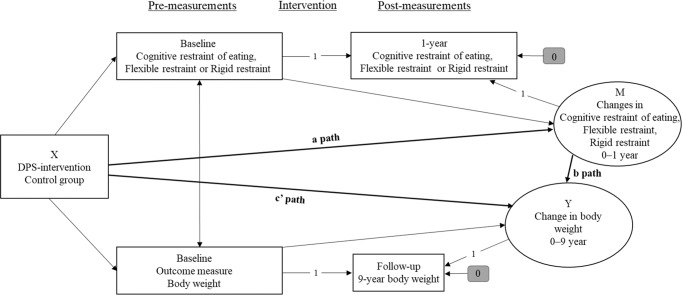
Background: Behavioral processes through which lifestyle interventions influence risk factors for type 2 diabetes (T2DM), e.g., body weight, are not well-understood. We examined whether changes in psychological dimensions of eating behavior during the first year of lifestyle intervention would mediate the effects of intervention on body weight during a 9-year period.
Methods: Middle-aged participants (38 men, 60 women) with overweight and impaired glucose tolerance (IGT) were randomized to an intensive, individualized lifestyle intervention group (n = 51) or a control group (n = 47). At baseline and annually thereafter until nine years body weight was measured and the Three Factor Eating Questionnaire assessing cognitive restraint of eating with flexible and rigid components, disinhibition and susceptibility to hunger was completed. This was a sub-study of the Finnish Diabetes Prevention Study, conducted in Kuopio research center.
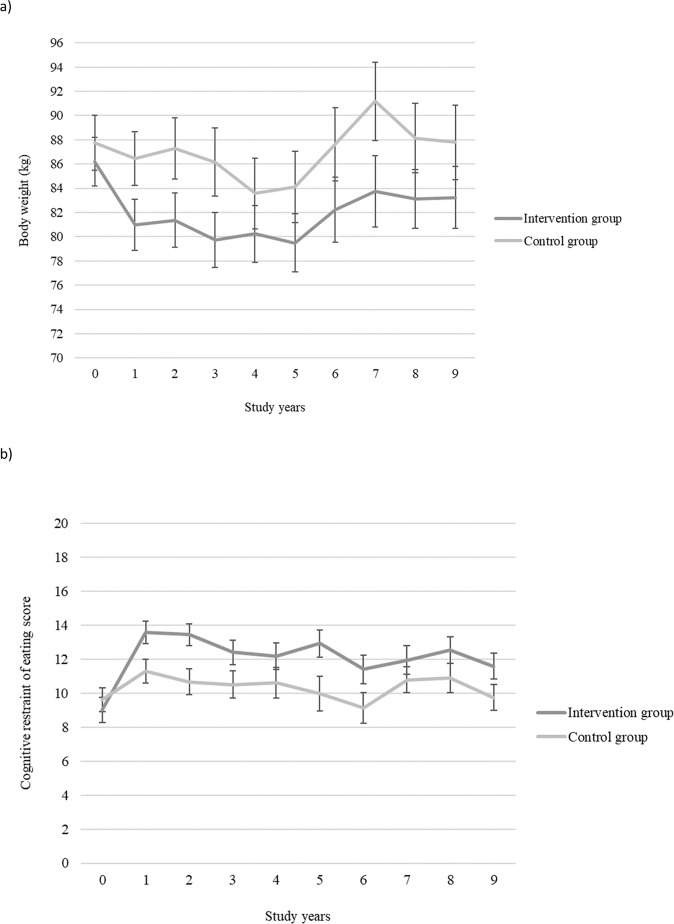
Results: During the first year of the intervention total cognitive (4.6 vs. 1.7 scores; p < 0.001), flexible (1.7 vs. 0.9; p = 0.018) and rigid (1.6 vs. 0.5; p = 0.001) restraint of eating increased, and body weight decreased (-5.2 vs. -1.2 kg; p < 0.001) more in the intervention group compared with the control group. The difference between the groups remained significant up to nine years regarding total (2.6 vs. 0.1 scores; p = 0.002) and rigid restraint (1.0 vs. 0.4; p = 0.004), and weight loss (-3.0 vs. 0.1 kg; p = 0.046). The first-year increases in total, flexible and rigid restraint statistically mediated the impact of intervention on weight loss during the 9-year study period.
Conclusions: Lifestyle intervention with intensive and individually tailored, professional counselling had long-lasting effects on cognitive restraint of eating and body weight in middle-aged participants with overweight and IGT. The mediation analyses suggest that early phase increase in cognitive restraint could have a role in long-term weight loss maintenance. This is important because long-term weight loss maintenance has various health benefits, including reduced risk of T2DM.
Trial registration: ClinicalTrials.gov NCT00518167.
© 2023. The Author(s).
Conflict of interest statement
The authors declare no competing interests.
Figures

References
Publication types
MeSH terms
Associated data
LinkOut - more resources
Full Text Sources
Medical
