


User experience evaluation of a 3D virtual reality educational program for illegal drug use prevention among high school students: Applying the decomposed theory of planned behavior
- PMID: 37152240
- PMCID: PMC10159246
- DOI: 10.1177/20552076231171237
User experience evaluation of a 3D virtual reality educational program for illegal drug use prevention among high school students: Applying the decomposed theory of planned behavior
Abstract
Objective: To evaluate user acceptability of an immersive three-dimensional virtual reality program for preventing illegal drug use and identify factors associated with continuous usage intention of three-dimensional virtual reality learning among high school students based on the decomposed theory of planned behavior.
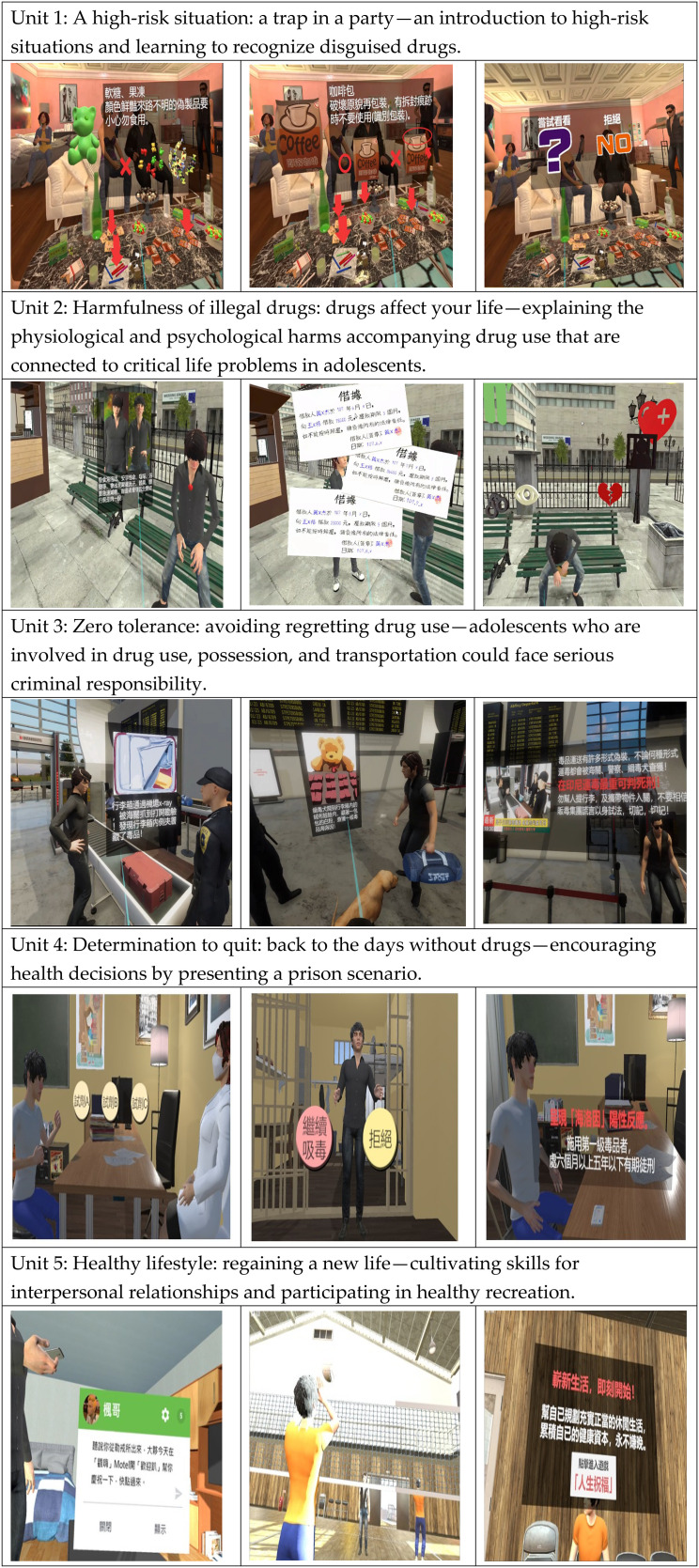
Methods: In this cross-sectional observational study, we developed five educational modules and serious games based on three-dimensional virtual reality technology. Ninety student-participants' experiences were assessed by a structured questionnaire based on the decomposed theory of planned behavior variables. We applied partial least squares structural equation modeling to examine the correlates of continuous usage intention.
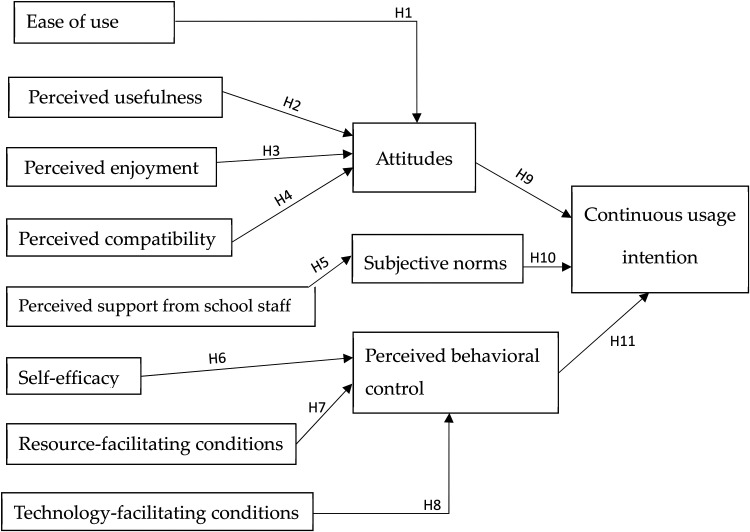
Results: The proposed model demonstrated an acceptable fit to the observed data. Eight of the 11 hypotheses based on the decomposed theory of planned behavior were supported. Continuous usage intention was significantly associated with attitudes, subjective norms, and perceived behavioral control; these variables explained 55.4% of the variance in continuous usage intention. Perceived usefulness and compatibility were significant antecedents of attitude. The significant antecedent of subjective norms was support from school staff. Self-efficacy and resource-facilitating conditions were significant antecedents of perceived behavioral control.
Conclusions: Our findings support the applicability of the decomposed theory of planned behavior as a framework for evaluating a three-dimensional virtual reality program for illegal drug use. We recommend that the program be included as teaching material for illegal drug prevention education in senior high schools.
Keywords: Adolescent health; continuous usage intention; decomposed theory of planned behavior; technology for adolescents; virtual reality.
© The Author(s) 2023.
Conflict of interest statement
The authors declared no potential conflicts of interest with respect to the research, authorship, and/or publication of this article.
Figures
References
-
- Collins D, Johnson K, Becker BJ. A meta-analysis of direct and mediating effects of community coalitions that implemented science-based substance abuse prevention interventions. Subst Use Misuse 2007; 42: 985–1007. - PubMed
-
- Ministry of Health and Welfare. National health interview and drug abuse survey, https://www.hpa.gov.tw/Pages/Detail.aspx?nodeid=363&pid=6534 (2017, accessed 12 August 2021).
-
- Liao JYHC, Lee CTC, Hsu HP, et al. Risk and protective factors for adolescents’ illicit drug use: a population-based study. Health Educ J 2018; 77: 761.
-
- Ministry of Health and Welfare. National survey report of illegal drug use in Taiwan, https://www.mohw.gov.tw/cp-4255-48855-1.html (2018, accessed 12 August 2021).
LinkOut - more resources
Full Text Sources
