A multistep mediation model examining how consultation in prolonged exposure therapy affects PTSD treatment outcomes
- PMID: 37155269
- PMCID: PMC10630526
- DOI: 10.1037/ser0000769
A multistep mediation model examining how consultation in prolonged exposure therapy affects PTSD treatment outcomes
Abstract
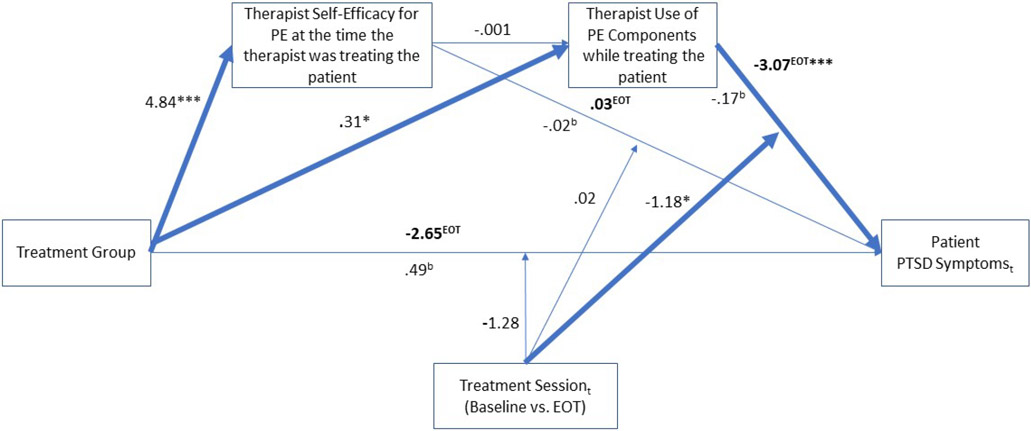
Prolonged exposure therapy (PE) is an evidence-based psychotherapy (EBP) for posttraumatic stress disorder (PTSD) that is underutilized in the military health system. Previous research suggests that postworkshop consultation is important for successful implementation. However, little is known about how consultation may relate to EBP adoption or patient outcomes. The present study addressed these gaps by examining associations between consultation, provider self-efficacy, use of PE, and patient outcomes using a multistep mediation model. This study used data from Foa et al. (2020), a two-armed randomized implementation trial comparing two PE training models: standard training (workshop only) and extended training (workshop + 6-8 months of postworkshop expert consultation) at three U.S. Army sites. Participants were patients with PTSD (N = 242) receiving care from the participating providers (N = 103). Providers who received extended training reported greater PE self-efficacy compared to standard training providers, but self-efficacy was unrelated to their use of PE components or to patient outcomes. Extended training providers used more PE components and had superior patient outcomes than standard training providers, and patient outcomes were mediated by the use of PE components. To our knowledge, this is the first study to demonstrate that EBP consultation leads to improved clinical outcomes for patients through increased use of the EBP. PE adoption (i.e., use of PE components in therapy) was not explained by increases in self-efficacy among providers who received extended training. Therefore, future research should assess how other factors may influence provider behavior in implementing EBPs. (PsycInfo Database Record (c) 2024 APA, all rights reserved).
Figures
References
-
- Ajzen I (1991). The theory of planned behavior. Organizational Behavior and Human Decision Processes, 50(2), 179–211.
-
- Beidas RS, Edmunds J, Ditty M, Watkins J, Walsh L, Marcus S, & Kendall P (2014). Are inner context factors related to implementation outcomes in cognitive-behavioral therapy for youth anxiety? Administration and Policy in Mental Health and Mental Health Services Research, 41(6), 788–799. 10.1007/s10488-013-0529-x - DOI - PMC - PubMed
-
- Borah EV, Wright EC, Donahue DA, Cedillos EM, Riggs DS, Isler WC, & Peterson AL (2013). Implementation outcomes of military provider training in cognitive processing therapy and prolonged exposure therapy for post-traumatic stress disorder. Military Medicine, 178(9), 939–944. 10.7205/MILMED-D-13-00072 - DOI - PubMed
-
- Cashwell TH, & Dooley K (2001). The impact of supervision on counselor self-efficacy. The Clinical Supervisor, 20(1), 39–47. 10.1300/J001v20n01_03 - DOI
-
- Charney ME, Chow L, Jakubovic RJ, Federico LE, Goetter EM, Baier AL, Riggs D, Phillips J, Bui E, & Simon NM (2019). Training community providers in evidence-based treatment for PTSD: Outcomes of a novel consultation program. Psychological Trauma: Theory, Research, Practice, and Policy, 11(7), 793. 10.1037/tra0000427 - DOI - PubMed
Publication types
MeSH terms
Grants and funding
LinkOut - more resources
Full Text Sources
Medical