


Ischemic Colitis Secondary to Olanzapine and Clonidine Use in a Patient With a History of Laxative Abuse
- PMID: 37155452
- PMCID: PMC10122613
- DOI: 10.7759/cureus.36605
Ischemic Colitis Secondary to Olanzapine and Clonidine Use in a Patient With a History of Laxative Abuse
Abstract
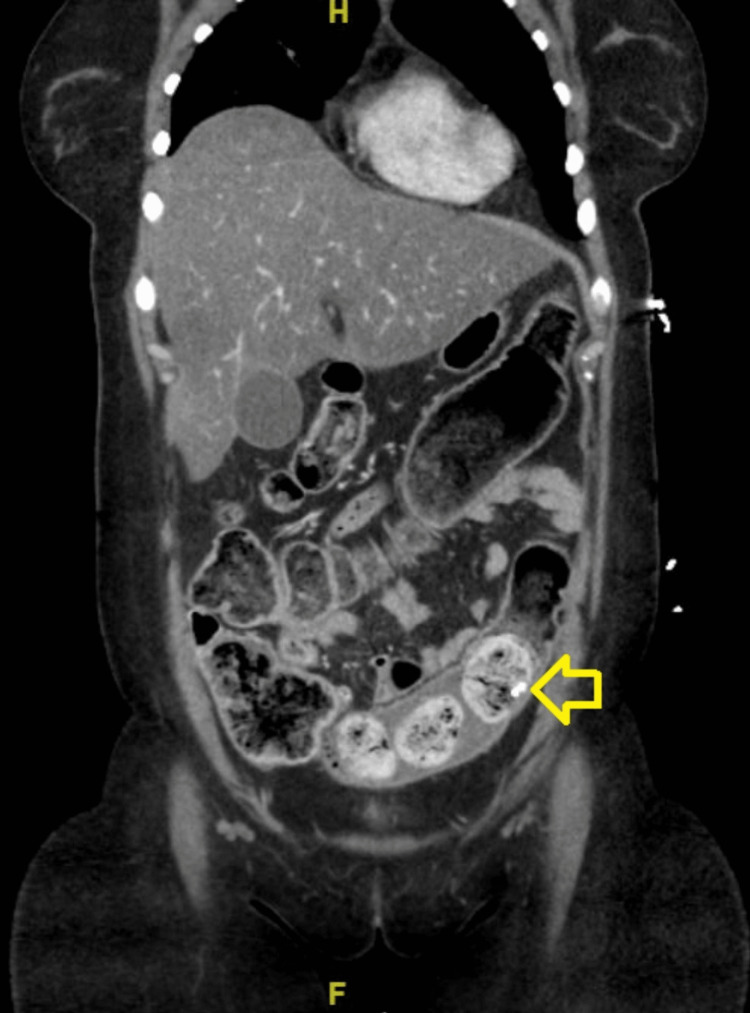
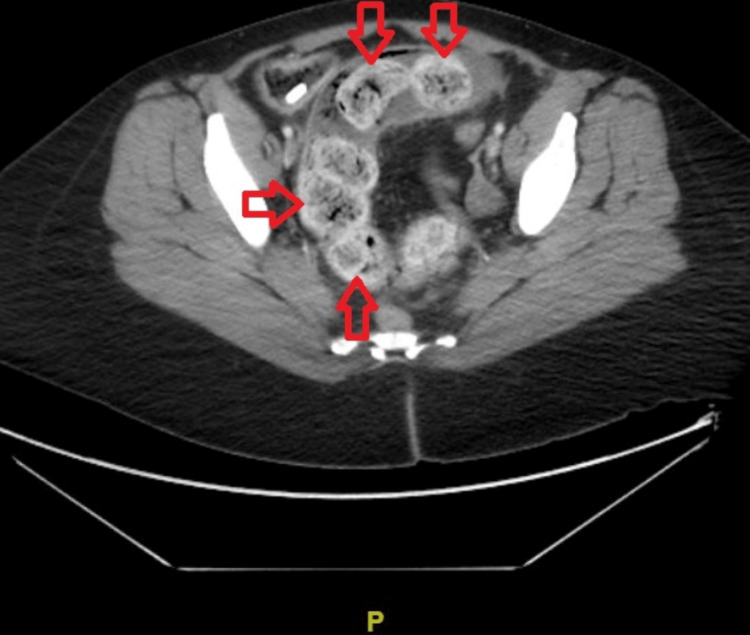
Ischemic colitis is the most common type of intestinal ischemia and is caused by an acute arterial occlusion, thrombosis, or hypoperfusion of the mesenteric vasculature. This case centers around a 39-year-old female with a past medical history significant for a 20-year history of stimulant laxative abuse, chronic constipation, bipolar disorder, and anxiety that presented with ischemic colitis following 21 days of obstipation. At the time of presentation, the patient was taking olanzapine 15 mg daily for the treatment of bipolar disorder and clonidine 0.2 mg three times daily for anxiety. Over the course of her hospitalization, the patient was found to have a high stool burden, including calcified stool, contributing to ischemic colitis. She was successfully treated with a clonidine taper, multiple enemas, and laxatives. Pharmacological agents that induce constipation have been shown to increase the risk of colonic ischemia by increasing intraluminal pressure in the colon. Atypical antipsychotics block peripheral anticholinergic and anti-serotonergic receptors, limit gastrointestinal muscle contractions, and delay intestinal transit.
Keywords: bipolar disorder treatment; bisacodyl; clonidine side effects; ischemic colitis; laxative abuse; olanzapine side effects.
Copyright © 2023, Theodore et al.
Conflict of interest statement
The authors have declared that no competing interests exist.
Figures
References
-
- ACG clinical guideline: epidemiology, risk factors, patterns of presentation, diagnosis, and management of colon ischemia (CI) Brandt LJ, Feuerstadt P, Longstreth GF, Boley SJ. Am J Gastroenterol. 2015;110:18–44. - PubMed
-
- Pharmacologically mediated colon ischemia. Hass DJ, Kozuch P, Brandt LJ. Am J Gastroenterol. 2007;102:1765–1780. - PubMed
-
- Colonic ischemia. [ May; 2022 ];Grubel P, Lamont JT, Nandakumar G. https://www.uptodate.com/contents/colonic-ischemia?search=ischemic+colit... UpToDate. 2022 16:2022.
-
- Alterations in colonic anatomy induced by chronic stimulant laxatives: the cathartic colon revisited. Joo JS, Ehrenpreis ED, Gonzalez L, et al. J Clin Gastroenterol. 1998;26:283–286. - PubMed
Publication types
LinkOut - more resources
Full Text Sources
Miscellaneous