


Country-level gender inequality is associated with structural differences in the brains of women and men
- PMID: 37155867
- PMCID: PMC10193926
- DOI: 10.1073/pnas.2218782120
Country-level gender inequality is associated with structural differences in the brains of women and men
Abstract
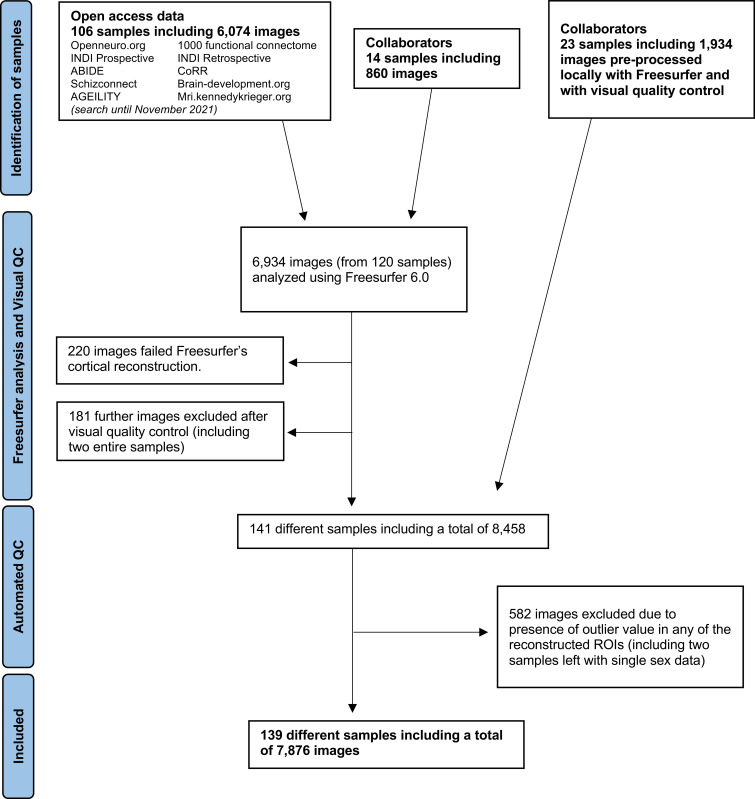
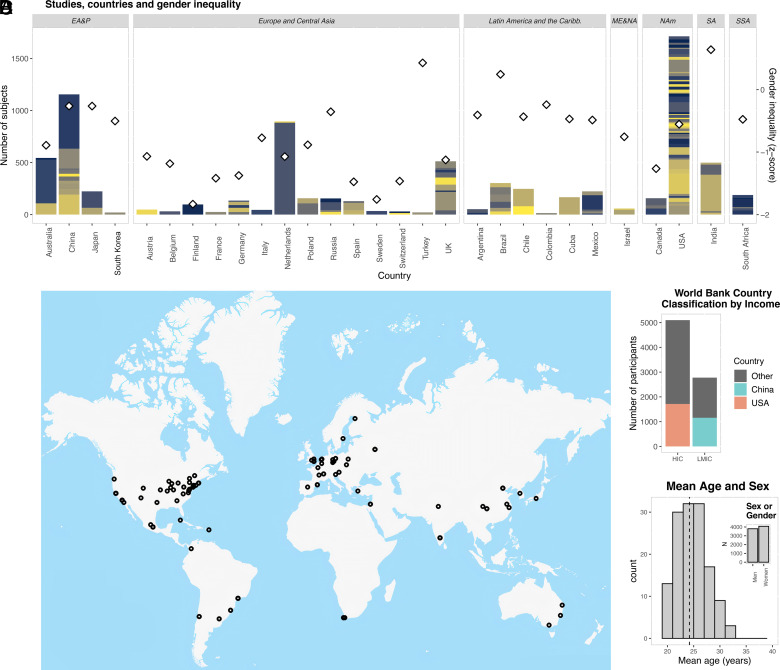
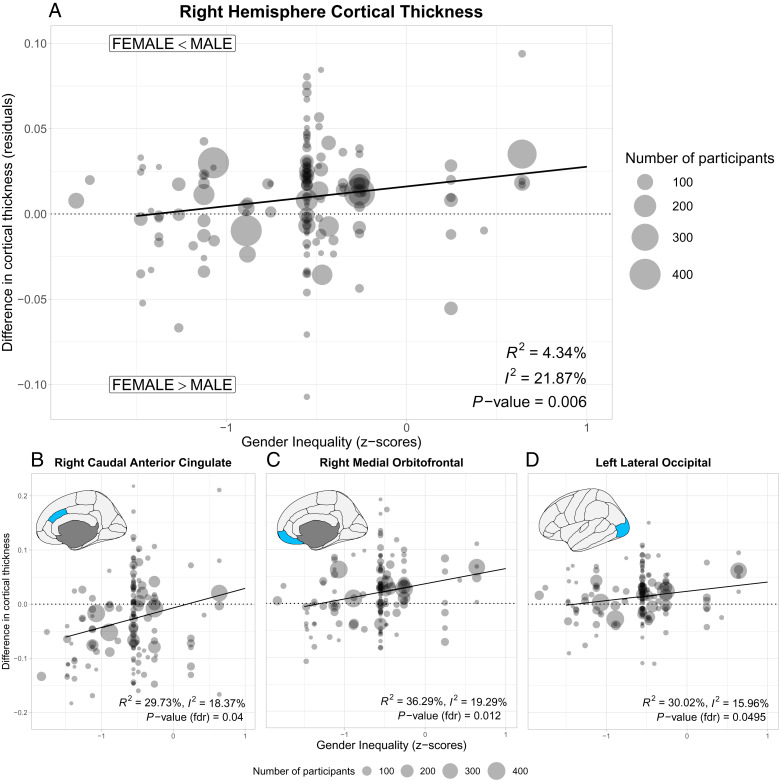
Gender inequality across the world has been associated with a higher risk to mental health problems and lower academic achievement in women compared to men. We also know that the brain is shaped by nurturing and adverse socio-environmental experiences. Therefore, unequal exposure to harsher conditions for women compared to men in gender-unequal countries might be reflected in differences in their brain structure, and this could be the neural mechanism partly explaining women's worse outcomes in gender-unequal countries. We examined this through a random-effects meta-analysis on cortical thickness and surface area differences between adult healthy men and women, including a meta-regression in which country-level gender inequality acted as an explanatory variable for the observed differences. A total of 139 samples from 29 different countries, totaling 7,876 MRI scans, were included. Thickness of the right hemisphere, and particularly the right caudal anterior cingulate, right medial orbitofrontal, and left lateral occipital cortex, presented no differences or even thicker regional cortices in women compared to men in gender-equal countries, reversing to thinner cortices in countries with greater gender inequality. These results point to the potentially hazardous effect of gender inequality on women's brains and provide initial evidence for neuroscience-informed policies for gender equality.
Keywords: gender inequality; sex differences; structural brain MRI.
Conflict of interest statement
The authors declare no competing interest.
Figures
Comment in
-
Measuring the impact of structural inequality on the structure of the brain.Proc Natl Acad Sci U S A. 2023 Jun 20;120(25):e2306076120. doi: 10.1073/pnas.2306076120. Epub 2023 Jun 7. Proc Natl Acad Sci U S A. 2023. PMID: 37285397 Free PMC article. No abstract available.
References
-
- United Nations Entity for Gender Equality and the Empowerment of Women (UN Women), “Turning promises into action: gender equality in the 2030 agenda for sustainable development” (2018).
-
- Crotti R., Pal K. K., Ratcheva V., Zahidi S., “Global Gender Gap Report 2021” (World Economic Forum, Switzerland, 2021).
-
- Gaye A., Klugman J., Kovacevic M., Twigg S., Zambrano E., Measuring key disparities in human development: The gender inequality index. Human development research paper 2010/46 (2010).
-
- Guiso L., Monte F., Sapienza P., Zingales L., Culture, gender, and math. Science 320, 1164–1165 (2008). - PubMed
