. 2023 Apr 29:2023:1278720.
doi: 10.1155/2023/1278720. eCollection 2023.

Pharmacological Characteristics of the Hydroethanolic Extract of Acmella oleracea (L) R. K. Jansen Flowers: ADME/Tox In Silico and In Vivo Antihypertensive and Chronic Toxicity Evaluation

Affiliations

Pharmacological Characteristics of the Hydroethanolic Extract of Acmella oleracea (L) R. K. Jansen Flowers: ADME/Tox In Silico and In Vivo Antihypertensive and Chronic Toxicity Evaluation

Emanuelle T Rodrigues et al. Evid Based Complement Alternat Med. .

Abstract

Acmella oleracea (L.) R. K. Jansen, popularly known as jambu in Northern Brazil, is widely used in folk medicine and local cuisine. Its consumption in different ways reinforces the need for safety assessments. In this study, the major compounds found in the hydroethanolic extract of A. oleracea flowers (EHFAO) were characterized by ultra-performance liquid mass spectrometry (UHPLC-ESI-QTOF-MS/MS). The effects of oral administration of 100/mg/kg of EHFAO extract over 60 days in male spontaneously hypertensive (SHR) and Wistar (WR) rats and the in silico ADME/Tox predictions, lipophilicity, and water solubility were accomplished for the compounds identified. Spilanthol was detected as the foremost major compound at a concentration of 97.7%, followed by 1.53% scopoletin and 0.77% d-limonene. The treatment with EHFAO did not alter the animals´ weight over the studied period. Moderate alterations were observed solely in the hepatic enzymes AST (WR = 97 UI/L and SHR = 150 UI/L p < 0.05) and ALT (WR = 55 UI/L and SHR = 95 UI/L p < 0.05), while no relevant histopathological alterations were found. The in-silico study confirmed the in vivo findings, as the identified compounds were considered highly bioactive orally, due to their drug similarity profiles, adequate lipid solubility, bioavailability, and pharmacokinetics. Therefore, the chronic treatment with EHFAO was found safe at the concentration of 100/mg/kg, with no interference in the blood pressure levels neither appreciable toxic effects.


Conflict of interest statement

The authors declare that they have no conflicts of interest.

Figures

Figure 1
Figure 1
Acmella oleracea detail of flowers and leaves and chemical structure of spilanthol (N-isobutyl-2(E),6(Z),8(E)-decatrienamide.
Figure 2
Figure 2
Spilanthol spectrum (a) from the hydroethanolic extract of Acmella oleracea flowers showing an m/z ratio of 222.1847. Very close value compared to the standard spilanthol spectrum and (b) with an m/z of 222.1852.
Figure 3
Figure 3
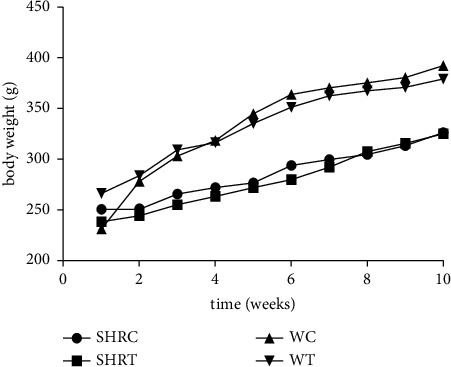
Weight assessment of the animals submitted to treatment via gavage with the hydroethanolic extract of flowers of A. oleracea; WC = control Wistar, WT = treated Wistar, SHRC = control spontaneously hypertensive rats, SHRT = treated spontaneously hypertensive rats where controls were treated with 100 μL of saline, and those treated with 100 mg/kg of EHFAo. Data are expressed as the mean ± standard deviation (SD) of the control and treated groups. Statistical analysis was performed using one-way ANOVA followed by Sidak's multiple comparison test ∗∗p < 0.01 when compared to controls.
Figure 4
Figure 4
Analysis of physiological parameters after metabolic cage. WC = control Wistar, WT = treated Wistar, SHRC = spontaneously hypertensive control rats, SHRT = spontaneously hypertensive rats treated where controls were treated with 100 μL saline, and those treated with 100 mg/kg of the hydroethanolic extract of flowers of A. oleracea. Data are expressed as the control and treated groups' mean ± standard deviation (SD). Statistical analysis was performed using two-tailed ANOVA followed by Sidak's multiple comparison test p < 0.05 compared to controls.
Figure 5
Figure 5
Systolic blood pressure values of rats of all strains in the group were measured weekly by tail plethysmography. Data were expressed as mean ± standard error of the mean. WC = Wistar control, WT = treated Wistar, SHRC = spontaneously hypertensive rat control, and SHRT = treated spontaneously hypertensive rat. WC and SHRC = 100 μL saline; WT and SHRT = 100 mg/kg EHFAO. Statistical analysis of variance; two-way ANOVA followed by multiple comparisons using GraphPad Prism 6.0. ∗∗p < 0.01, when the group was compared with the WC group.
Figure 6
Figure 6
Hepatic and renal biochemical markers after oral administration of hydroethanolic extract of flowers of A. oleracea in WC = Wistar control (WC), treated Wistar (WT) rats, spontaneously hypertensive control (SHRC) rats, and spontaneously hypertensive treated (SHRT) rats. Data are expressed as the mean ± standard error (SD); statistical analysis of variance; one-way ANOVA followed by multiple comparisons using GraphPad Prism 6.0. p < 0.05, when the group was compared with the WC group.
Figure 7
Figure 7
Biochemical analysis of urine after treatment with the hydroethanolic extract of flowers of A. oleracea was collected at the end of the 12 hours in a metabolic cage. Data are expressed as the mean ± standard error (SD). Statistical analysis of variance; one-way ANOVA followed by multiple comparisons using GraphPad Prism 6.0. p < 0.05, when the group was compared with the WC group.
Figure 8
Figure 8
Histopathological analysis of the liver and kidney of the SHR and WT groups. Livers (a–d) and kidneys (e–h). Morphological aspects of the liver of rats treated with the hydroethanolic extract of flowers of A. oleracea in both strains (b, d) were similar to their respective control groups (a, c). Likewise, no morphological changes were obtained in the kidneys of SHRT and WT rodents (f, h). V = centrilobular vein of the liver; G = renal glomerulus and D = distal convoluted tubule; P = proximal convoluted tubule; swollen lymphatic vessels present only in the control SHR (arrows).
Figure 9
Figure 9
Log P (a) and Log S (b) values were predicted using different methodologies for the pivotal molecule and the hydroethanolic extract of flowers of A. oleracea compounds.
Figure 10
Figure 10
Experimental design. (A) 20 Wistar rats (10 control group; 10 hydroethanolic extract of flowers of the A. oleracea-treated group). (B) 20 SHR (10 control group, 10 hydroethanolic extract of A. oleracea flowers-treated group group. (C) Hydroethanolic extract of A. oleracea flowers administration via gavage. Timeline with the order analysis: collection, identification, and preparation of the A. oleracea extract, oral bioavailability, weekly weighing, pressure measurement, metabolic cage, euthanasia, biochemical analysis, histological analysis, in silico evaluation, and statistical analysis.

References

    1. Dallazen J. L., Maria-Ferreira D., da Luz B. B., et al. Pharmacological potential of alkylamides from Acmella oleracea flowers and synthetic isobutylalkyl amide to treat inflammatory pain. Inflammopharmacology . 2020;28(1):175–186. doi: 10.1007/s10787-019-00601-9. - DOI - PubMed
    1. Huang W.-C., Peng H.-L., Hu S., Wu S.-J. Spilanthol from traditionally used spilanthes acmella enhances AMPK and ameliorates obesity in mice fed high-fat diet. Nutrients . 2019;11(5):p. 991. doi: 10.3390/nu11050991. - DOI - PMC - PubMed
    1. Freitas Blanco V. S. D., Michalak B., Zelioli I. A. M., et al. Isolation of spilanthol from Acmella oleracea based on Green Chemistry and evaluation of its in vitro anti-inflammatory activity. The Journal of Supercritical Fluids . 2018;140:372–379. doi: 10.1016/j.supflu.2018.07.028. - DOI
    1. Balieiro O. C., da Silva Pinheiro M. S., Silva S. Y. S., et al. Analytical and preparative chromatographic approaches for extraction of spilanthol from Acmella oleracea flowers. Microchemical Journal . 2020;157 doi: 10.1016/j.microc.2020.105035.105035 - DOI
    1. de Souza G. C., Viana M. D., Goés L. D. M., et al. Reproductive toxicity of the hydroethanolic extract of the flowers of Acmella oleracea and spilanthol in zebrafish: in vivo and in silico evaluation. Human & Experimental Toxicology . 2020;39(2):127–146. doi: 10.1177/0960327119878257. - DOI - PubMed

LinkOut - more resources