


European inequalities and similarities in officially recognized dental specialties
- PMID: 37170254
- PMCID: PMC10176728
- DOI: 10.1186/s12903-023-02987-z
European inequalities and similarities in officially recognized dental specialties
Abstract
Background: Although the European Economic Space usually acts in a united and organized way, several main differences are found regarding the type and number of dental specialties all around this group of member states. The aim of the study is to analyse the inequalities and similarities existing between 21 European countries, highlighting the number and types of recognized dental specialties.
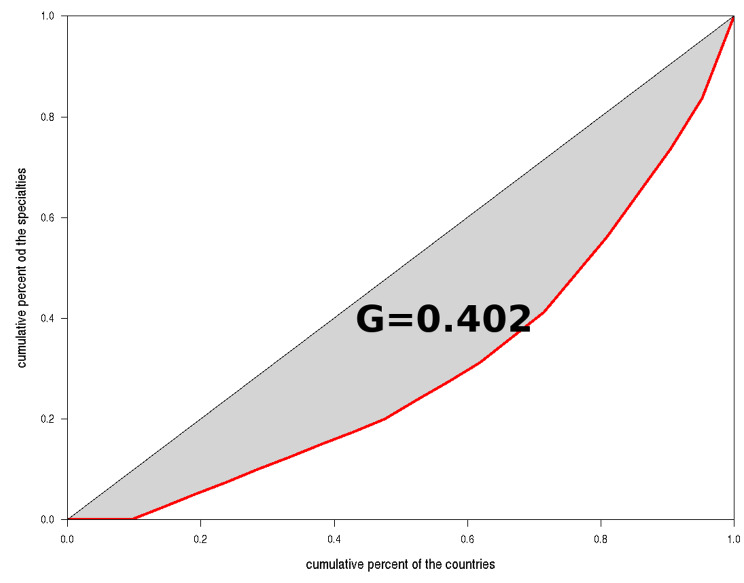
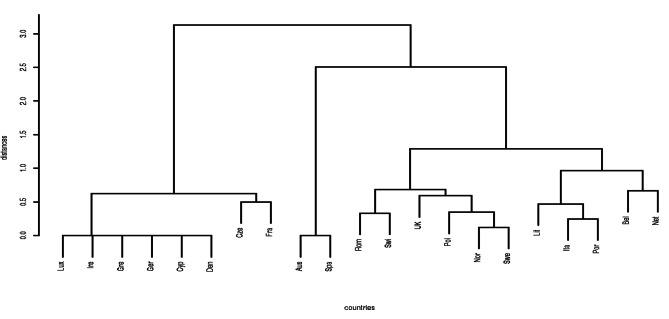
Methods: Available official documents and webpages from 20 out of the 30 countries of which the European Economic Space is comprised plus the United Kingdom (UK), were analysed to obtain reliable data referred to dental specialties. Differences were tested with the Lorentz curve and Gini test. Additionally, a Cluster analysis was performed to obtain groups of countries with a similar pattern in the number and type of dental specialties.
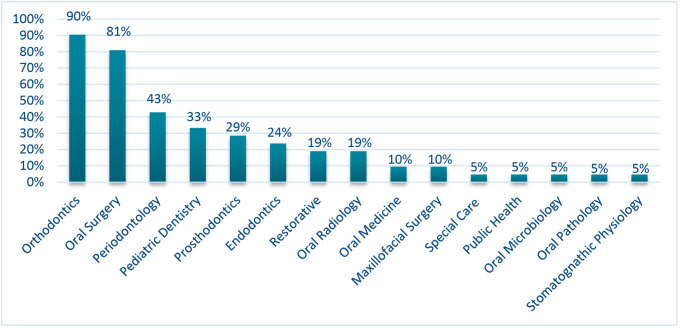
Results: Up to a total of 15 different specialties are officially recognized in all the analysed countries. Orthodontics (90%) and Oral Surgery (81%) are the two most frequently recognized specialties. The total global degree of inequality of the analysed countries was 40.2%. Cluster analysis differentiated three different main groups of countries according to the number and type of dental specialties.
Conclusions: The situation of dental specialties in the area of the EES plus the UK exhibits an unequal organization. Cluster analysis showed 3 main clusters of countries with a similar pattern of dental specialties.
Keywords: Dental specialties; Europe; Oral surgery; Orthodontics.
© 2023. The Author(s).
Conflict of interest statement
The authors declare that they have no competing interests
Figures
References
-
- García-Espona I. Odontólogos por la Especialidad. Análisis de las especialidades odontológicas. Madrid (Spain). Ed. Grupo Peldaño; 2021.
-
- Athanasiou AE, Darendeliler MA, Eliades T, Hägg U, Larson BE, Pirttiniemi P, et al. World Federation of Orthodontists (WFO) Guidelines for Postgraduate Orthodontic Education. World J Orthod. 2009;10:153–66. - PubMed
MeSH terms
LinkOut - more resources
Full Text Sources
Medical
