


Videolaryngoscopy versus direct laryngoscopy for tracheal intubation in neonates
- PMID: 37171122
- PMCID: PMC10177149
- DOI: 10.1002/14651858.CD009975.pub4
Videolaryngoscopy versus direct laryngoscopy for tracheal intubation in neonates
Abstract
Background: Establishment of a secure airway is a critical part of neonatal resuscitation in the delivery room and the neonatal intensive care unit. Videolaryngoscopy has the potential to facilitate successful endotracheal intubation, and decrease adverse consequences of a delay in airway stabilization. Videolaryngoscopy may enhance visualization of the glottis and intubation success in neonates. This is an update of a review first published in 2015, and updated in 2018.
Objectives: To determine the effectiveness and safety of videolaryngoscopy compared to direct laryngoscopy in decreasing the time and attempts required for endotracheal intubation and increasing the success rate on first intubation attempt in neonates (0 to 28 days of age).
Search methods: In November 2022, we updated the search for trials evaluating videolaryngoscopy for neonatal endotracheal intubation in CENTRAL, MEDLINE, Embase, CINAHL, and BIOSIS. We also searched abstracts of the Pediatric Academic Societies, clinical trials registries (www.
Clinicaltrials: gov; www.controlled-trials.com), and reference lists of relevant studies.
Selection criteria: Randomized controlled trials (RCTs), quasi-RCTs, cluster-RCTs, or cross-over trials, in neonates (0 to 28 days of age), evaluating videolaryngoscopy with any device used for endotracheal intubation compared with direct laryngoscopy.
Data collection and analysis: Three review authors performed data collection and analysis, as recommended by Cochrane Neonatal. Two review authors independently assessed studies identified by the search strategy for inclusion. We used the GRADE approach to assess the certainty of the evidence.
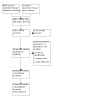
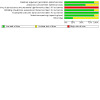
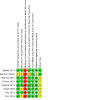
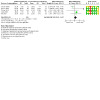
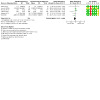
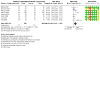
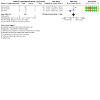
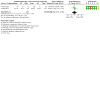
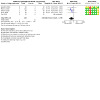
Main results: The updated search yielded 7786 references, from which we identified five additional RCTs for inclusion, seven ongoing trials, and five studies awaiting classification. Three studies were included in the previous version of the review. For this update, we included eight studies, which provided data on 759 intubation attempts in neonates. We included neonates of either sex, who were undergoing endotracheal intubation in international hospitals. Different videolaryngoscopy devices (including C-MAC, Airtraq, and Glidescope) were used in the studies. For the primary outcomes; videolaryngoscopy may not reduce the time required for successful intubation when compared with direct laryngoscopy (mean difference [MD] 0.74, 95% confidence interval [CI] -0.19 to 1.67; 5 studies; 505 intubations; low-certainty evidence). Videolaryngoscopy may result in fewer intubation attempts (MD -0.08, 95% CI -0.15 to 0.00; 6 studies; 659 intubations; low-certainty evidence). Videolaryngoscopy may increase the success of intubation at the first attempt (risk ratio [RR] 1.24, 95% CI 1.13 to 1.37; risk difference [RD] 0.14, 95% CI 0.08 to 0.20; number needed to treat for an additional beneficial outcome [NNTB] 7, 95% CI 5 to 13; 8 studies; 759 intubation attempts; low-certainty evidence). For the secondary outcomes; the evidence is very uncertain about the effect of videolaryngoscopy on desaturation or bradycardia episodes, or both, during intubation (RR 0.94, 95% CI 0.38 to 2.30; 3 studies; 343 intubations; very-low certainty evidence). Videolaryngoscopy may result in little to no difference in the lowest oxygen saturations during intubation compared with direct laryngoscopy (MD -0.76, 95% CI -5.74 to 4.23; 2 studies; 359 intubations; low-certainty evidence). Videolaryngoscopy likely results in a slight reduction in the incidence of airway trauma during intubation attempts compared with direct laryngoscopy (RR 0.21, 95% CI 0.05 to 0.79; RD -0.04, 95% CI -0.07 to -0.01; NNTB 25, 95% CI 14 to 100; 5 studies; 467 intubations; moderate-certainty evidence). There were no data available on other adverse effects of videolaryngoscopy. We found a high risk of bias in areas of allocation concealment and performance bias in the included studies.
Authors' conclusions: Videolaryngoscopy may increase the success of intubation on the first attempt and may result in fewer intubation attempts, but may not reduce the time required for successful intubation (low-certainty evidence). Videolaryngoscopy likely results in a reduced incidence of airway-related adverse effects (moderate-certainty evidence). These results suggest that videolaryngoscopy may be more effective and potentially reduce harm when compared to direct laryngoscopy for endotracheal intubation in neonates. Well-designed, adequately powered RCTS are necessary to confirm the efficacy and safety of videolaryngoscopy in neonatal intubation.
Trial registration: ClinicalTrials.gov NCT01090726 NCT01371032.
Copyright © 2023 The Cochrane Collaboration. Published by John Wiley & Sons, Ltd.
Conflict of interest statement
KL: works as a health professional in Neonatology at Children's Hospital of Philadelphia, USA
NN: works as a health professional in Neonatology at Baylor College of Medicine/Texas Children's Hospital, USA
JA: works as a health professional in Neonatology at Boston Children’s Hospital, USA
CF: works as a health professional in Neonatology at Texas Children's Hospital, USA
MP: works as a health professional in Neonatology at Baylor College of Medicine/Texas Children's Hospital, USA; he is an Associate Editor for Cochrane Neonatal, however, he was not involved in the editorial process for this review
Figures
Update of
-
Videolaryngoscopy versus direct laryngoscopy for tracheal intubation in neonates.Cochrane Database Syst Rev. 2018 Jun 4;6(6):CD009975. doi: 10.1002/14651858.CD009975.pub3. Cochrane Database Syst Rev. 2018. Update in: Cochrane Database Syst Rev. 2023 May 12;5:CD009975. doi: 10.1002/14651858.CD009975.pub4. PMID: 29862490 Free PMC article. Updated.
References
References to studies included in this review
Bartle 2019 {published and unpublished data}
-
- Bartle DG, Powell R, Pearson K, Adeboye TS. Video vs direct laryngoscopy. Success rates and confidence: a feasibility study. Infant 2019;15(5):1-4. [DOI: 10.1007/s12630-016-0792-x] - DOI
Kamath 2020a {published data only}
-
- Kamath N, Dogra N, Gupta A. Comparison of ease of intubation with airtraq optical laryngoscope versus Miller laryngoscope in neonates – a randomised interventional study. Indian Journal of Anaesthesia 2020;64(13):S24-5.
Moussa 2016 {published data only}
O'Shea 2015 {published data only}
Salama 2019 {published data only}
Singh 2009 {published data only}
Tao 2019 {published data only}
-
- Tao B, Liu K, Zhao P, Wang D, Liu Y, Yin H. Comparison of glidescope video laryngoscopy and direct laryngoscopy for tracheal intubation in neonates. Anesthesia and Analgesia 2019;129(2):482-6. - PubMed
Volz 2018 {published data only}
-
- Volz S, Stevens TP, Dadiz R. A randomized controlled trial: does coaching using video during direct laryngoscopy improve residents’ success in neonatal intubations? Journal of Perinatology May 2018;38(8):1074-80. [PMID: ] - PubMed
References to studies excluded from this review
Fiadjoe 2012 {published and unpublished data}
-
- Fiadjoe JE, Gurnaney H, Dalesio N, Sussman E, Zhao H, Zang X, et al. A prospective randomized equivalence trial of the GlideScope Cobalt video laryngoscope to traditional direct laryngoscopy in neonates and infants. Anesthesiology 2012;116(3):622-8. [DOI: 10.1097/ALN.0b013e318246ea4d] [PMID: ] - DOI - PubMed
Jagannathan 2017 {published data only}
-
- Jagannathan N, Hajduk J, Sohn L, Huang A, Sawardekar A, Albers B, et al. Randomized equivalence trial of the King Vision aBlade videolaryngoscope with the Miller direct laryngoscope for routine tracheal intubation in children < 2 yr of age. British Journal of Anesthesia 2017;118(6):932-7. [PMID: ] - PubMed
Komasawa 2017 {published data only}
Manov 2020 {published and unpublished data}
-
- Manirajan M, Bidkar PU, Sivakumar RK, Lata S, Srinivasan G, Jha AK. Comparison of paediatric King Vision™ videolaryngoscope and Macintosh laryngoscope for elective tracheal intubation in children of age less than 1 year: a randomised clinical trial. Indian Journal of Anesthesia 2020;64(11):943-8. [PMID: ] - PMC - PubMed
Parmekar 2017 {published data only}
-
- Parmekar S, Arnold JL, Anselmo C, Pammi M, Hagan J, Fernandes CJ, et al. Mind the gap: can videolaryngoscopy bridge the competency gap in neonatal endotracheal intubation among pediatric trainees? A randomized controlled study. Journal of Perinatology 2017;37(8):979-83. [DOI: 10.1038/jp.2017.72] [PMID: ] - DOI - PubMed
Saran 2019 {published data only}
Sørensen 2012 {published data only}
Vlatten 2009 {published data only}
-
- Vlatten A, Aucoin S, Litz S, Macmanus B, Soder C. A comparison of the STORZ video laryngoscope and standard direct laryngoscopy for intubation in the pediatric airway – a randomized clinical trial. Paediatric Anaesthesia 2009;19(11):1102-7. [DOI: 10.1111/j.1460-9592.2009.03127.x] [PMID: ] - DOI - PubMed
References to studies awaiting assessment
Chae 2022 {published and unpublished data}
Galante 2018a {published data only}
-
- Galante D, Consani G. Use of tracheal intubation with Miller laryngoscope versus the AirTraq Optical laryngoscope in pediatric patient. Pediatric Critical Care Medicine 2018;19:67.
Garcia‐Marcinkiewicz 2020 {published data only}
-
- Garcia-Marcinkiewicz AG, Kovatsis PG, Hunyady AI, Olomu PN, Zhang B, Sathyamoorthy M, et al. First-attempt success rate of video laryngoscopy in small infants (VISI): a multicentre, randomised controlled trial. Lancet 2020;396:10266. - PubMed
Jain 2018 {published data only}
-
- Jain D, Mehta S, Gandhi K, Arora S, Parikh B, Abas M. Comparison of intubation conditions with CMAC Miller videolaryngoscope and conventional Miller laryngoscope in lateral position in infants: a prospective randomized trial. Paediatric Anaesthesia 2018;28(3):226-30. - PubMed
Yumul 2013 {published and unpublished data}
-
- NCT01371032. Study to compare Video Miller Device to direct laryngoscopy [A randomized, prospective study to compare the Video Miller Device to direct laryngoscopy using a standard pediatric Miller Blade for tracheal intubation of children < 3 years of age undergoing general anesthesia]. https://clinicaltrials.gov/ct2/show/NCT01371032 (first received 10 June 2011).
-
- Yumul R, Elvir Lazo OL, Glenn T, Mathoni A, Filsinger DB, Hemaya EG, et al. A randomized, prospective study comparing the video Miller device to a standard pediatric Miller blade for direct laryngoscopy and tracheal intubation of young children. In: Scientific Abstract Guide, Anesthesiology 2013, Annual meeting of American Society of Anesthesiologists, October 12 - 16, 2013; San Francisco, California. San Francisco, California: American Society of Anesthesiologists, 2013:101.
References to ongoing studies
ACTRN12614001134617 {unpublished data only}
-
- ACTRN12614001134617. A randomised controlled clinical trial comparing C-MAC (™) videolaryngoscope intubation with direct laryngoscope intubation in neonates. The HEADS UP Study. anzctr.org.au/Trial/Registration/TrialReview.aspx?id=367096 (first received 24 October 2014).
CTRI/2021/06/034029 {published data only}
-
- CTRI/2021/06/034029. Comparison of two videolaryngoscopes with direct laryngoscope for endotracheal intubation in neonates undergoing surgery under general anaesthesia. trialsearch.who.int/Trial2.aspx?TrialID=CTRI/2021/06/034029 (first received 7 June 2021).
CTRI/2022/04/041925 {published data only}
-
- CTRI/2022/04/041925. Comparison of MacGrath video laryngoscope and Macintosh laryngoscope for intubation in neonatal patients. trialsearch.who.int/Trial2.aspx?TrialID=CTRI/2022/04/041925 (first received 19 April 2022).
CTRI/2022/07/044293 {published data only}
-
- CTRI/2022/07/044293. P.G. Study plan, comparison of video laryngoscope versus Macintosh laryngoscope for elective tracheal intubation in infants - a randomised interventional study at SMS meical college, during 2021-2023. trialsearch.who.int/Trial2.aspx?TrialID=CTRI/2022/07/044293 (first received 25 July 2022).
DRKS00020792 {published data only}
-
- DRKS00020792. Evaluating the feasibility and safety of video laryngoscopy for routine nasotracheal intubation in neonates – a randomized controlled pilot trial. drks.de/DRKS00020792 (first received 7 February 2020).
NCT04295902 {unpublished data only}
-
- NCT04295902. Laryngoscopy for neonatal and infant airway management wIth supplemental oxygen (OPTIMISE): a multi-center prospective randomized controlled trial. clinicaltrials.gov/ct2/show/NCT04295902 (first received 5 March 2020).
NCT04994652 {published data only}
-
- NCT04994652. Video or direct laryngoscopy for endotracheal intubation in newborns (VODE). clinicaltrials.gov/ct2/show/NCT04994652 (first received 6 August 2021).
Additional references
Asai 2008
Aziz 2012
Cochrane EPOC Group 2017
-
- Cochrane Effective Practice and Organisation of Care (EPOC). Data collection form. EPOC Resources for review authors, 2017. Available from epoc.cochrane.org/resources/epoc-specific-resources-review-authors (accessed 11 June 2022).
Deeks 2022
-
- Deeks JJ, Higgins JPT, Altman DG, editor(s). Chapter 10: Analysing data and undertaking meta-analyses. In: Higgins JPT, Thomas J, Chandler J, Cumpston M, Li T, Page MJ, et al, editor)s). Cochrane Handbook for Systematic Reviews of Interventions Version 6.3 (updated February 2022). Cochrane, 2022. Available from www.training.cochrane.org/handbook.
Falck 2003
-
- Falck AJ, Escobedo MB, Baillargeon JG, Villard LG, Gunkel JH. Proficiency of pediatric residents in performing neonatal endotracheal intubation. Pediatrics 2003;112(6 Pt 1):1242-7. [PMID: ] - PubMed
GRADEpro GDT 2022 [Computer program]
-
- GRADEpro GDT. McMaster University and Evidence Prime, Version accessed 12 December 2022. Hamilton (ON): McMaster University (developed by Evidence Prime), 2022. Available at gradepro.org.
Griesdale 2012
Guyatt 2008
Healy 2012
Higgins 2017
-
- Higgins JP, Thomas J, Chandler J, Cumpston M, Li T, Page MJ, et al, editor(s). Cochrane Handbook for Systematic Reviews of Interventions Version 6.1 (updated September 2020). Available from www.training.cochrane.org/handbook.
Higgins 2021
-
- Borenstein M, Hedges LV, Higgins JPT, Rothstein HR. Notes on subgroup analyses and meta‐regression. In: Introduction to Meta‐Analysis . John Wiley & Sons, Ltd, 2021:213-9. [DOI: 10.1002/9780470743386.ch21] - DOI
Higgins 2022
-
- Higgins JPT, Thomas J, Chandler J, Cumpston M, Li T, Page MJ, Welch VA (editors) . Cochrane Handbook for Systematic Reviews of Interventions version 6.3 (updated February 2022). Cochrane, 2022. Available from www.training.cochrane.org/handbook.. Cochrane Collaboration, 2022.
Hirabayashi 2007
Hirabayashi 2008
Kattwinkel 2011
-
- Kattwinkel J. Textbook of Neonatal Resuscitation. 6th edition. Elk Grove Village (IL): American Academy of Pediatrics and American Heart Association, 2011.
Kim 2008
-
- Kim JT, Na HS, Bae JY, Kim DW, Kim HS, Kim CS, et al. GlideScope video laryngoscope: a randomized clinical trial in 203 paediatric patients. British Journal of Anaesthesia 2008;101(4):531-4. - PubMed
Lim 2005
Maharaj 2006
NCT01793727
-
- NCT01793727. Learning curve of the Infant Glidescope® Cobalt Video Laryngoscope in anesthesiology residents. clinicaltrials.gov/show/NCT01793727 (first received 15 February 2013).
Page 2021
Pott 2008
Review Manager 2020 [Computer program]
-
- Review Manager 5 (RevMan 5). Version 5.4. Copenhagen: Nordic Cochrane Centre, The Cochrane Collaboration, 2020.
Roberts 2006
Schünemann 2013
-
- Schünemann H, Brożek J, Guyatt G, Oxman A, editor(s). Handbook for grading the quality of evidence and the strength of recommendations using the GRADE approach (updated October 2013). GRADE Working Group, 2013. Available from gdt.guidelinedevelopment.org/app/handbook/handbook.html.
Shippey 2007
-
- Shippey B, Ray D, McKeown D. Case series: the McGrath videolaryngoscope – an initial clinical evaluation. Canadian Journal of Anaesthesia 2007;54(4):307-13. [PMID: ] - PubMed
Shippey 2008
-
- Shippey B, Ray D, McKeown D. Use of the McGrath videolaryngoscope in the management of difficult and failed tracheal intubation. British Journal of Anaesthesia 2008;100(1):116-9. - PubMed
Thong 2009
-
- Thong SY, Lim Y. Video and optic laryngoscopy assisted tracheal intubation – the new era. Anaesthesia and Intensive Care 2009;37(2):219-33. [PMID: ] - PubMed
Vanderhal 2009
Weiss 2001
-
- Weiss M, Schwarz U, Dillier CM, Gerber AC. Teaching and supervising tracheal intubation in paediatric patients using videolaryngoscopy. Pediatric Anesthesia 2001;11(3):343-8. [PMID: ] - PubMed
References to other published versions of this review
Lingappan 2015
Publication types
MeSH terms
Associated data
LinkOut - more resources
Full Text Sources
Medical
Miscellaneous
