


The Role of Immunohistochemistry in the Differential Diagnosis between Intrahepatic Cholangiocarcinoma, Hepatocellular Carcinoma and Liver Metastasis, as Well as Its Prognostic Value
- PMID: 37174934
- PMCID: PMC10177238
- DOI: 10.3390/diagnostics13091542
The Role of Immunohistochemistry in the Differential Diagnosis between Intrahepatic Cholangiocarcinoma, Hepatocellular Carcinoma and Liver Metastasis, as Well as Its Prognostic Value
Abstract
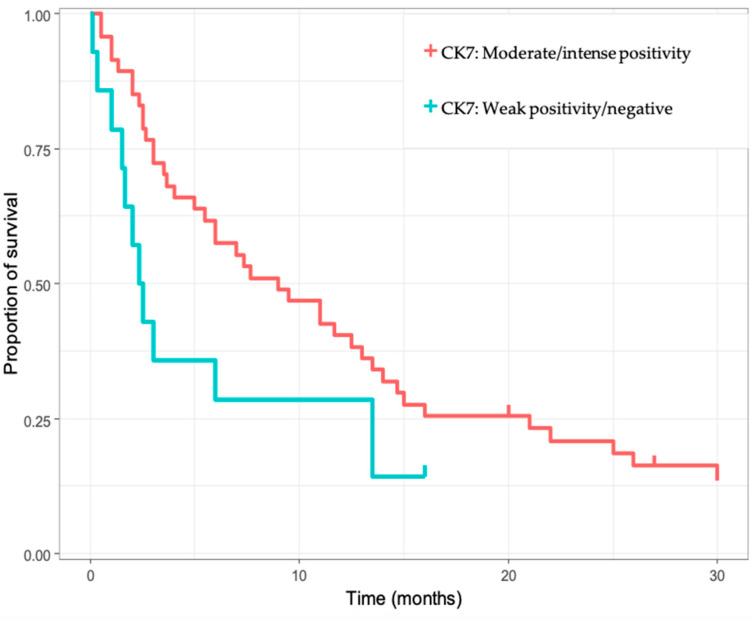
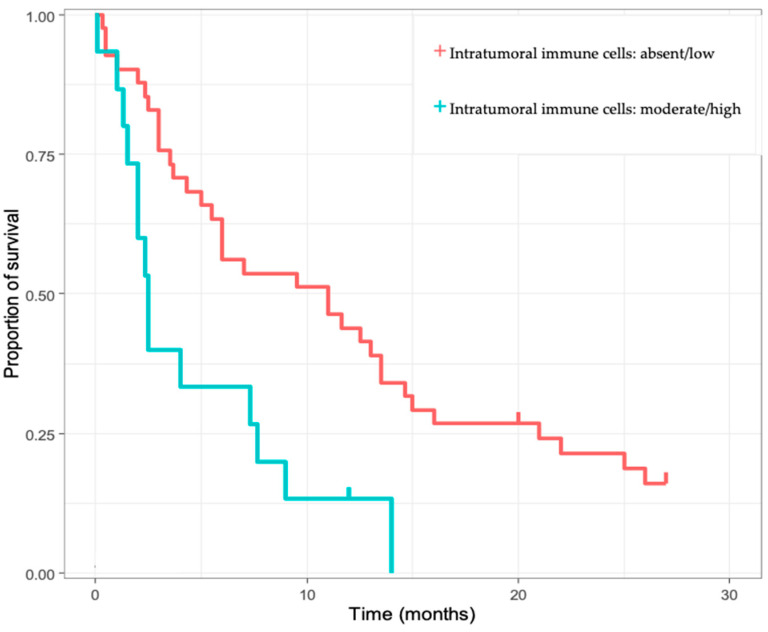
Intrahepatic cholangiocarcinoma (iCCA) is the second most frequent primary hepatic malignant tumor, after hepatocellular carcinoma (HCC). Its incidence has risen worldwide, yet the only potentially curative treatment, surgical resection, is seldom applicable, and the median overall survival remains extremely low. So far, there are no personalized therapy regimens. This study investigated whether routine immunohistochemical stains have diagnostic and/or prognostic value in iCCA. Clinical, imaging, and pathology data were retrospectively gathered for patients diagnosed with iCCA, HCC, or liver metastases assessed using liver needle biopsies. Three study groups with an equal number of cases (n = 65) were formed. In the iCCA group, CK19, CA19-9, CK7, and CEA demonstrated the highest sensitivities (100%, 100%, 93.7%, and 82.6%, respectively). The most relevant stains used for diagnosing HCCs were Glypican 3, CD34 (sinusoidal pattern), and Hep Par 1, with corresponding sensitivities of 100%, 100%, and 98.2%. The immunohistochemical panels for diagnosing metastatic tumors were chosen after correlating the clinical data and morphologic H&E aspects. Moderate/intensely positive CK7 expression and absent/low amount of intratumoral immune cells were favorable prognostic factors and correlated with increased overall survival in both the univariate analysis and the multivariate regression adjusted for age, existence of cirrhosis, number of tumors, and tumor differentiation.
Keywords: CK7; hepatocellular carcinoma; immunohistochemistry; intrahepatic cholangiocarcinoma; intratumoral immune cells; needle biopsy; secondary tumor.
Conflict of interest statement
The authors declare no conflict of interest.
Figures
References
-
- WHO Classification of Tumours Editorial Board . Digestive System Tumours, WHO Classification of Tumours. 5th ed. World Health Organization; Lyon, France: IARC Publications; Lyon, France: 2019.
LinkOut - more resources
Full Text Sources
Research Materials
