Review
. 2023 Apr 25;28(9):3698.
doi: 10.3390/molecules28093698.

PROTACs in the Management of Prostate Cancer

Affiliations
Review

PROTACs in the Management of Prostate Cancer

Poornachandra Yedla et al. Molecules. .

Abstract

Cancer treatments with targeted therapy have gained immense interest due to their low levels of toxicity and high selectivity. Proteolysis-Targeting Chimeras (PROTACs) have drawn special attention in the development of cancer therapeutics owing to their unique mechanism of action, their ability to target undruggable proteins, and their focused target engagement. PROTACs selectively degrade the target protein through the ubiquitin-proteasome system, which describes a different mode of action compared to conventional small-molecule inhibitors or even antibodies. Among different cancer types, prostate cancer (PC) is the most prevalent non-cutaneous cancer in men. Genetic alterations and the overexpression of several genes, such as FOXA1, AR, PTEN, RB1, TP53, etc., suppress the immune response, resulting in drug resistance to conventional drugs in prostate cancer. Since the progression of ARV-110 (PROTAC for PC) into clinical phases, the focus of research has quickly shifted to protein degraders targeting prostate cancer. The present review highlights an overview of PROTACs in prostate cancer and their superiority over conventional inhibitors. We also delve into the underlying pathophysiology of the disease and explain the structural design and linkerology strategies for PROTAC molecules. Additionally, we touch on the various targets for PROTAC in prostate cancer, including the androgen receptor (AR) and other critical oncoproteins, and discuss the future prospects and challenges in this field.

Keywords: PROTAC; androgen receptor; mutation; prostate cancer; resistance.


Conflict of interest statement

The authors declare no conflict of interest.

Figures
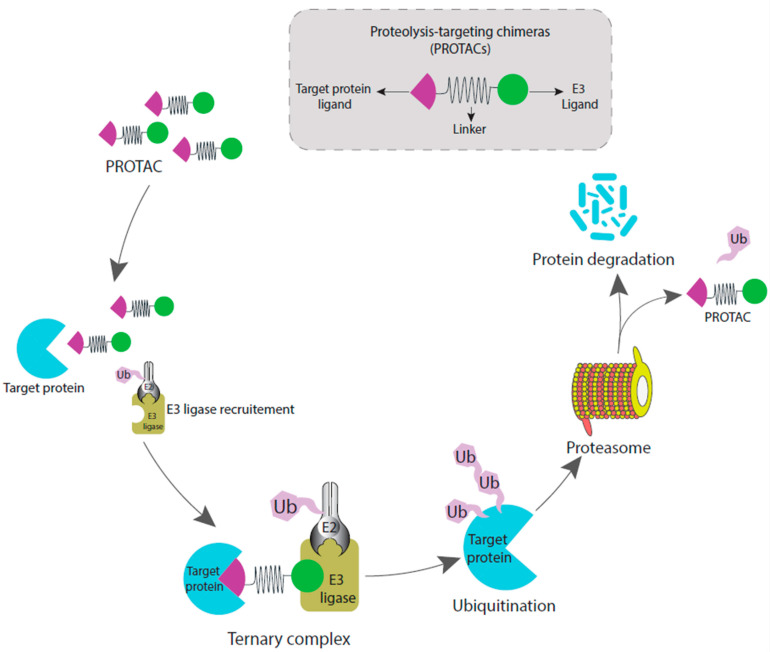
Figure 1
Figure 1
General mechanism of PROTAC-mediated ubiquitination and proteasomal degradation of target protein. The heterobifunctional PROTAC is composed of a ligand that binds to the target protein and a ligand that binds to the E3 ubiquitin ligase by a linker.
Figure 2
Figure 2
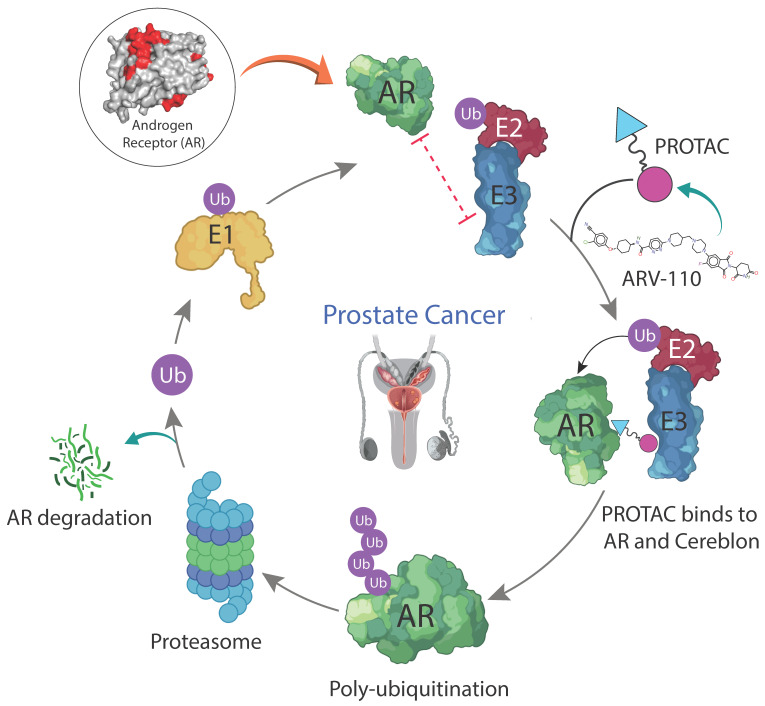
Mechanism of ARV110 in the degradation of AR protein. Initially, the ubiquitin protein binds to an E1 ubiquitin-activating enzyme and then transfers it to an E2 ubiquitin-conjugating enzyme. ARV110 binds with cereblon E3 ligase, AR, and forms a ternary complex. Finally, the cereblon E3 ligase delivers ubiquitin to the AR and induces poly-ubiquitination. The ubiquitinated AR proteins are recognized and degraded by proteasome.
Figure 3
Figure 3
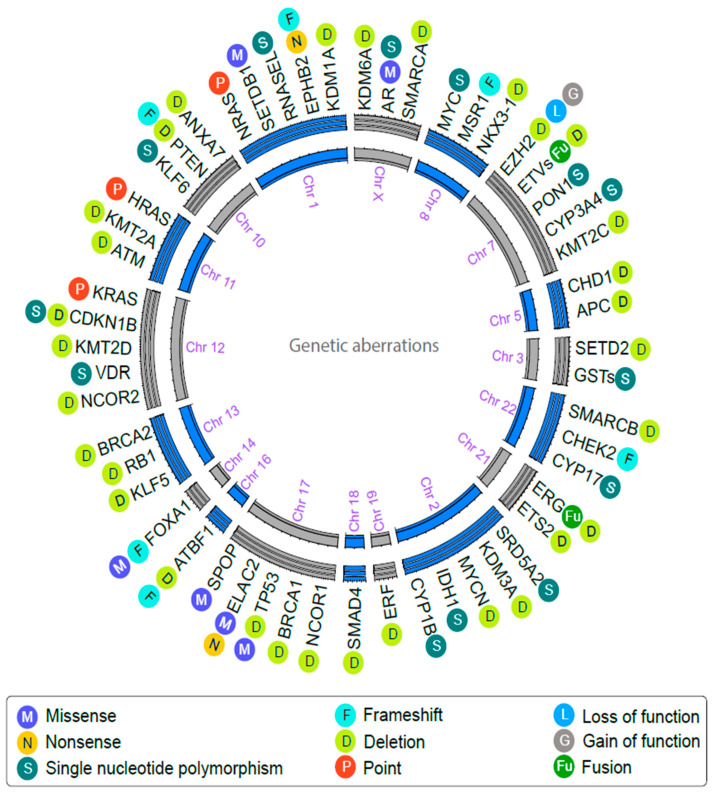
Overview of genetic aberrations in different genes involved in the progression of prostate cancer. Genes and their respective chromosomal location were depicted in outer and inner circles, respectively. Each genetic variation is denoted with a single letter along with a distinct color.
Figure 4
Figure 4
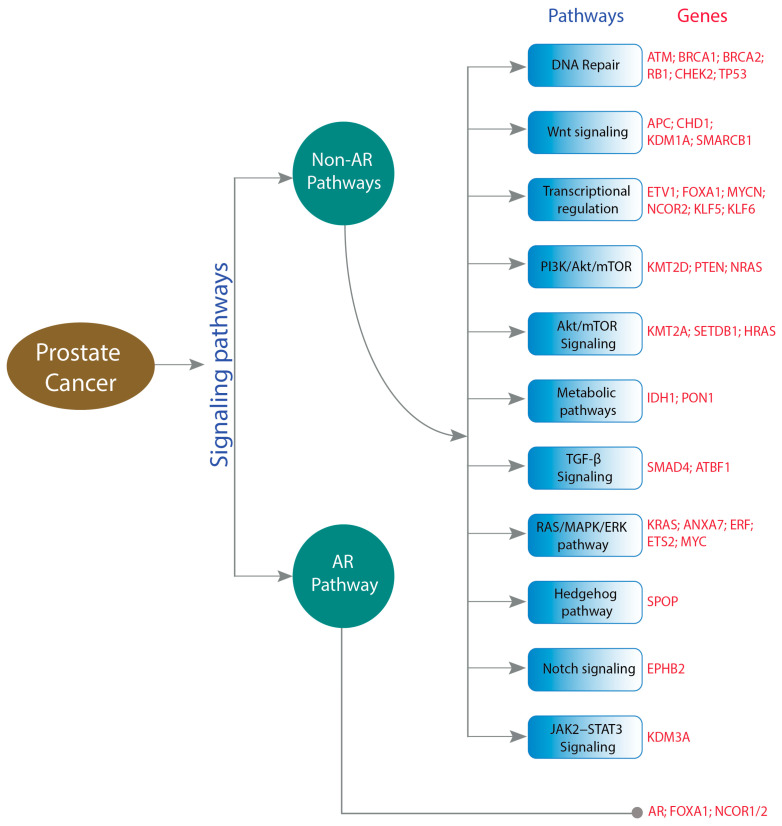
The intricate signaling pathways, including both androgen receptor (AR) and non-AR pathways, and their respective genes have been implicated in the progression of prostate cancer. The relevant genes have been highlighted in red.
Figure 5
Figure 5
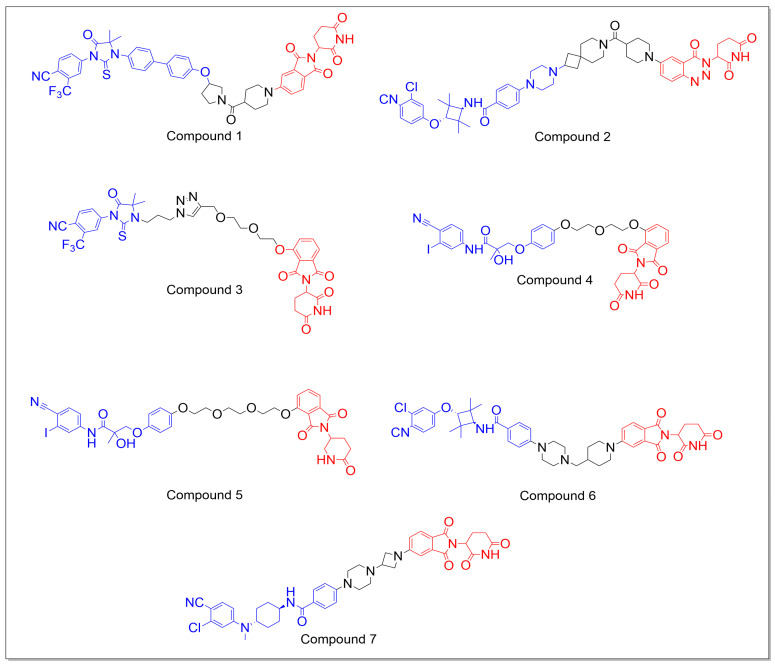
The chemical structures of CRBN-based PROTACs that target the androgen receptor typically display the POI ligand in blue, the E3 ligase ligand in red, and the linker region in black.
Figure 6
Figure 6
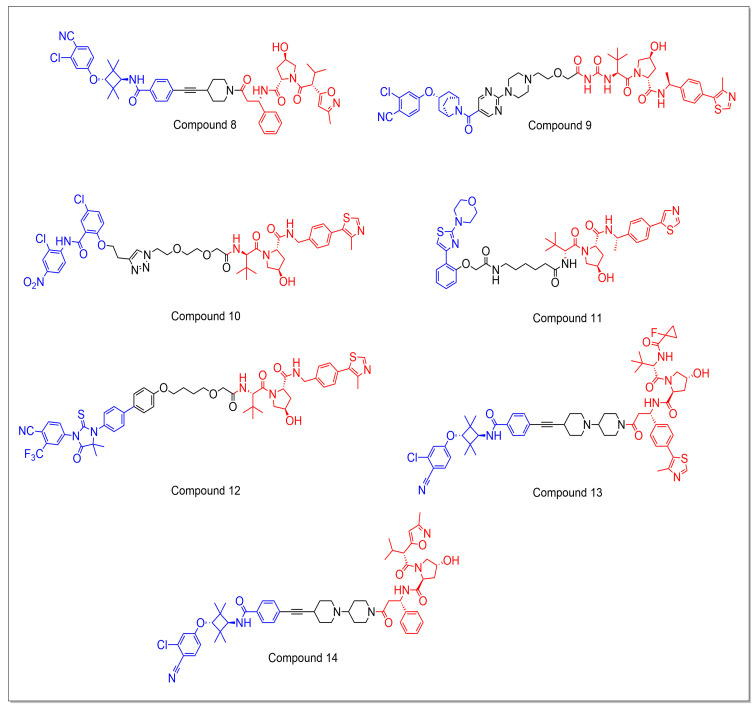
The chemical structures of VHL-based PROTACs that target the androgen receptor typically display the POI ligand in blue, the E3 ligase ligand in red, and the linker region in black.
Figure 7
Figure 7
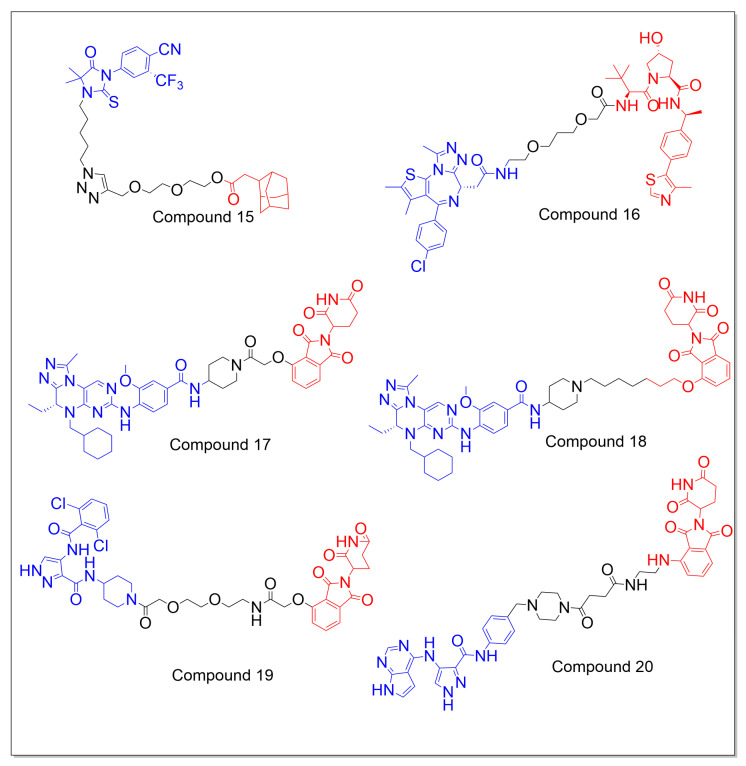
Chemical structures of miscellaneous E3 ligase ligand-based PROTAC (compound 15)-targeting androgen receptor and PROTACs targeting non-AR targets (compound 16–20). The POI ligand is shown in blue, the E3 ligase ligand is in red, and the linker is represented by black.

References

    1. Baudino T. Targeted Cancer Therapy: The Next Generation of Cancer Treatment. Curr. Drug Discov. Technol. 2015;12:3–20. doi: 10.2174/1570163812666150602144310. - DOI - PubMed
    1. Dong J., Zhang Q., Wang Z., Huang G., Li S. Recent Advances in the Development of Indazole-Based Anticancer Agents. ChemMedChem. 2018;13:1490–1507. doi: 10.1002/cmdc.201800253. - DOI - PubMed
    1. Békés M., Langley D.R., Crews C.M. PROTAC Targeted Protein Degraders: The Past Is Prologue. Nat. Rev. Drug Discov. 2022;21:181–200. doi: 10.1038/s41573-021-00371-6. - DOI - PMC - PubMed
    1. Liu Z., Zhang Y., Xiang Y., Kang X. Small-Molecule PROTACs for Cancer Immunotherapy. Molecules. 2022;27:5439. doi: 10.3390/molecules27175439. - DOI - PMC - PubMed
    1. Prozzillo Y., Fattorini G., Santopietro M.V., Suglia L., Ruggiero A., Ferreri D., Messina G. Targeted Protein Degradation Tools: Overview and Future Perspectives. Biology. 2020;9:421. doi: 10.3390/biology9120421. - DOI - PMC - PubMed

Substances