. 2023 Apr 27;24(9):7952.
doi: 10.3390/ijms24097952.

Injectable Hydrogel Guides Neurons Growth with Specific Directionality

Affiliations

Injectable Hydrogel Guides Neurons Growth with Specific Directionality

Yun-Hsiu Tseng et al. Int J Mol Sci. .

Abstract

Visual disabilities affect more than 250 million people, with 43 million suffering from irreversible blindness. The eyes are an extension of the central nervous system which cannot regenerate. Neural tissue engineering is a potential method to cure the disease. Injectability is a desirable property for tissue engineering scaffolds which can eliminate some surgical procedures and reduce possible complications and health risks. We report the development of the anisotropic structured hydrogel scaffold created by a co-injection of cellulose nanofiber (CNF) solution and co-polypeptide solution. The positively charged poly (L-lysine)-r-poly(L-glutamic acid) with 20 mol% of glutamic acid (PLLGA) is crosslinked with negatively charged CNF while promoting cellular activity from the acid nerve stimulate. We found that CNF easily aligns under shear forces from injection and is able to form hydrogel with an ordered structure. Hydrogel is mechanically strong and able to support, guide, and stimulate neurite growth. The anisotropy of our hydrogel was quantitatively determined in situ by 2D optical microscopy and 3D X-ray tomography. The effects of PLLGA:CNF blend ratios on cell viability, neurite growth, and neuronal signaling are systematically investigated in this study. We determined the optimal blend composition for stimulating directional neurite growth yielded a 16% increase in length compared with control, reaching anisotropy of 30.30% at 10°/57.58% at 30°. Using measurements of calcium signaling in vitro, we found a 2.45-fold increase vs. control. Based on our results, we conclude this novel material and unique injection method has a high potential for application in neural tissue engineering.

Keywords: aligned structure; calcium imaging; cellulose nanofiber; hydrogel; injectable; neuron; polypeptide; three-dimensional tomography; tissue engineering.


Conflict of interest statement

The authors declare no conflict of interest.

Figures
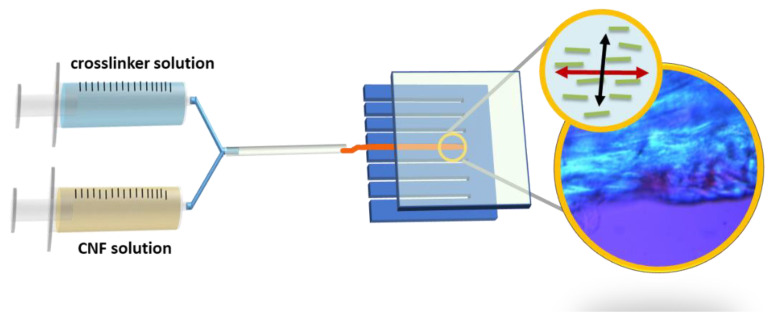
Figure 1
Figure 1
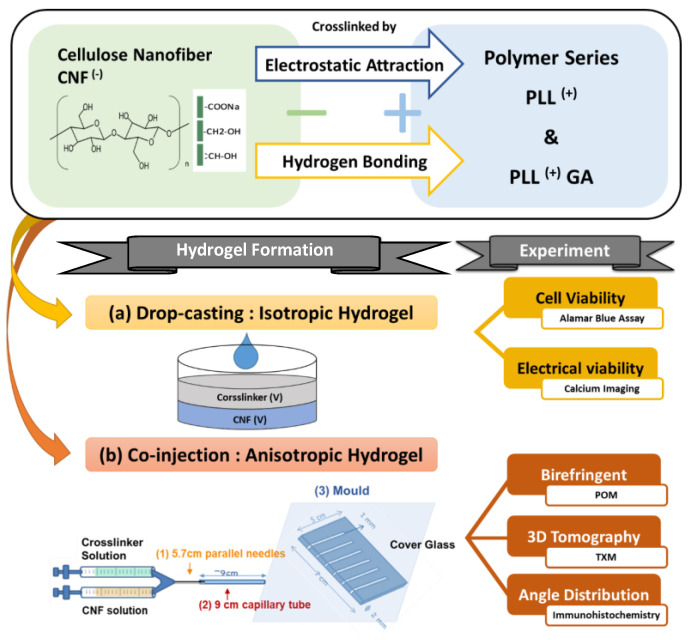
Schematic diagram of the preparation of the anisotropic-structured hydrogel via shear force using co-injection of CNF and crosslinker solutions.
Figure 2
Figure 2
Schematic diagrams of hydrogel preparation (a) isotropic gel and (b) anisotropic gel.
Figure 3
Figure 3
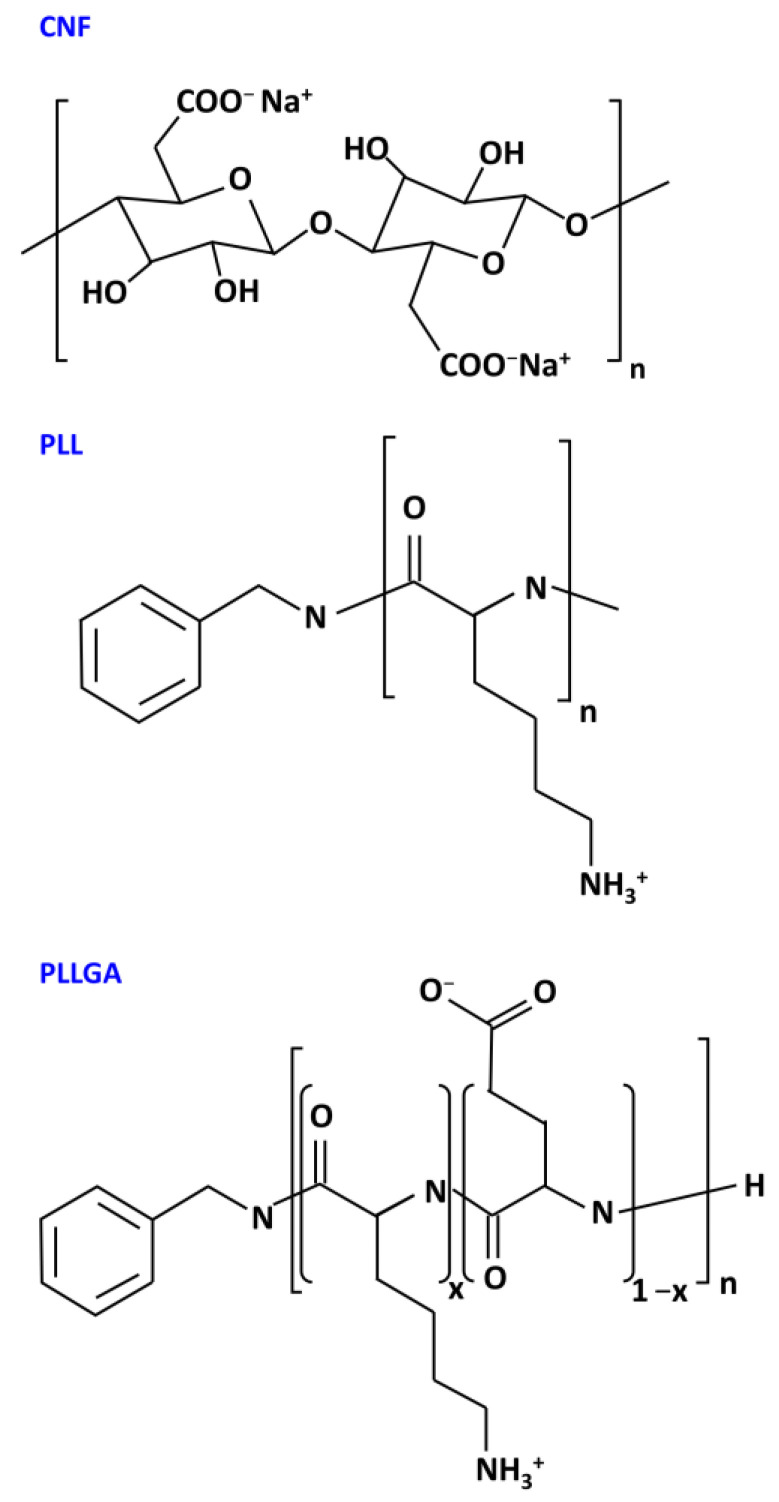
Chemical structures of CNF, PLL, and PLLGA in the hydrogel.
Figure 4
Figure 4
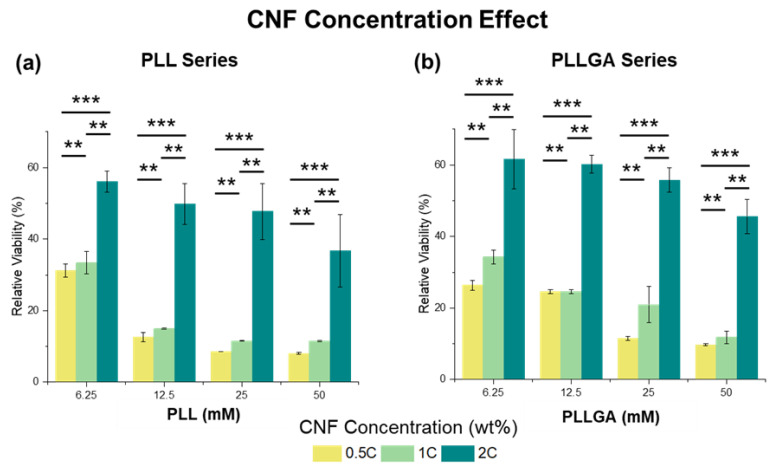
The CNF concentration effect in (a) PLL and (b) PLLGA crosslinker series on the relative viability from AlamarBlue assay on Day 6 PC12 cells. n = 7. The Kruskal–Wallis H-test was used to determine significant differences between groups. (** = p < 0.01, *** = p < 0.001).
Figure 5
Figure 5
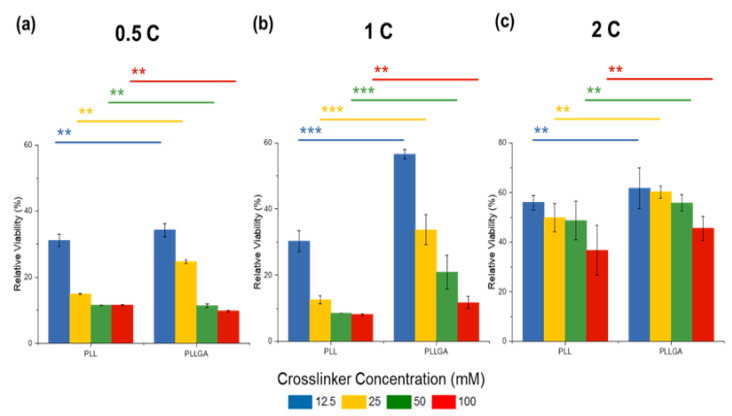
The enhancement of the cell viability on Day 6 through the modification from PLL to PLLGA by varying the CNF concentration (a) 0.5 wt.%, (b) 1.0 wt.%, and (c) 2.0 wt.%. n = 7. The Kruskal–Wallis H-test was used to determine significant differences between groups. (** = p < 0.01, *** = p < 0.001).
Figure 6
Figure 6
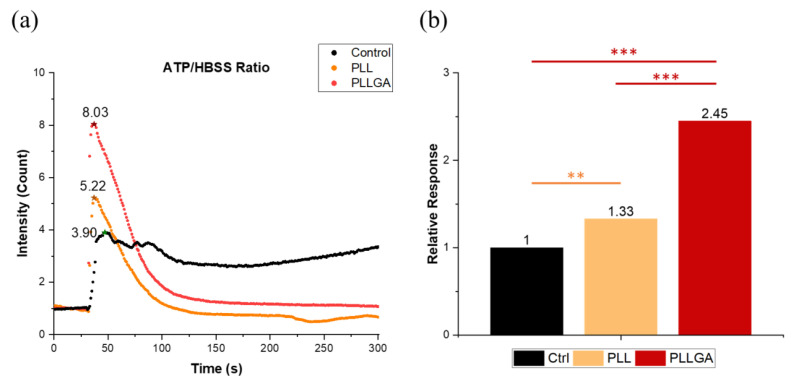
(a) The fluorescent intensity profile of the calcium indicator to ATP stimulation and (b) the electroactivity of ARPE cultured on 2C-6.25PLL and 2C-PLLGA on Day 1 was represented as the response peak heights which were normalized with the control group. n = 7. The Kruskal–Wallis H-test was used to determine significant differences between groups. (** = p < 0.01, *** = p < 0.001). The star sign marks the highest point of each curve.
Figure 7
Figure 7
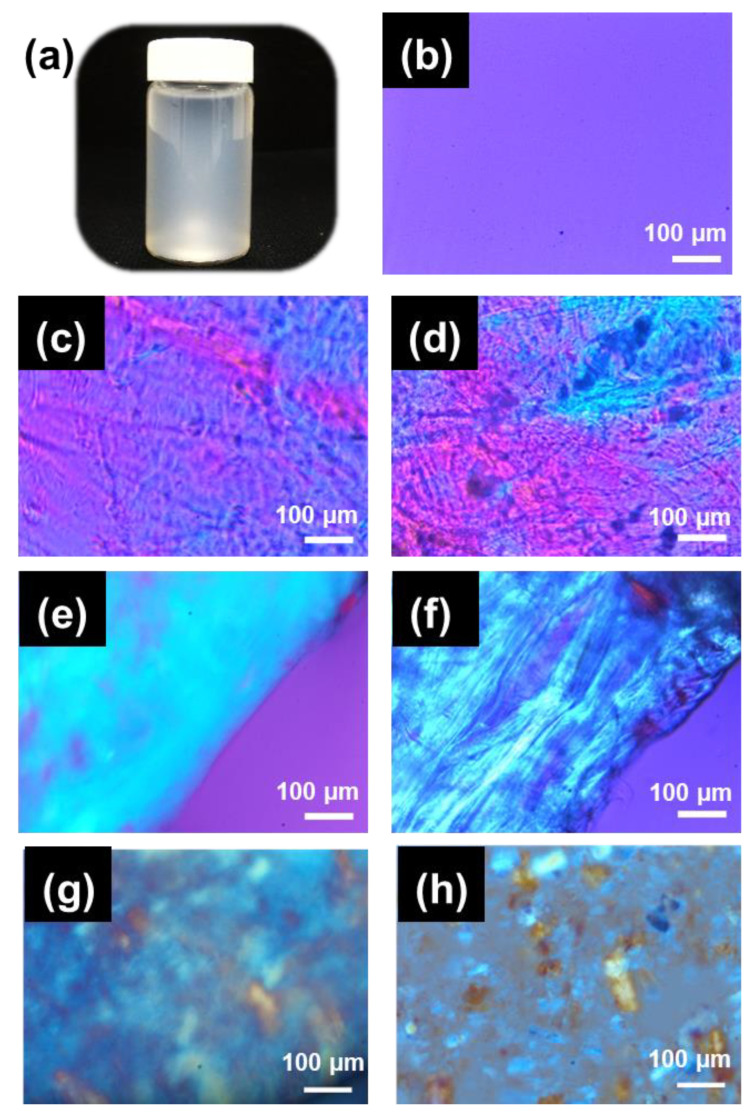
(a) Typical photo image of CNF hydrogel. POM images of the well-dispersed (b) 2.0 wt.% CNF solution, (c) iso-2C-50PLL, (d) iso-2C-50 PLLGA, (e) ani-2C-50PLL, (f) ani-2C-50 PLLGA, and anisotropic hydrogels, (g) iso-2C-50PLL, and (h) iso-2C-50 PLLGA, which were fabricated with not well-dispersed CNF solution showed the micro-scale aggregation bundle.
Figure 8
Figure 8
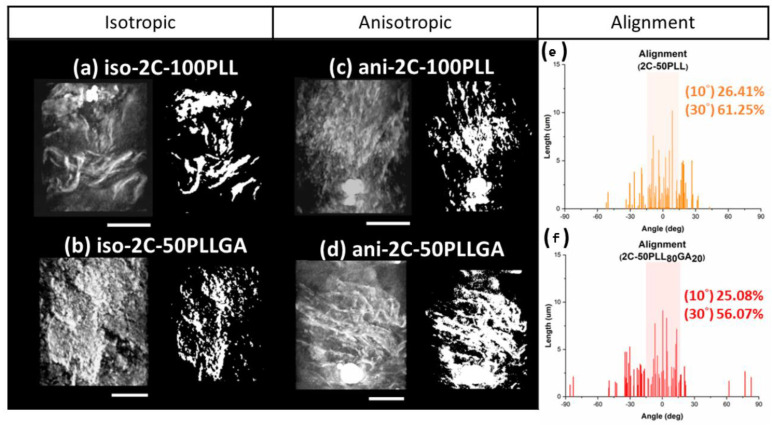
The TXM image of (a) iso-2C-50PLL, (b) iso-2C-50PLLGA, (c) ani-2C-50PLL, and (d) ani-2C-50PLLGA, and the alignment of hydrogel molecules was performed by angle distribution analysis from (e) ani-2C-50PLL and (f) ani-2C-50PLLGA. (n = 50), scale bar 5 micron.
Figure 9
Figure 9
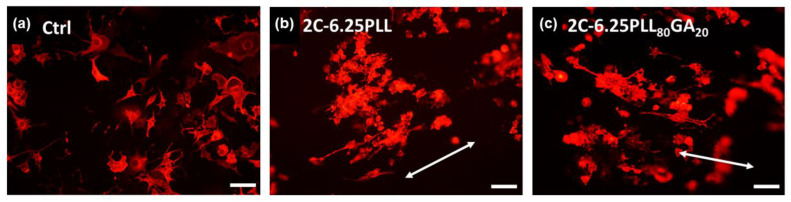
Representative images of immunohistochemical staining results of PC12 cells cultured on (a) untreated glass coverslip and (b) 2C-6.25PLL, (c) 2C-6.25PLL80GA20 anisotropic hydrogel for five days. The arrow bar indicates the directionality of the neurites.
Figure 10
Figure 10
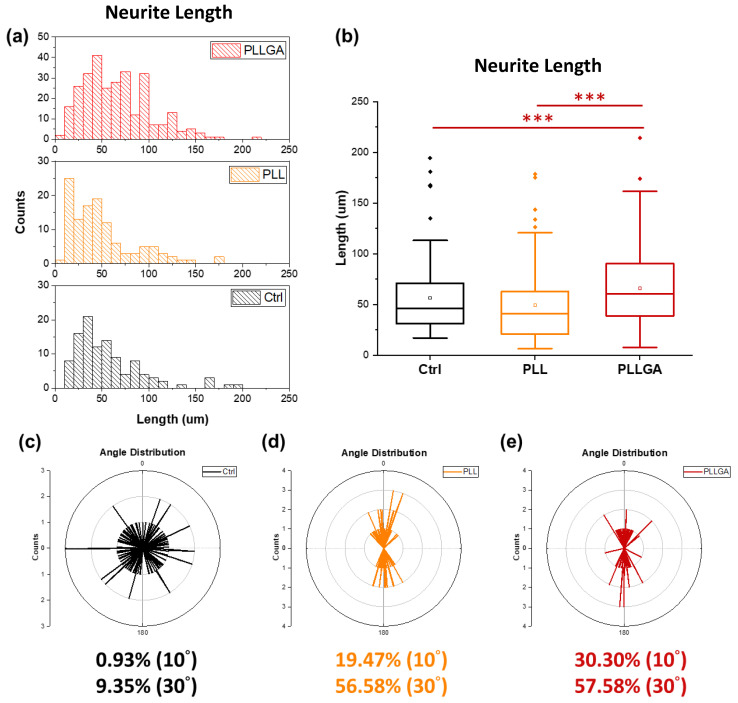
(a) The neurite length distribution and (b) the box chart of the neurite length. The % alignment of (c) control group, (d) ani-2C-6.25PLL, (e) ani 2C-6.25PLLGA. The counts (x-axis) represent the “number of the neurites”. Additionally, 10 degrees represent neurite growth between +10 degree and −10 degree. The Kruskal–Wallis H-test was used to determine significant differences between groups. (*** = p < 0.001).

References

    1. Ha A., Kim Y.K., Park Y.J., Jeoung J.W., Park K.H. Intraocular pressure change during reading or writing on smartphone. PLoS ONE. 2018;13:e0206061. doi: 10.1371/journal.pone.0206061. - DOI - PMC - PubMed
    1. Qudsiya S.M., Khatoon F., Khader A.A., Ali M.A., Hazari M.A.H., Sultana F., Farheen A. Study of intraocular pressure among individuals working on computer screens for long hours: Effect of exposure to computer screens on IOP. Ann. Med. Physiol. 2017;1:22–25. doi: 10.23921/amp.2017v1i1.263328. - DOI
    1. Nassr M.A., Morris C.L., Netland P.A., Karcioglu Z.A. Intraocular Pressure Change in Orbital Disease. Surv. Ophthalmol. 2009;54:519–544. doi: 10.1016/j.survophthal.2009.02.023. - DOI - PubMed
    1. Chen M., Wu A., Zhang L., Wang W., Chen X., Yu X., Wang K. The increasing prevalence of myopia and high myopia among high school students in Fenghua city, eastern China: A 15-year population-based survey. BMC Ophthalmol. 2018;18:159. doi: 10.1186/s12886-018-0829-8. - DOI - PMC - PubMed
    1. Matsumura H., Hirai H. Prevalence of Myopia and Refractive Changes in Students from 3 to 17 Years of Age. Surv. Ophthalmol. 1999;44:S109–S115. doi: 10.1016/S0039-6257(99)00094-6. - DOI - PubMed

LinkOut - more resources