


Trends in Population-Based Studies: Molecular and Digital Epidemiology (Review)
- PMID: 37179982
- PMCID: PMC10171044
- DOI: 10.17691/stm2022.14.4.07
Trends in Population-Based Studies: Molecular and Digital Epidemiology (Review)
Abstract
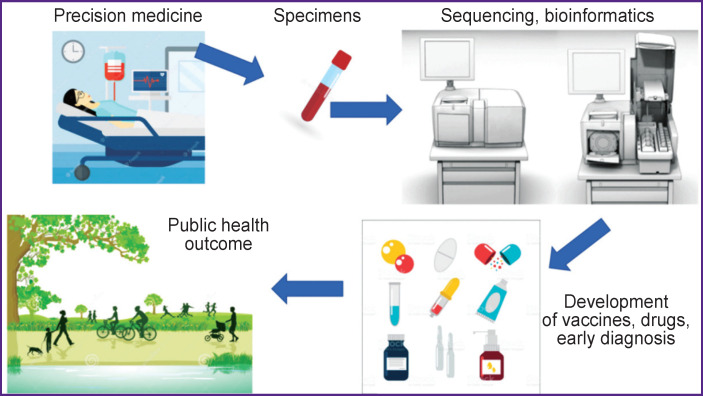
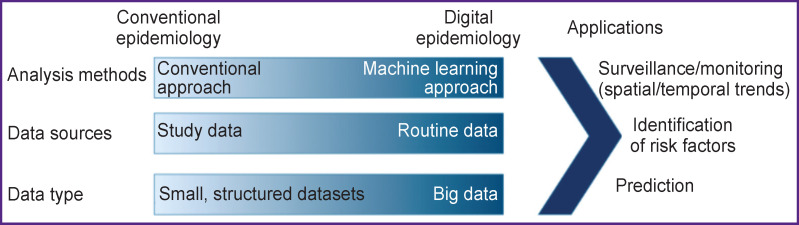
The development of high-throughput technologies has sharply increased the opportunities to research the human body at the molecular, cellular, and organismal levels in the last decade. Rapid progress in biotechnology has caused a paradigm shift in population-based studies. Advances in modern biomedical sciences, including genomic, genome-wide, post-genomic research and bioinformatics, have contributed to the emergence of molecular epidemiology focused on the study of the personalized molecular mechanism of disease development and its extrapolation to the population level. The work of research teams at the intersection of information technology and medicine has become the basis for highlighting digital epidemiology, the important tools of which are machine learning, the ability to work with real world data, and accumulated big data. The developed approaches accelerate the process of collecting and processing biomedical data, testing new scientific hypotheses. However, new methods are still in their infancy, they require testing of application under various conditions, as well as standardization. This review highlights the role of omics and digital technologies in population-based studies.
Keywords: digital epidemiology; information technologies; molecular epidemiology; omics technologies; population-based studies in medicine.
Conflict of interest statement
The authors declare no conflicts of interest in preparing the publication.
Figures
References
Publication types
MeSH terms
LinkOut - more resources
Full Text Sources