


Vaccines for African swine fever: an update
- PMID: 37180260
- PMCID: PMC10173882
- DOI: 10.3389/fmicb.2023.1139494
Vaccines for African swine fever: an update
Erratum in
-
Corrigendum: Vaccines for African swine fever: an update.Front Microbiol. 2024 Dec 6;15:1529175. doi: 10.3389/fmicb.2024.1529175. eCollection 2024. Front Microbiol. 2024. PMID: 39712893 Free PMC article.
Abstract
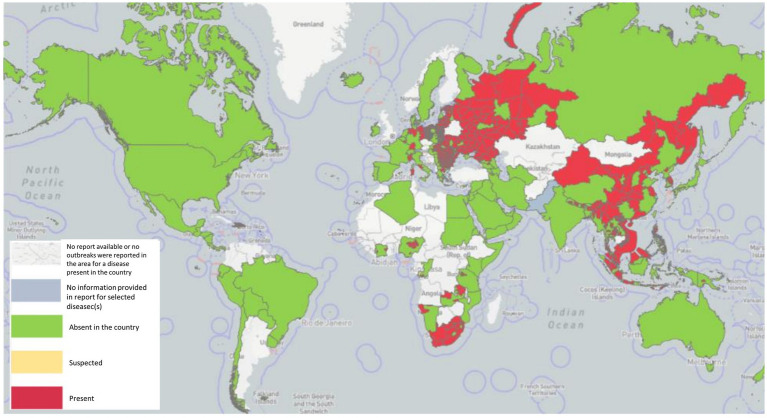
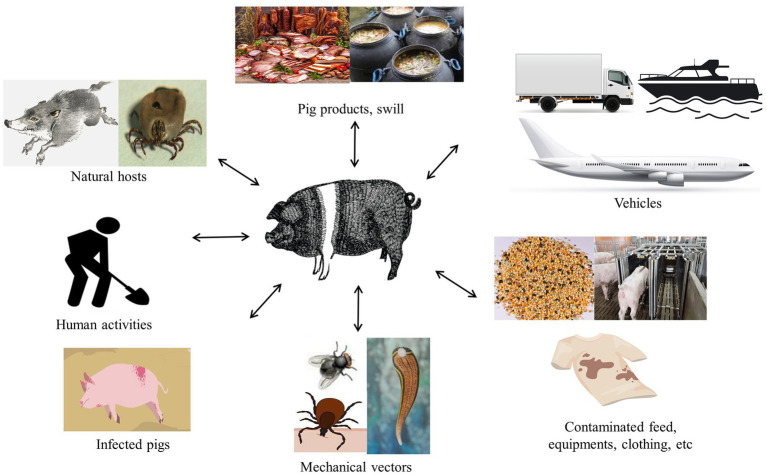
African swine fever (ASF) is a fatal infectious disease of swine caused by the African swine fever virus (ASFV). Currently, the disease is listed as a legally notifiable disease that must be reported to the World Organization for Animal Health (WOAH). The economic losses to the global pig industry have been insurmountable since the outbreak of ASF. Control and eradication of ASF are very critical during the current pandemic. Vaccination is the optimal strategy to prevent and control the ASF epidemic, but since inactivated ASFV vaccines have poor immune protection and there aren't enough cell lines for efficient in vitro ASFV replication, an ASF vaccine with high immunoprotective potential still remains to be explored. Knowledge of the course of disease evolution, the way of virus transmission, and the breakthrough point of vaccine design will facilitate the development of an ASF vaccine. In this review, the paper aims to highlight the recent advances and breakthroughs in the epidemic and transmission of ASF, virus mutation, and the development of vaccines in recent years, focusing on future directions and trends.
Keywords: African swine fever virus; epidemic and spread; progress; review; vaccine.
Copyright © 2023 Zhang, Zhao, Zhang, Qin, Shan and Cai.
Conflict of interest statement
HZ was employed by the company Qingdao Haihua Biological Group Co., Ltd, Qingdao, China. The remaining authors declare that the research was conducted in the absence of any commercial or financial relationships that could be construed as a potential conflict of interest.
Figures
References
Publication types
LinkOut - more resources
Full Text Sources
Other Literature Sources
