Review
. 2023 Apr 3;13(4):453.
doi: 10.3390/bios13040453.

Carbon Nanomaterials-Based Screen-Printed Electrodes for Sensing Applications

Affiliations
Review

Carbon Nanomaterials-Based Screen-Printed Electrodes for Sensing Applications

Rafael Matias Silva et al. Biosensors (Basel). .

Abstract

Electrochemical sensors consisting of screen-printed electrodes (SPEs) are recurrent devices in the recent literature for applications in different fields of interest and contribute to the expanding electroanalytical chemistry field. This is due to inherent characteristics that can be better (or only) achieved with the use of SPEs, including miniaturization, cost reduction, lower sample consumption, compatibility with portable equipment, and disposability. SPEs are also quite versatile; they can be manufactured using different formulations of conductive inks and substrates, and are of varied designs. Naturally, the analytical performance of SPEs is directly affected by the quality of the material used for printing and modifying the electrodes. In this sense, the most varied carbon nanomaterials have been explored for the preparation and modification of SPEs, providing devices with an enhanced electrochemical response and greater sensitivity, in addition to functionalized surfaces that can immobilize biological agents for the manufacture of biosensors. Considering the relevance and timeliness of the topic, this review aimed to provide an overview of the current scenario of the use of carbonaceous nanomaterials in the context of making electrochemical SPE sensors, from which different approaches will be presented, exploring materials traditionally investigated in electrochemistry, such as graphene, carbon nanotubes, carbon black, and those more recently investigated for this (carbon quantum dots, graphitic carbon nitride, and biochar). Perspectives on the use and expansion of these devices are also considered.

Keywords: biochar; carbon black; carbon nanotubes; carbon quantum dots; carbonaceous nanomaterials; disposable electrodes; electroanalysis; graphene; graphitic carbon nitride; screen-printing.


Conflict of interest statement

The authors declare no conflict of interest.

Figures
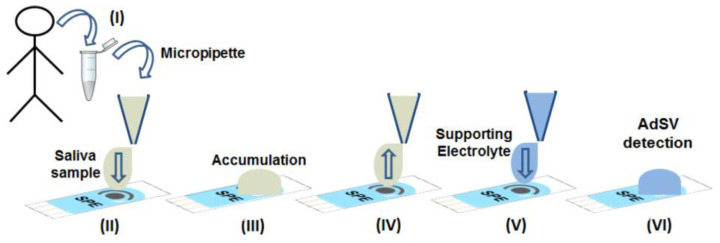
Figure 7
Figure 7
Analysis of authentic saliva samples by the adsorptive stripping wave voltammetry technique using SPE-CNT. Saliva samples were collected (I) using Salivetts®, see Section 2.3 (Please, refer to the original work at [122]). (II) the saliva samples (100 μL) with or without addition of modafinil were drop-casted on SPE-CNT using a micropipette; (III) the accumulation step required for AdSV was carried out directly in authentic saliva samples (undiluted) from which the analyte was extracted by adsorption on the electrode; (IV) the saliva samples were removed using a micropipette; (V) the supporting electrolyte was added and; (VI) the detection was performed by AdSV or adsorptive square-wave voltammetry (AdSWV) techniques. Reprinted with permission from Elsevier from Ref. [122].
Figure 8
Figure 8
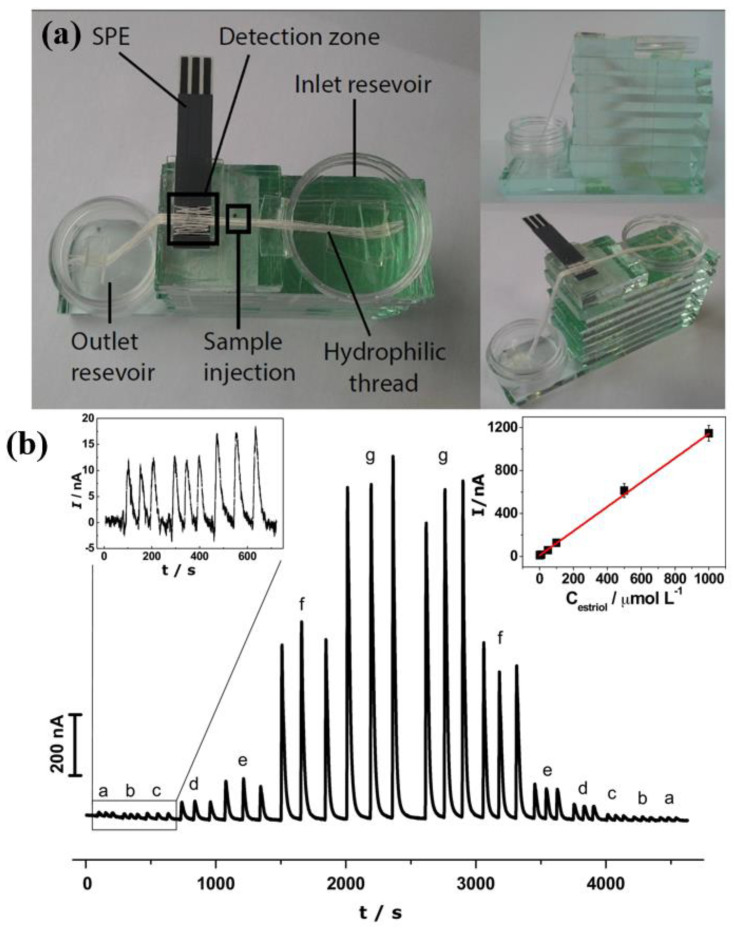
(a) Illustration of the thread-based electroanalytical device after the assembly process. (b) Successive amperometric response in μTED obtained from injections of 2.0 μL of estriol standard solutions aliquots, varying over a range of (a) 1.0; (b) 5.0; (c) 10.0; (d) 50.0; (e) 100.0; (f) 500.0 and (g) 1000.0 μmol L−1, with a flow rate of 0.50 μL s−1. Applied potential: 0.75 V. Analytical curve for the amperometric responses in the thread-based electroanalytical device (in detail). Each point is the average value of the six injections for each concentration. Reprinted with permission from Elsevier from Ref. [123].
Figure 9
Figure 9
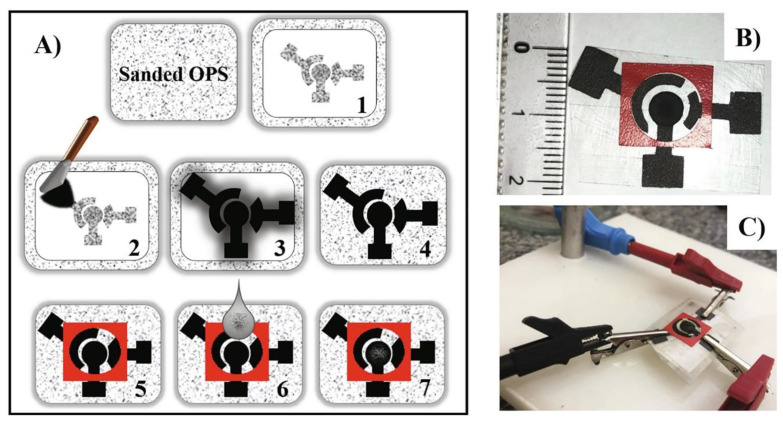
(A) Schematic representation of SPE preparation and modification. (B) Image of the final device. (C) Image of the final SPE connected to the potentiostat. Reprinted with permission from Elsevier from Ref. [124].
Figure 13
Figure 13
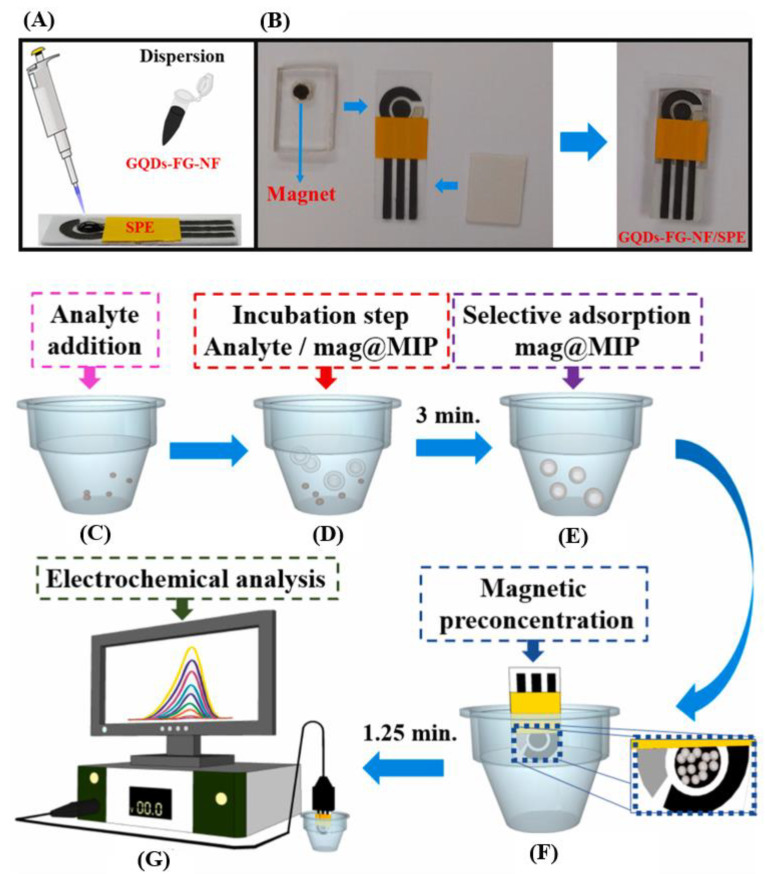
(A) SPE modification with GQDs-FG-NF and (B) fixing the magnet to the modified SPE. Sensor mechanism: (C) addition of the analyte; (D) incubation step with the mag@MIP in the analyte solution; (E) analyte adsorption by the mag@MIP; (F) separation of the analyte-mag@MIP with the electrode magnet (GQDs-FG-NF/SPE), and (G) steps of electrochemical analysis. Reprinted with permission from Elsevier from Ref. [156].
Figure 1
Figure 1
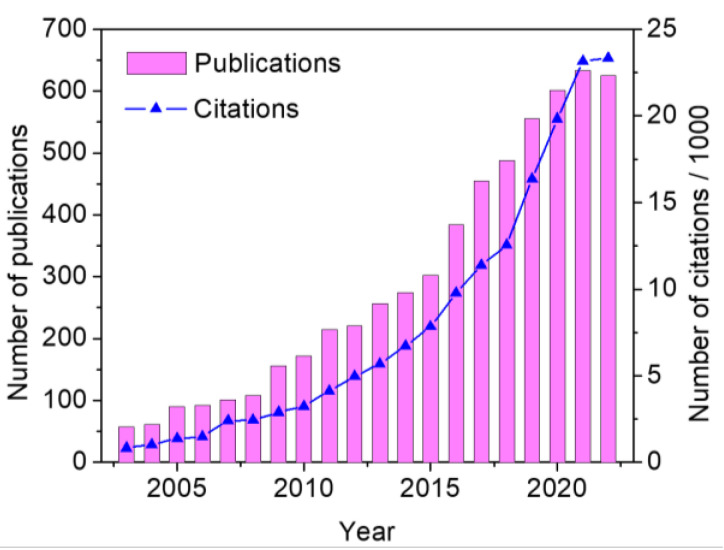
Report of publications and citations provided by the Web of Science database with the keywords “carbon” and “screen-printed electrode”.
Figure 2
Figure 2
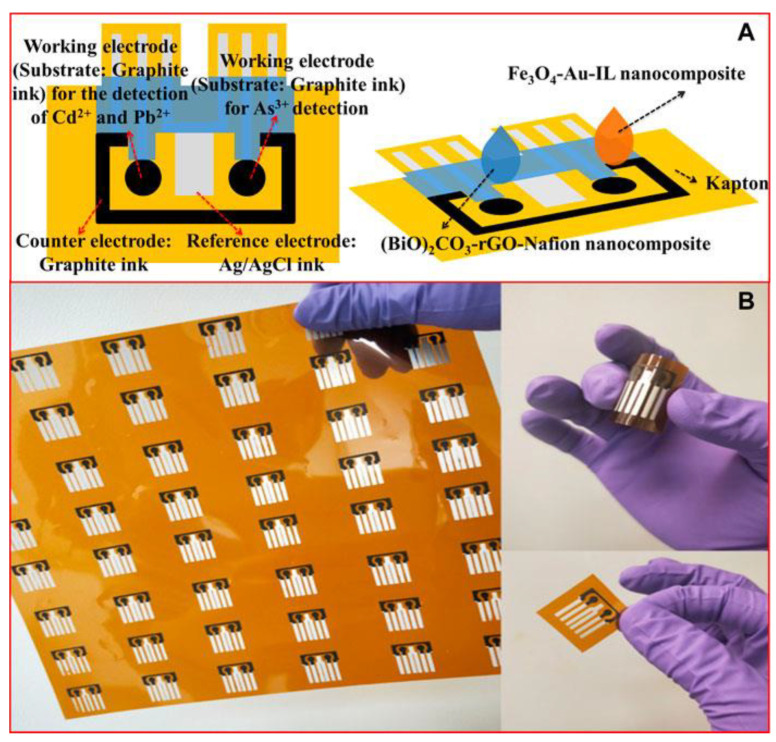
(A) Schematic diagram of the SPE. (B) Optical images of the SPE. Reprinted with permission from Frontiers from Ref. [27]. Subtitles: IL: L-cysteine.
Figure 3
Figure 3
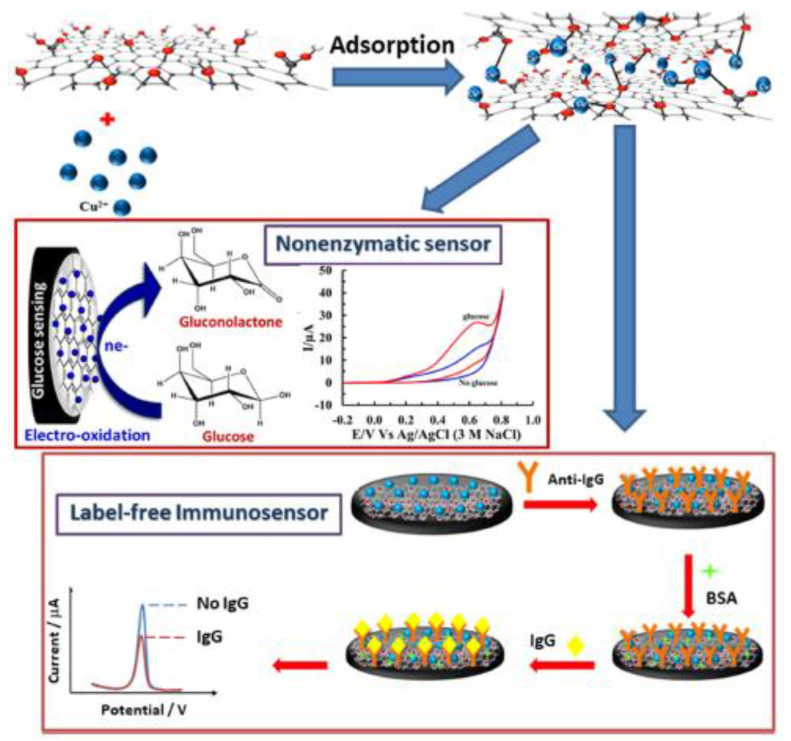
Fabrications of IgG immunosensor and non-enzymatic glucose sensor based on a versatile Cu(II)/GO−modified SPCE. Reprinted with permission from Frontiers from Ref. [44].
Figure 4
Figure 4
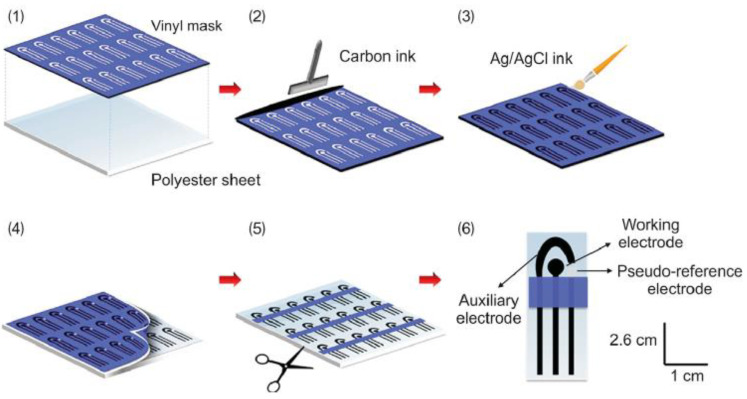
Schematic representation of the preparation of SPE. (1) the vinyl mask was fixed on a polyester sheet (USA Folien Laserjet Clear A4 transparency film); (2) the carbon ink (C2160602D2 from Gwent Electronic Materials Ltd., São Paulo, Brazil) was deposited on the support with a plastic spatula and cured at 90 °C for 30 min; (3) the Ag/AgCl ink (C2051014P10, Gwent Electronic Materials Ltd., São Paulo, Brazil) was applied to the part corresponding to the pseudo-reference electrode, and then the ink was cured at 60 °C for 30 min; (4) removal of the vinyl mask; (5) delimitation of the geometric area of the working electrodes with a rectangular vinyl mask, followed by a heater press and (6) SPE for use. Reprinted with permission from Elsevier from Ref. [48].
Figure 5
Figure 5
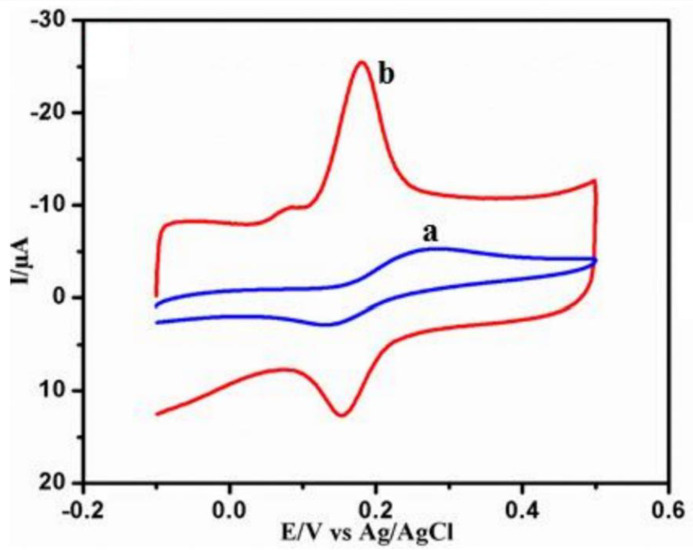
Cyclic voltammetry of bare SPCE (a) and f−MWCNT/SPCE (b) in the presence of 500 μmol L−1 CT in 0.05 mol L−1 PB solution (pH 7.0) at a scan rate of 50 mV s−1. Reprinted with permission from ESG from Ref. [113].
Figure 6
Figure 6
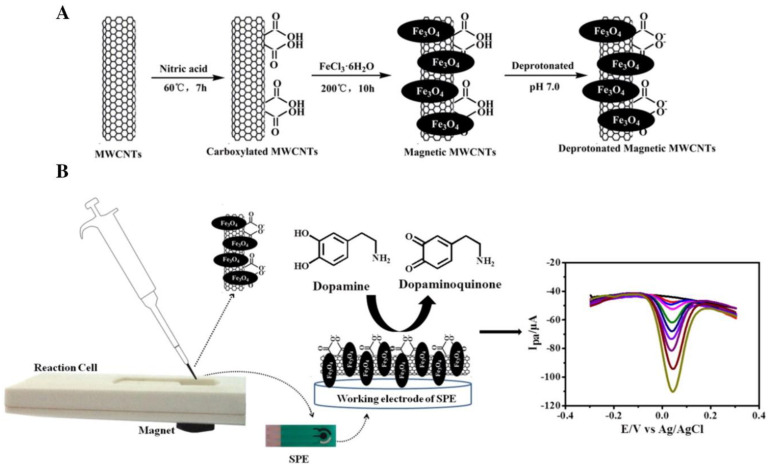
(A) Synthetic route of mMWCNTs. (B) Magnetism-assisted modification of SPE with mMWCNTs and electrochemical response of dopamine on mMWCNTs/SPE. Reprinted with permission from Elsevier from Ref. [121].
Figure 10
Figure 10
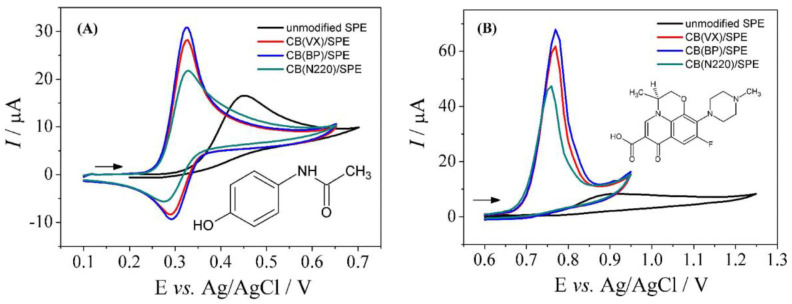
Cyclic voltammograms obtained from the application of the three proposed electrodes: unmodified SPE (black line); CB(VULCAN XC72R)/SPE (red line); CB(BLACK PEARLS 4750)/SPE (blue line) or CB(N220)/SPE (green line) for (A) 5.0 × 10⁻⁴ mol L−1 acetaminophen and (B) 1.0 × 10⁻⁴ mol L−1 Levofloxacin, in 0.2 mol L−1 phosphate buffer solution (pH 3.0), at scan rate (v) = 50 mV s−1. Reprinted with permission from Wiley from Ref. [147].
Figure 11
Figure 11
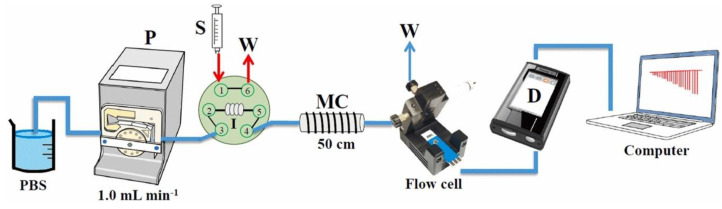
Illustration of FI-Amp system for uric acid determination using a CB-GO modified SPCE (PBS = 10 mM phosphate buffer pH 6.0, P = peristaltic pump, S = standard/sample, I = injection valve (150 μL), MC = mixing coil, W = waste, D = AC impedance electrochemical analyzer-simulator. Reprinted with permission from Elsevier from Ref. [149].
Figure 12
Figure 12
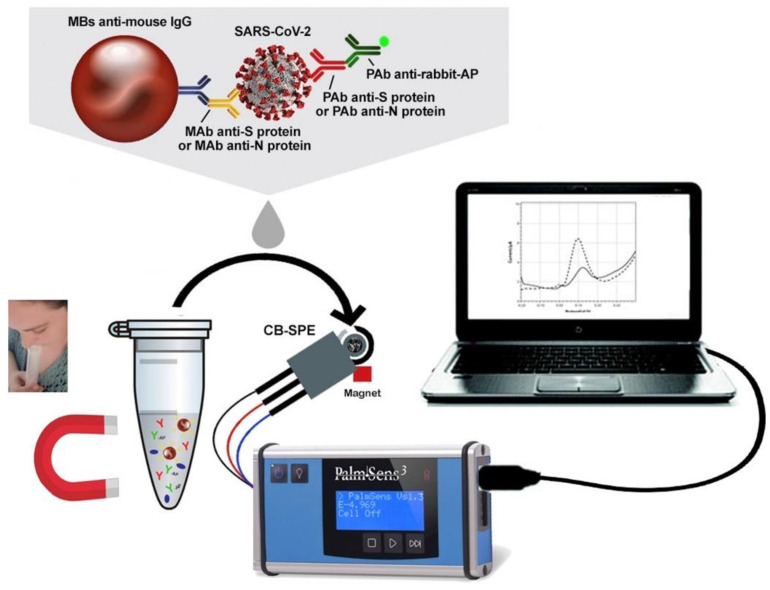
The MBs-based assay for SARS-CoV-2 detection in untreated saliva. Reprinted with permission from Elsevier from Ref. [152].
Figure 14
Figure 14
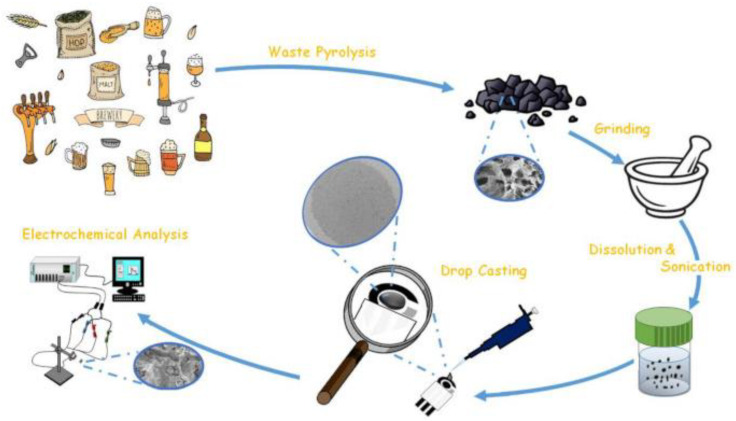
Biochar/SPE preparation scheme. Reprinted with the permission of Elsevier from Ref. [176].

References

    1. Simões F.R., Xavier M.G. Nanoscience and Its Applications. Elsevier; Amsterdam, The Netherlands: 2017. Electrochemical Sensors; pp. 155–178.
    1. Ferrari A.G.-M., Rowley-Neale S.J., Banks C.E. Screen-printed electrodes: Transitioning the laboratory in-to-the field. Talanta Open. 2021;3:100032. doi: 10.1016/j.talo.2021.100032. - DOI
    1. Ye Q., Zhang Z., Liu J., Wang X. Screen-printed electrode-based biosensors modified with functional nucleic acid probes and their applications in this pandemic age: A review. Anal. Methods. 2022;14:2961–2975. doi: 10.1039/D2AY00666A. - DOI - PubMed
    1. Karimi-Maleh H., Karimi F., Alizadeh M., Sanati A.L. Electrochemical Sensors, a Bright Future in the Fabrication of Portable Kits in Analytical Systems. Chem. Rec. 2020;20:682–692. doi: 10.1002/tcr.201900092. - DOI - PubMed
    1. Shi J.-X., Lei X.-W., Natsuki T. Review on Carbon Nanomaterials-Based Nano-Mass and Nano-Force Sensors by Theoretical Analysis of Vibration Behavior. Sensors. 2021;21:1907. doi: 10.3390/s21051907. - DOI - PMC - PubMed

Substances

LinkOut - more resources