


Modelling the economic burden of SARS-CoV-2 infection in health care workers in four countries
- PMID: 37188709
- PMCID: PMC10185455
- DOI: 10.1038/s41467-023-38477-7
Modelling the economic burden of SARS-CoV-2 infection in health care workers in four countries
Abstract
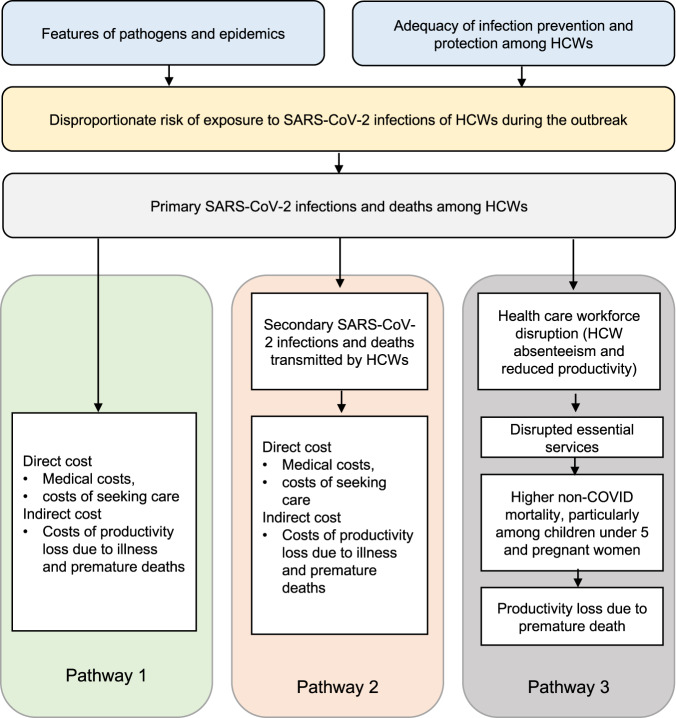
Health care workers (HCWs) experienced greater risk of SARS-CoV-2 infection during the COVID-19 pandemic. This study applies a cost-of-illness (COI) approach to model the economic burden associated with SARS-CoV-2 infections among HCWs in five low- and middle-income sites (Kenya, Eswatini, Colombia, KwaZulu-Natal province, and Western Cape province of South Africa) during the first year of the pandemic. We find that not only did HCWs have a higher incidence of COVID-19 than the general population, but in all sites except Colombia, viral transmission from infected HCWs to close contacts resulted in substantial secondary SARS-CoV-2 infection and death. Disruption in health services as a result of HCW illness affected maternal and child deaths dramatically. Total economic losses attributable to SARS-CoV-2 infection among HCWs as a share of total health expenditure ranged from 1.51% in Colombia to 8.38% in Western Cape province, South Africa. This economic burden to society highlights the importance of adequate infection prevention and control measures to minimize the risk of SARS-CoV-2 infection in HCWs.
© 2023. The Author(s).
Conflict of interest statement
The authors declare no competing interests.
Figures


References
-
- World Health Organization. Pulse Survey on Continuity of Essential Health Services During the COVID-19 Pandemic: Interim Report. (World Health Organization, Geneva, Switzerland, 2020).
MeSH terms
LinkOut - more resources
Full Text Sources
Medical
Miscellaneous
