


The impact of the COVID-19 pandemic restrictions on the health care utilization of cancer patients
- PMID: 37189037
- PMCID: PMC10183678
- DOI: 10.1186/s12885-023-10945-9
The impact of the COVID-19 pandemic restrictions on the health care utilization of cancer patients
Abstract
Background: COVID-19 has impacted both society and medical care. While Germany entered the first lockdown in spring 2020, the PIKKO study (Patient information, communication and competence empowerment in oncology) was still active. The intervention modules, patient navigator (PN), services of the Saarland Cancer Society (SCS), psycho-social counseling and different courses, and online knowledge database (ODB) continued to be offered, but in an adapted form. It was the aim of this supplementary survey to identify the restrictions and burdens of the pandemic containment strategies on the PIKKO patients and thus on the PIKKO study itself. Furthermore, this work shows how the PIKKO modules were used during the lockdown.
Methods: All patients in the PIKKO intervention group (IG) were invited to complete a questionnaire, n = 503. Furthermore, utilization of the SCS and log files of the ODB were analyzed. For socio-demographic data and contacts with the PN, data from the regular PIKKO surveys were used. In addition to descriptive statistics, chi²-tests, F-tests and linear regression analyses were performed.
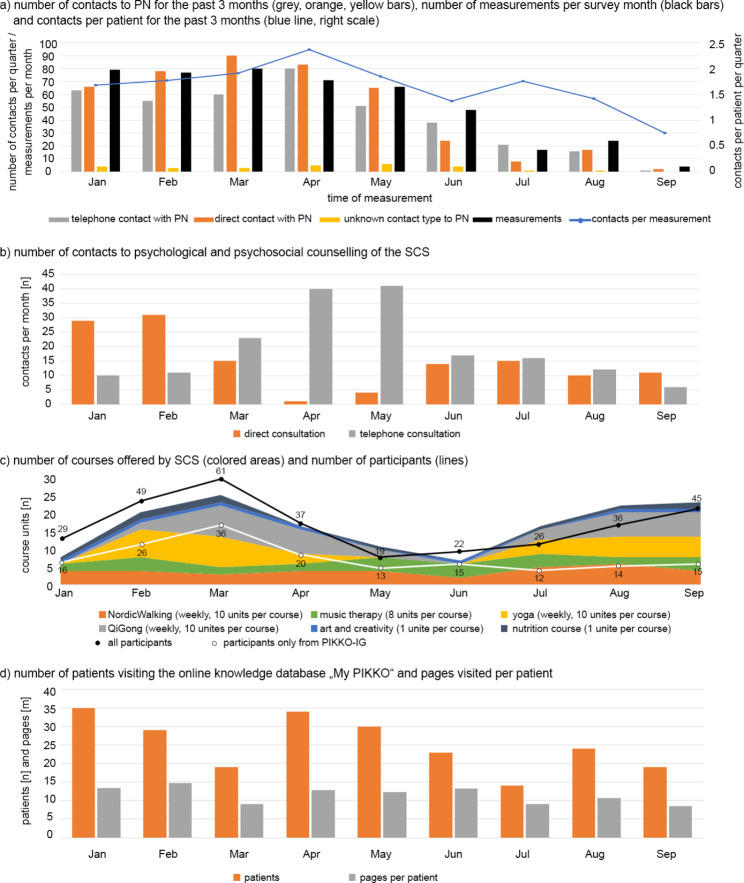
Results: 356 patients participated in this supplemental survey. 37.6% reported restrictions. "Restrictions on accompanying persons", "ban on visits to the wards" and "protective mouth-nose-mask" were reported as the greatest burdens. 39.0% expressed fears that the restrictions would have an impact on the course of their disease. Linear regression analyses showed differences in feelings of burden among age groups (more among < 60-year-olds), gender (more among women), children in the household (more with children), and preexisting financial stress (more with financial worries). In April 2020, there was more patient contact with PNs by phone, more SCS psycho-social counseling by phone, adapted SCS course offering, but with significantly fewer participants, and high activity on the ODB.
Conclusion: Cancer patients in the IG reported restrictions from the pandemic containment strategies and feared an impact on their recovery. However, whether a burden is perceived as heavy depends more on gender, age, or pre-existing burdens than on whether the lockdown affects PIKKO or not. The utilization of counseling, courses or the ODB despite lockdown shows the need for such services, especially in times of crisis.
Trial registration: This study was retrospectively registered in the German Clinical Trial Register under DRKS00016703 (21 Feb 2019, retrospectively registered). https://www.drks.de/drks_web/navigate.do?navigationId=trial.HTML&TRIAL_ID=DRKS00016703 .
Keywords: COVID-19; Cancer; Online knowledge database; Patient navigator; Psycho-social counseling.
© 2023. The Author(s).
Conflict of interest statement
The authors declare no competing interests.
Figures

References
-
- Schilling J, Tolksdorf K, Marquis A, Faber M, Pfoch T, Buda S, et al. Die verschiedenen Phasen der COVID-19-Pandemie in Deutschland: Eine deskriptive Analyse von Januar 2020 bis Februar 2021. Bundesgesundheitsbl Gesundheitsfor Gesundheitsschutz. 2021;64(9):1093–106. doi: 10.1007/s00103-021-03394-x. - DOI - PMC - PubMed
-
- Kolling S, Thul S. Allgemeinverfügung zum Vollzug des Infektionsschutzgesetztes (IfSG) vom 18.03.2020. Ministerium für Soziales, Gesundheit, Frauen und Familie des Saarlandes, Ministerium für Umwelt und Verbraucherschutz des Saarlandes. 2020.
-
- Hans T, Rehlinger A, Strobel P, Bouillon K, Bachmann M, Streichert-Clivot C et al. Verordnung zur Änderung infektionsrechtlicher Verordnungen zur Bekämpfung der Corona-Pandemie vom 2. Mai 2020. Amtsblatt des Saarlandes. 2020.
-
- Hans T, Rehlinger A, Strobel P, Bouillon K, Bachmann M, Streichert-Clivot C et al. Verordnung zur Änderung infektionsrechtlicher Verordnungen zur Bekämpfung der Corona-Pandemie von 15. Mai 2020. 2020.
Publication types
MeSH terms
Grants and funding
LinkOut - more resources
Full Text Sources
Medical
Miscellaneous
