


Objective and subjective cognition in survivors of COVID-19 one year after ICU discharge: the role of demographic, clinical, and emotional factors
- PMID: 37189173
- PMCID: PMC10184095
- DOI: 10.1186/s13054-023-04478-7
Objective and subjective cognition in survivors of COVID-19 one year after ICU discharge: the role of demographic, clinical, and emotional factors
Abstract
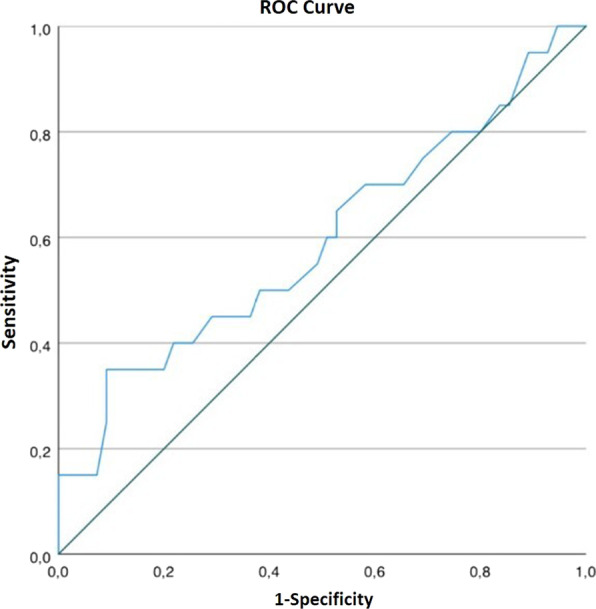
Background: Intensive Care Unit (ICU) COVID-19 survivors may present long-term cognitive and emotional difficulties after hospital discharge. This study aims to characterize the neuropsychological dysfunction of COVID-19 survivors 12 months after ICU discharge, and to study whether the use of a measure of perceived cognitive deficit allows the detection of objective cognitive impairment. We also explore the relationship between demographic, clinical and emotional factors, and both objective and subjective cognitive deficits.
Methods: Critically ill COVID-19 survivors from two medical ICUs underwent cognitive and emotional assessment one year after discharge. The perception of cognitive deficit and emotional state was screened through self-rated questionnaires (Perceived Deficits Questionnaire, Hospital Anxiety and Depression Scale and Davidson Trauma Scale), and a comprehensive neuropsychological evaluation was carried out. Demographic and clinical data from ICU admission were collected retrospectively.
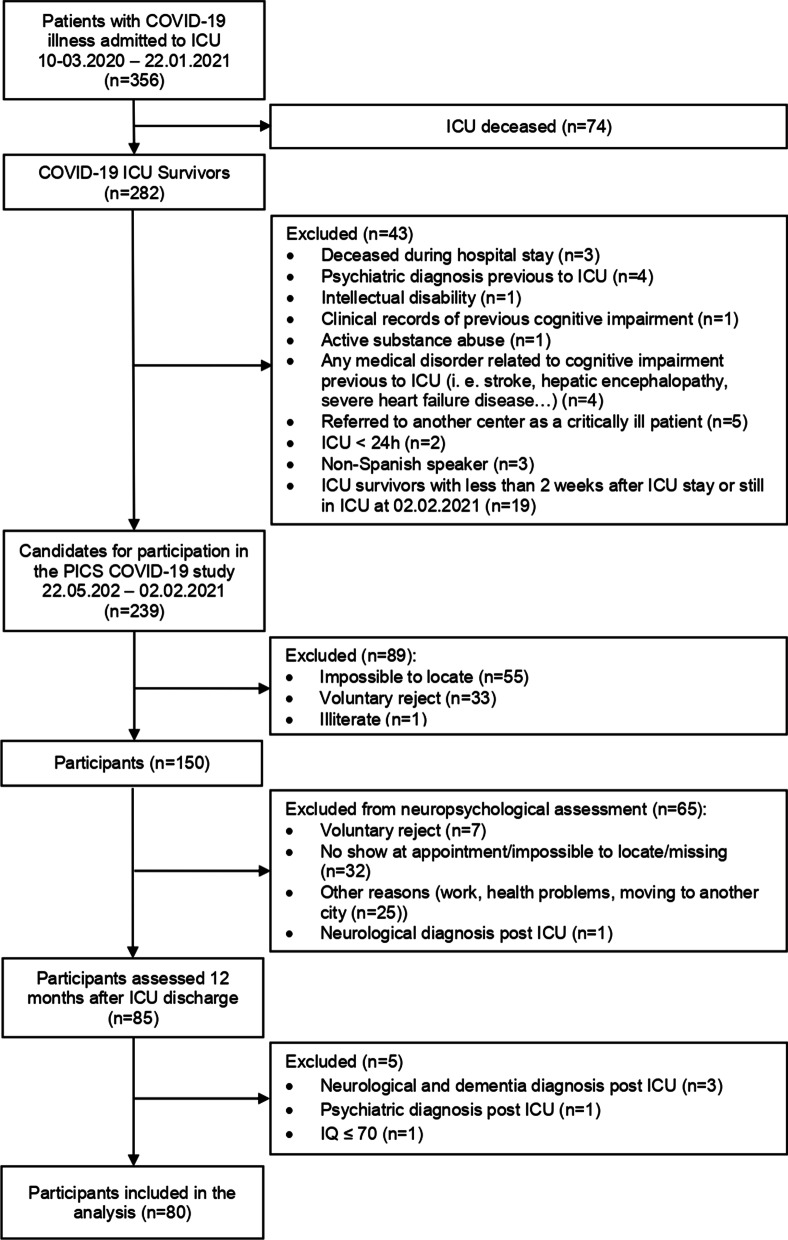
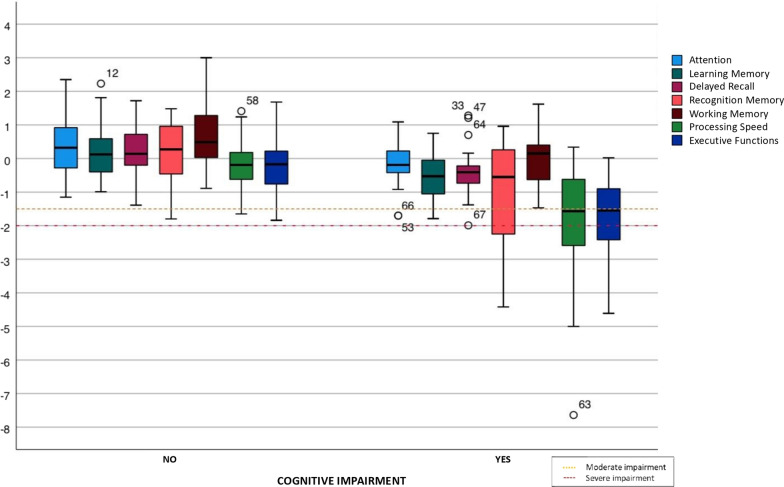
Results: Out of eighty participants included in the final analysis, 31.3% were women, 61.3% received mechanical ventilation and the median age of patients was 60.73 years. Objective cognitive impairment was observed in 30% of COVID-19 survivors. The worst performance was detected in executive functions, processing speed and recognition memory. Almost one in three patients manifested cognitive complaints, and 22.5%, 26.3% and 27.5% reported anxiety, depression and post-traumatic stress disorder (PTSD) symptoms, respectively. No significant differences were found in the perception of cognitive deficit between patients with and without objective cognitive impairment. Gender and PTSD symptomatology were significantly associated with perceived cognitive deficit, and cognitive reserve with objective cognitive impairment.
Conclusions: One-third of COVID-19 survivors suffered objective cognitive impairment with a frontal-subcortical dysfunction 12 months after ICU discharge. Emotional disturbances and perceived cognitive deficits were common. Female gender and PTSD symptoms emerged as predictive factors for perceiving worse cognitive performance. Cognitive reserve emerged as a protective factor for objective cognitive functioning.
Trial registration: ClinicalTrials.gov Identifier: NCT04422444; June 9, 2021.
Keywords: Cognition; Cognitive reserve; Intensive care; PICS; Post-traumatic stress.
© 2023. The Author(s).
Conflict of interest statement
All authors declare no competing interests.
Figures
References
-
- Mikkelsen ME, Still M, Anderson BJ, Bienvenu OJ, Brodsky MB, Brummel N, et al. Society of critical care medicine’s international consensus conference on prediction and identification of long-term impairments after critical illness. Crit Care Med. 2020;48(11):1670–9. doi: 10.1097/CCM.0000000000004586. - DOI - PubMed
Publication types
MeSH terms
Associated data
Grants and funding
LinkOut - more resources
Full Text Sources
Medical
