


Manipulating facial musculature with functional electrical stimulation as an intervention for major depressive disorder: a focused search of literature for a proposal
- PMID: 37193985
- PMCID: PMC10190013
- DOI: 10.1186/s12984-023-01187-8
Manipulating facial musculature with functional electrical stimulation as an intervention for major depressive disorder: a focused search of literature for a proposal
Abstract
Background: Major Depressive Disorder (MDD) is associated with interoceptive deficits expressed throughout the body, particularly the facial musculature. According to the facial feedback hypothesis, afferent feedback from the facial muscles suffices to alter the emotional experience. Thus, manipulating the facial muscles could provide a new "mind-body" intervention for MDD. This article provides a conceptual overview of functional electrical stimulation (FES), a novel neuromodulation-based treatment modality that can be potentially used in the treatment of disorders of disrupted brain connectivity, such as MDD.
Methods: A focused literature search was performed for clinical studies of FES as a modulatory treatment for mood symptoms. The literature is reviewed in a narrative format, integrating theories of emotion, facial expression, and MDD.
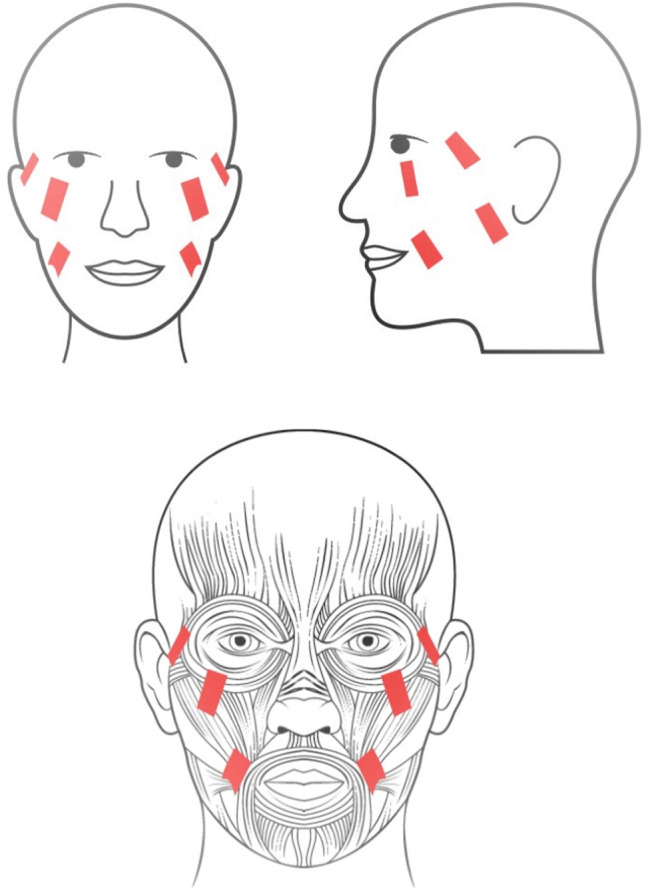
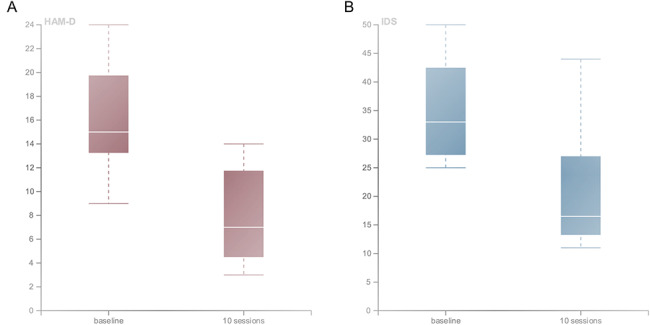
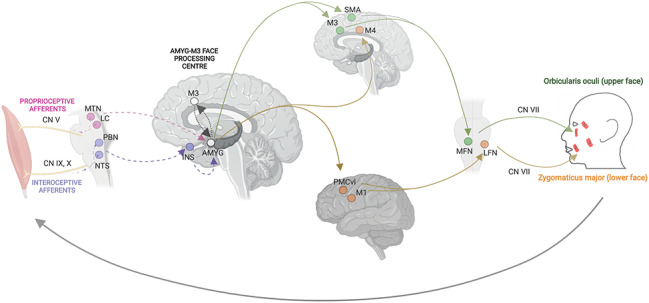
Results: A rich body of literature on FES supports the notion that peripheral muscle manipulation in patients with stroke or spinal cord injury may enhance central neuroplasticity, restoring lost sensorimotor function. These neuroplastic effects suggest that FES may be a promising innovative intervention for psychiatric disorders of disrupted brain connectivity, such as MDD. Recent pilot data on repetitive FES applied to the facial muscles in healthy participants and patients with MDD show early promise, suggesting that FES may attenuate the negative interoceptive bias associated with MDD by enhancing positive facial feedback. Neurobiologically, the amygdala and nodes of the emotion-to-motor transformation loop may serve as potential neural targets for facial FES in MDD, as they integrate proprioceptive and interoceptive inputs from muscles of facial expression and fine-tune their motor output in line with socio-emotional context.
Conclusions: Manipulating facial muscles may represent a mechanistically novel treatment strategy for MDD and other disorders of disrupted brain connectivity that is worthy of investigation in phase II/III trials.
Keywords: Amygdala; Depressive disorder; Facial expression; Facial muscles; Functional electrical stimulation; Interoception; Myofunctional therapy; Neurological rehabilitation; Neuromodulation; Neuroplasticity.
© 2023. The Author(s).
Conflict of interest statement
Ilya Demchenko, Naaz Desai, Stephanie N. Iwasa, Fatemeh Gholamali Nezhad, and Nicholas O. Rule declare no conflict of interest. José Zariffa is the patent inventor for functional electrical stimulation to modulate affect (US-9259576-B2; approved on February 16, 2016); the patent belongs to University Health Network; he has received research support from the Natural Sciences and Engineering Research Council of Canada, Craig H. Neilsen Foundation, Heart and Stroke Foundation of Canada, Wings for Life Spinal Cord Research Foundation, Ontario Ministry of Colleges and Universities, and Praxis Spinal Cord Institute. Sidney H. Kennedy has received honoraria or research funds from Abbott, Alkermes, Allergan, Boehringer Ingelheim, Brain Canada, Canadian Institutes of Health Research, Janssen, Lundbeck, Lundbeck Institute, Merck, Ontario Brain Institute, Ontario Research Fund, Otsuka, Pfizer, Servier, Sunovion, Sun Pharmaceuticals, Xian-Janssen, and holds stock in Field Trip Health. Jeffrey F. Cohn reports grants or contracts from National Institutes of Health and National Science Foundation, and royalties/licenses from the University of Pittsburgh. He receives consulting fees from RealEyes, Xtrodes, Skylyte, has a patent approved on image normalization for facial analysis (US11244206), holds a leadership or fiduciary role at IEEE International Conference on Automatic Face and Gesture Recognition and Association for Affective Computing Society, and holds stock in Deliberate AI and Embodied. Milos R. Popovic is the inventor of the patent for facial electrical stimulation to modulate affect belonging to University Health Network, is the Chief Technology Officer and the Director of Myndtec, Inc., a company that manufactures transcutaneous functional electrical stimulators. He is the Director of KITE, Toronto Rehabilitation Institute – University Health Network (Toronto, ON, Canada) and reports grants or contracts from Connaught Innovation Award, Brain Canada, Mitacs, Webster Foundation, Dean Strategic Funding at the University of Toronto, Natural Sciences and Engineering Research Council of Canada, and Canadian Fund for Innovation. He has a patent approved on February 16, 2016 (USA US-9259576-B2) with Dr. S. Hitzig and Dr. J. Zariffa “Functional electrical stimulation method, use and apparatus for mood alteration”; the patent belongs to University Health Network. He is consulting for a company Fourier Intelligence, which designs rehabilitation robotics technologies, and holds stock in MyndTec. Benoit H. Mulsant holds and receives support from the Labatt Family Chair in Biology of Depression in Late-Life Adults at the University of Toronto. He currently receives or has received for the past three years research support from Brain Canada, Canadian Institutes of Health Research, Center for Addiction and Mental Health Foundation, Patient-Centered Outcomes Research Institute, National Institute of Health, Capital Solution Design LLC (software used in a study funded by Center for Addiction and Mental Health Foundation), and HAPPYneuron (software used in a study funded by Brain Canada). He has also been an unpaid consultant to Myriad Neuroscience for the past three years. Venkat Bhat is supported by an Academic Scholar Award from the Department of Psychiatry at the University of Toronto; he has received research support from the Canadian Institutes of Health Research, Brain & Behavior Foundation, Ministry of Health/Ontario Medical Association Innovation Funds, New Frontiers in Research Fund, Department of National Defense (Government of Canada), and an investigator-initiated trial from Roche Canada.
Figures
References
Publication types
MeSH terms
LinkOut - more resources
Full Text Sources
Miscellaneous
