Randomized Controlled Trial
. 2023 Aug;70(8):e30418.
doi: 10.1002/pbc.30418. Epub 2023 May 18.

Impact of diagnostic and end-of-induction Curie scores with tandem high-dose chemotherapy and autologous transplants for metastatic high-risk neuroblastoma: A report from the Children's Oncology Group

Affiliations
Randomized Controlled Trial

Impact of diagnostic and end-of-induction Curie scores with tandem high-dose chemotherapy and autologous transplants for metastatic high-risk neuroblastoma: A report from the Children's Oncology Group

Keri A Streby et al. Pediatr Blood Cancer. 2023 Aug.

Abstract

Background: Diagnostic mIBG (meta-iodobenzylguanidine) scans are an integral component of response assessment in children with high-risk neuroblastoma. The role of end-of-induction (EOI) Curie scores (CS) was previously described in patients undergoing a single course of high-dose chemotherapy (HDC) and autologous hematopoietic cell transplant (AHCT) as consolidation therapy.

Objective: We now examine the prognostic significance of CS in patients randomized to tandem HDC and AHCT on the Children's Oncology Group (COG) trial ANBL0532.

Study design: A retrospective analysis of mIBG scans obtained from patients enrolled in COG ANBL0532 was performed. Evaluable patients had mIBG-avid, International Neuroblastoma Staging System (INSS) stage 4 disease, did not progress during induction therapy, consented to consolidation randomization, and received either single or tandem HDC (n = 80). Optimal CS cut points maximized the outcome difference (≤CS vs. >CS cut-off) according to the Youden index.

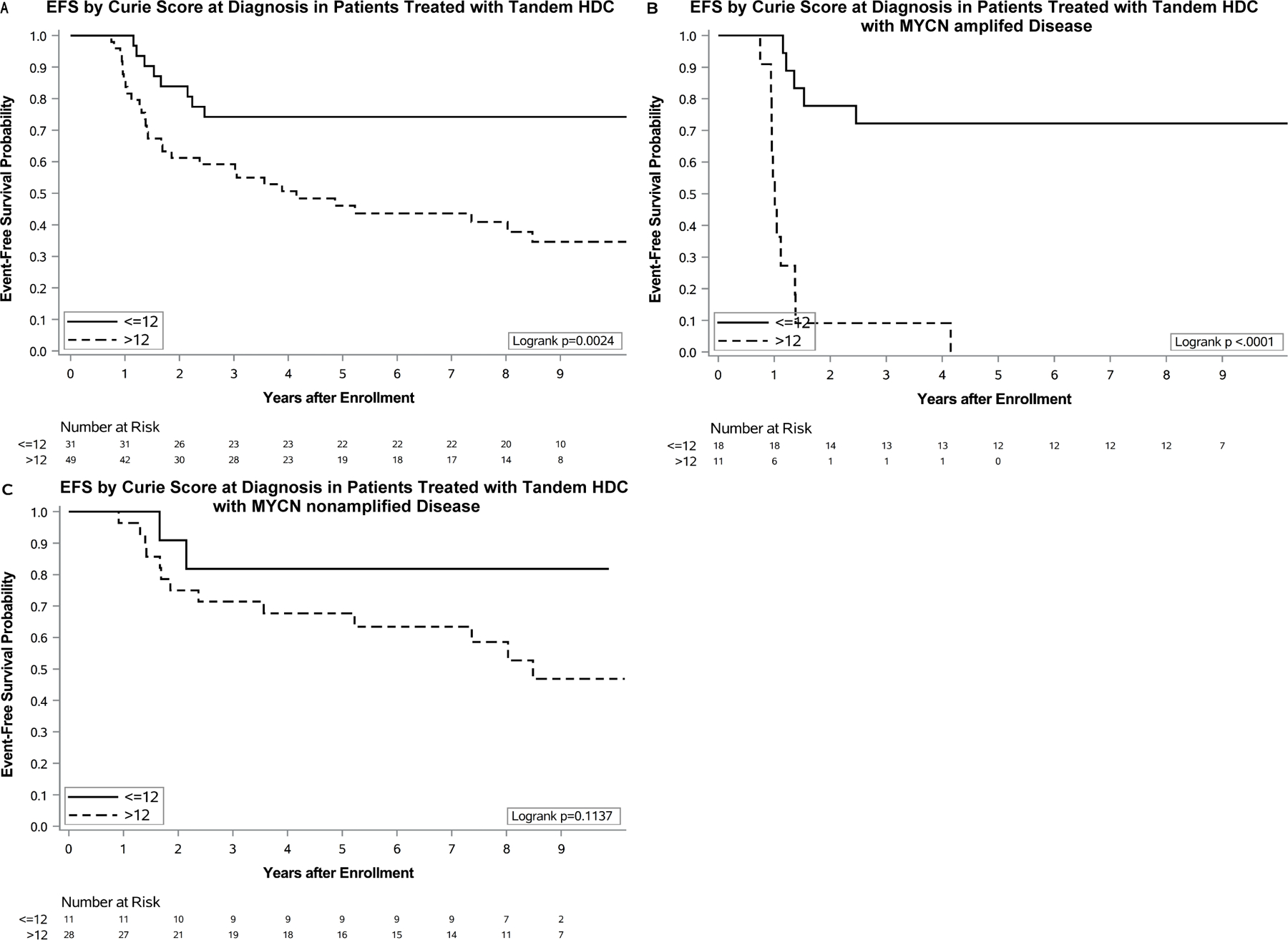
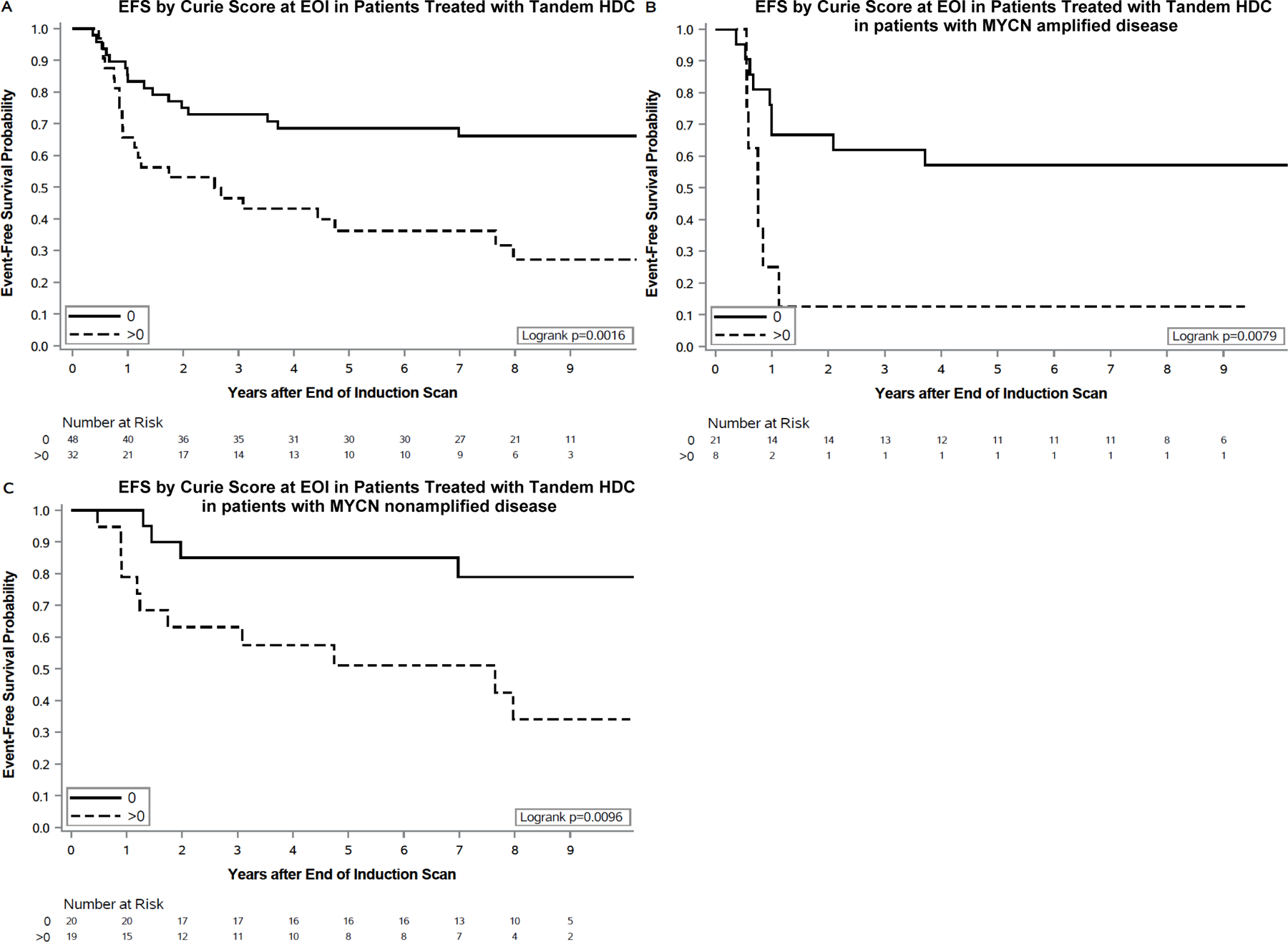
Results: For recipients of tandem HDC, the optimal cut point at diagnosis was CS = 12, with superior event-free survival (EFS) from study enrollment for patients with CS ≤ 12 (3-year EFS 74.2% ± 7.9%) versus CS > 12 (59.2% ± 7.1%) (p = .002). At EOI, the optimal cut point was CS = 0, with superior EOI EFS for patients with CS = 0 (72.9% ± 6.4%) versus CS > 0 (46.5% ± 9.1%) (p = .002).

Conclusion: In the setting of tandem transplantation for children with high-risk neuroblastoma, CS at diagnosis and EOI may identify a more favorable patient group. Patients treated with tandem HDC who exhibited a CS ≤ 12 at diagnosis or CS = 0 at EOI had superior EFS compared to those with CS above these cut points.

Keywords: Curie score; mIBG; neuroblastoma; tandem.


Conflict of interest statement

Conflicts of interest: Keri A. Streby is a consultant for Innervate Radiopharmaceuticals LLC and YmAbs Therapeutics Inc. and Kate Matthay is a consultant for Innervate Radiopharmaceuticals LLC.

Figures

FIGURE 1.
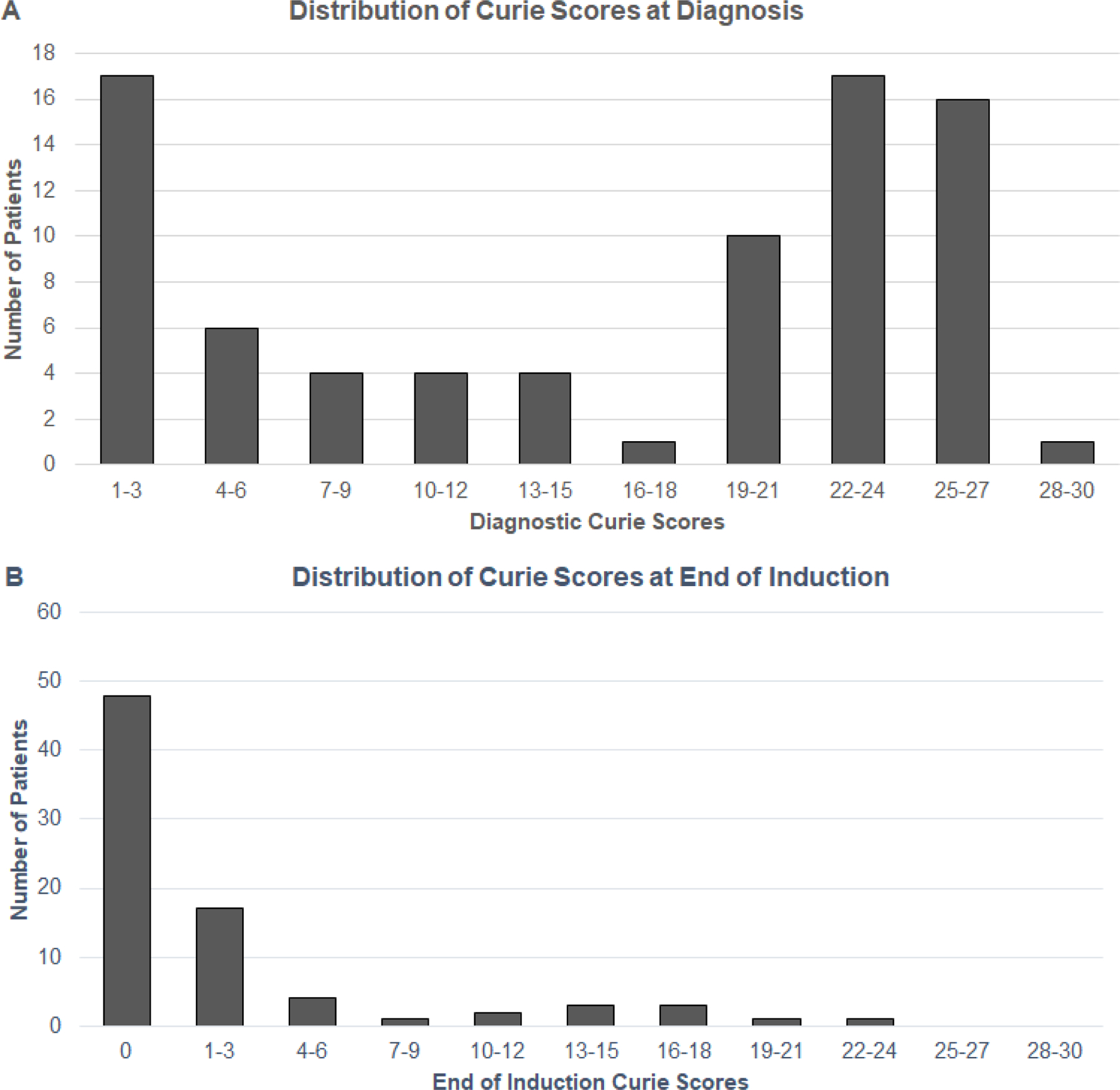
FIGURE 1.. Distribution of Curie Scores at (A) diagnosis, and (B) end of induction for patients treated with tandem high-dose chemotherapy.
FIGURE 2.
FIGURE 2.. Event-free survival by Curie score at diagnosis in patients treated with tandem HDC. EFS by diagnostic CS using: A) Optimal cut point of 12 in all patients. (B) Optimal cut point of 12 in patients with MYCN-amplified neuroblastoma. (C) Optimal cut point of 12 in patients with MYCN-NA neuroblastoma.
EFS= event-free survival, CS= Curie score, HDC= high-dose chemotherapy
FIGURE 3.
FIGURE 3.. Event-free survival by Curie score at end of induction in patients treated with tandem HDC. EFS by EOI CS using: (A) Optimal cut point of 0 in all patients. (B) Optimal cut point of 0 in patients with MYCN-amplified neuroblastoma. (C) Optimal cut point of 0 in patients with MYCN-NA neuroblastoma.
EFS= event-free survival, CS= Curie score, HDC= high-dose chemotherapy, EOI= end of induction

References

    1. Yu AL, Gilman AL, Ozkaynak MF, et al. Anti-GD2 antibody with GM-CSF, interleukin-2, and isotretinoin for neuroblastoma. N Engl J Med Sep 2010;363(14):1324–34. doi:10.1056/NEJMoa0911123 - DOI - PMC - PubMed
    1. Yu AL, Gilman AL, Ozkaynak MF, et al. Long-Term Follow-up of a Phase III Study of ch14.18 (Dinutuximab) + Cytokine Immunotherapy in Children with High-Risk Neuroblastoma: COG Study ANBL0032. Clin Cancer Res Apr 15 2021;27(8):2179–2189. doi:10.1158/1078-0432.CCR-20-3909 - DOI - PMC - PubMed
    1. Park JR, Kreissman SG, London WB, et al. Effect of Tandem Autologous Stem Cell Transplant vs Single Transplant on Event-Free Survival in Patients With High-Risk Neuroblastoma: A Randomized Clinical Trial. JAMA August 27 2019;322(8):746–755. doi:10.1001/jama.2019.11642 - DOI - PMC - PubMed
    1. Kreissman SG, Seeger RC, Matthay KK, et al. Purged versus non-purged peripheral blood stem-cell transplantation for high-risk neuroblastoma (COG A3973): a randomised phase 3 trial. Lancet Oncol Sep 2013;14(10):999–1008. doi:10.1016/S1470-2045(13)70309-7 - DOI - PMC - PubMed
    1. Seif AE, Naranjo A, Baker DL, et al. A pilot study of tandem high-dose chemotherapy with stem cell rescue as consolidation for high-risk neuroblastoma: Children’s Oncology Group study ANBL00P1. Bone Marrow Transplant Jul 2013;48(7):947–52. doi:10.1038/bmt.2012.276 - DOI - PMC - PubMed

Publication types

MeSH terms

Substances