Cost-Related Medication Nonadherence and Desire for Medication Cost Information Among Adults Aged 65 Years and Older in the US in 2022
- PMID: 37200029
- PMCID: PMC10196872
- DOI: 10.1001/jamanetworkopen.2023.14211
Cost-Related Medication Nonadherence and Desire for Medication Cost Information Among Adults Aged 65 Years and Older in the US in 2022
Abstract
Importance: Rising prescription drug costs and increasing prices for consumer goods may increase cost-related medication nonadherence. Cost-conscious prescribing can be supported by real-time benefit tools, but patient views on real-time benefit tool use and their potential benefits and harms are largely unexplored.
Objective: To assess older adults' cost-related medication nonadherence, cost-coping strategies, and views on the use of real-time benefit tools in clinical practice.
Design, setting, and participants: A weighted, nationally representative survey of adults aged 65 years and older administered via the internet and telephone from June 2022 to September 2022.
Main outcomes and measures: Cost-related medication nonadherence; cost coping strategies; desire for cost conversations; potential benefits and harms from real-time benefit tool use.
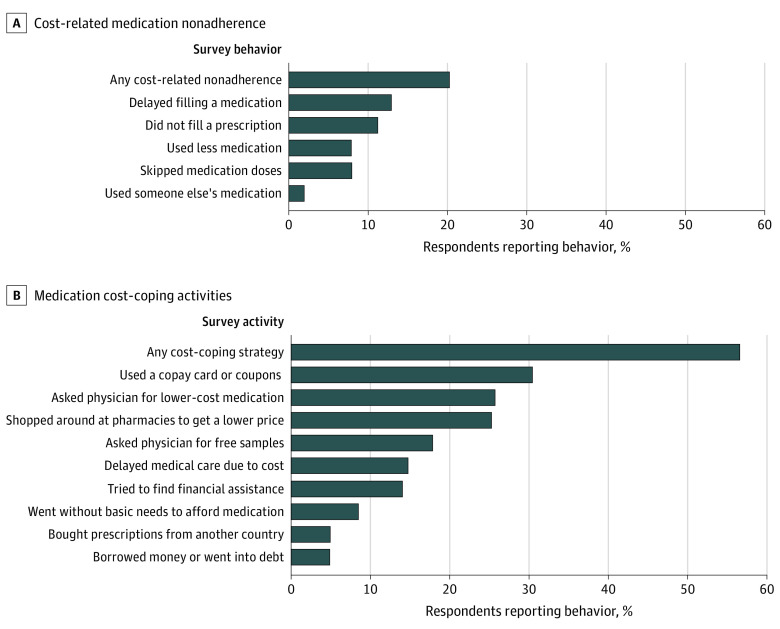
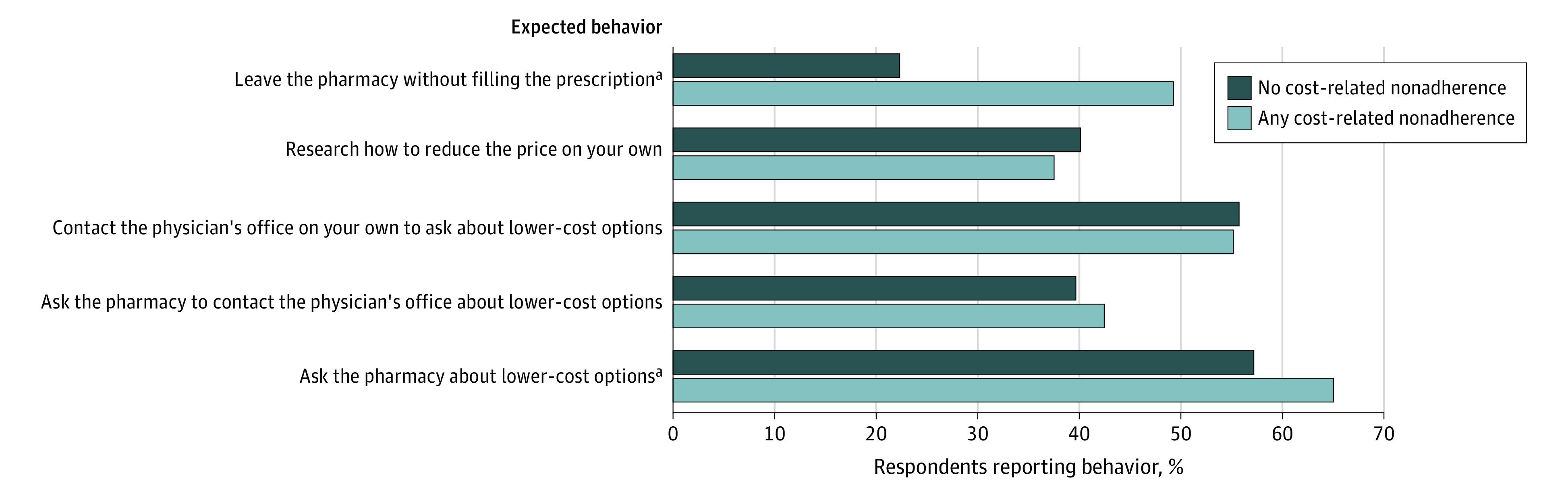
Results: Among 2005 respondents, most were female (54.7%) and partnered (59.7%); 40.4% were 75 years or older. Cost-related medication nonadherence was reported by 20.2% of participants. Some respondents used extreme forms of cost-coping, including foregoing basic needs (8.5%) or going into debt (4.8%) to afford medications. Of respondents, 89.0% reported being comfortable or neutral about being screened before a physician's visit for wanting to have medication cost conversations and 89.5% indicated a desire for their physician to use a real-time benefit tool. Respondents expressed concern if prices were inaccurate, with 49.9% of those with cost-related nonadherence and 39.3% of those without reporting they would be extremely upset if their actual medication price was more than what their physician estimated with a real-time benefit tool. If the actual price was much more than the estimated real-time benefit tool price, nearly 80% of respondents with cost-related nonadherence reported that it would affect their decision to start or keep taking a medication. Furthermore, 54.2% of those with any cost-related nonadherence and 30% of those without reported they would be moderately or extremely upset if their physicians used a medication price tool but chose not to discuss prices with them.
Conclusions and relevance: In 2022, approximately 1 in 5 older adults reported cost-related nonadherence. Real-time benefit tools may support medication cost conversations and cost-conscious prescribing, and patients are enthusiastic about their use. However, if disclosed prices are inaccurate, there is potential for harm through loss of confidence in the physician and nonadherence to prescribed medications.
Conflict of interest statement
Figures
References
-
- Hamel L, Lopes L, Kirzinger A, et al. Public opinion on prescription drugs and their prices. KFF . 2022. Accessed November 29, 2022. https://www.kff.org/health-costs/poll-finding/public-opinion-on-prescrip...