. 2023 May 18;19(5):e1010760.
doi: 10.1371/journal.pgen.1010760. eCollection 2023 May.

Functional screening of lysosomal storage disorder genes identifies modifiers of alpha-synuclein neurotoxicity

Affiliations

Functional screening of lysosomal storage disorder genes identifies modifiers of alpha-synuclein neurotoxicity

Meigen Yu et al. PLoS Genet. .

Abstract

Heterozygous variants in the glucocerebrosidase (GBA) gene are common and potent risk factors for Parkinson's disease (PD). GBA also causes the autosomal recessive lysosomal storage disorder (LSD), Gaucher disease, and emerging evidence from human genetics implicates many other LSD genes in PD susceptibility. We have systemically tested 86 conserved fly homologs of 37 human LSD genes for requirements in the aging adult Drosophila brain and for potential genetic interactions with neurodegeneration caused by α-synuclein (αSyn), which forms Lewy body pathology in PD. Our screen identifies 15 genetic enhancers of αSyn-induced progressive locomotor dysfunction, including knockdown of fly homologs of GBA and other LSD genes with independent support as PD susceptibility factors from human genetics (SCARB2, SMPD1, CTSD, GNPTAB, SLC17A5). For several genes, results from multiple alleles suggest dose-sensitivity and context-dependent pleiotropy in the presence or absence of αSyn. Homologs of two genes causing cholesterol storage disorders, Npc1a / NPC1 and Lip4 / LIPA, were independently confirmed as loss-of-function enhancers of αSyn-induced retinal degeneration. The enzymes encoded by several modifier genes are upregulated in αSyn transgenic flies, based on unbiased proteomics, revealing a possible, albeit ineffective, compensatory response. Overall, our results reinforce the important role of lysosomal genes in brain health and PD pathogenesis, and implicate several metabolic pathways, including cholesterol homeostasis, in αSyn-mediated neurotoxicity.


Conflict of interest statement

The authors have declared that no competing interests exist.

Figures

Fig 1
Fig 1. Study flowchart.
Out of 53 human LSD genes, 86 are conserved in Drosophila and have available lines for genetic screening. 259 genetic fly strains, including RNAi and insertional or classical alleles, were tested for interaction with the locomotor phenotype induced by pan-neuronal α-synuclein (αSyn) expression. Screening revealed 15 fly genes for which gene loss significantly enhances the αSyn phenotype. Based on further tests of all modifying strains in the absence of αSyn, genes were further classified as synergistic or additive. Synergistic genes were defined as having at least one modifying allele in which there was no significant evidence of locomotor impairment in the absence of αSyn.
Fig 2
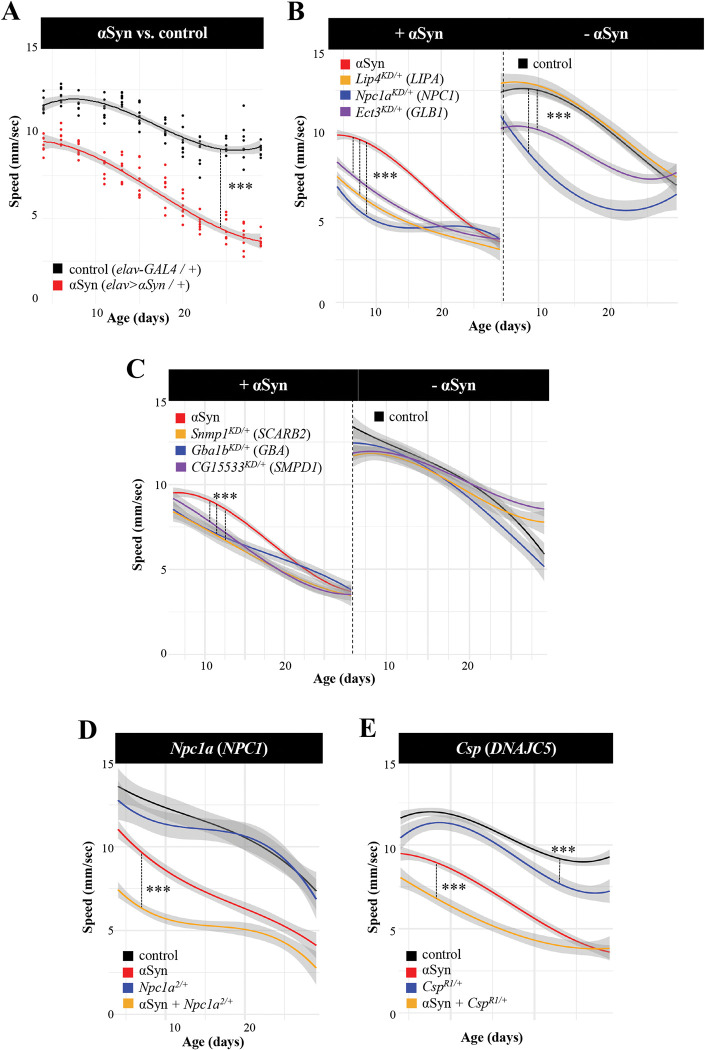
Fig 2. Lysosomal storage disorder (LSD) gene homologs show dose-sensitivity and context-dependent pleiotropy in Drosophila.
(A) Pan-neuronal expression of human α-synuclein (elav > αSyn) induces progressive locomotor impairment. (B) Pan-neuronal knockdown (KD) of LSD gene homologs with RNA-interference (RNAi) enhances the αSyn locomotor phenotype. RNAi transgenes were tested in heterozygosity. In the absence of αSyn, KD (elav > RNAi) causes no (LIPA/Lip4: v31021), moderate (GLB1/Ect3: 3132R1), or severe (NPC1/Npc1a: v105405) toxicity. (C) Additional synergistic gene modifiers enhance αSyn following KD, but do not cause significant locomotor impairment in the absence of αSyn (SCARB2/Snmp1: v42496; GBA/Gba1b: v21336; and SMPD1/CG15533: v42520). (D and E) Heterozygous loss-of-function alleles of Npc1a (D) and Csp (E) dominantly enhance αSyn. Climbing speed was assessed longitudinally including at least 11 aged time points over 30 days (n > 6 replicates of 15 animals each). Statistical comparisons based on one-way ANOVA considering three nested models (genotype, genotype + time, and genotype*time) and reporting results for the most complex model meeting significance. ***, p<5x10⁻⁵. See also S1 Fig for comprehensive results from validation tests of all other genes/alleles, and S5 Table for detailed statistical output.
Fig 3
Fig 3. Lysosomal storage disorder (LSD) gene modifiers of α-synuclein (αSyn).
Human LSD genes and Drosophila homologs identified as modifiers are indicated. Human genes with additional supportive evidence as PD risk loci from human genetics are noted with an asterisk (*). Based on further tests to establish αSyn-dependent or independent activity, genes were further classified as synergistic (S) or additive (A). Synergistic genes were defined as having at least one modifying allele in which there was no significant evidence of locomotor impairment in the absence of αSyn. Additive genes were characterized by alleles that consistently produced locomotor phenotypes in the absence of αSyn. All modifier genes had at least one allele establishing αSyn-independent functional requirements in the fly nervous system.
Fig 4
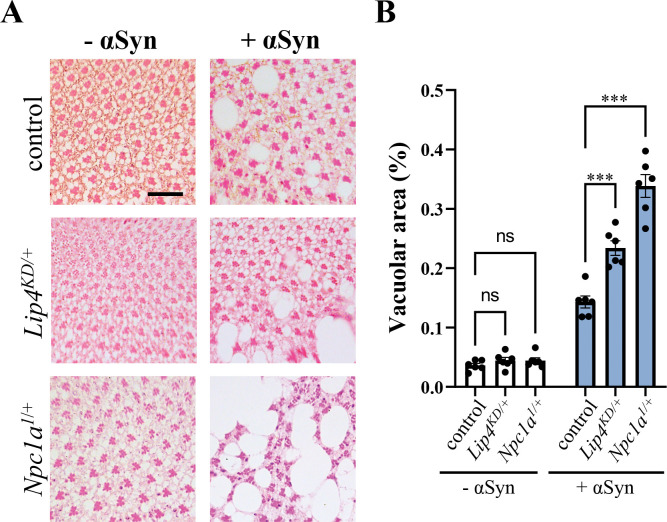
Fig 4. Cholesterol storage disorder gene homologs enhance α-synuclein (αSyn) induced retinal degeneration.
(A) Expression of αSyn in the adult retina (Rh1>αSyn) causes progressive neurodegeneration compared with controls (Rh1-GAL4 / +). Knockdown (KD) of Lip4 (Rh1>v31021 / +) or heterozygosity for a Npc1a loss-of-function allele enhances αSyn-mediated tissue destruction. Tangential retinal sections from 15 day-old animals were stained with hematoxylin and eosin. (B) Quantification based on extent of vacuolar changes (vacuole area / total area) from at least n = 6 animals per genotype. Statistical comparisons were made using unpaired t-tests, followed by Dunnett’s post-hoc test. Error bars represent the standard error of the mean. ***, p<0.001; ns, not significant. Scale bar = 20μm. See also S8 Fig for results using additional RNAi and alleles.
Fig 5
Fig 5. Differential expression of lysosomal storage disorder (LSD) protein homologs in flies.
Comparisons of protein abundance (normalized) from fly heads are shown for elav>αSyn (Gray) or control (White, elav-GAL4 / +), based on Tandem Mass Tag proteomics. t-tests were performed for comparisons of mean abundance considering n = 8 replicate samples for each genotype. Error bars represent the standard error of the mean. *, p<0.05; **, p<0.01; ***, p<0.001. All proteins shown were also significantly differentially expressed based on analyses in DESeq2 (Wald test) and following adjustment using the Benjamini-Hochberg procedure (padj < 0.05). See also S4 Table and S9 Fig for replication analysis using an independent longitudinal Drosophila proteomics dataset.

References

    1. Ye H, Robak LA, Yu M, Cykowski M, Shulman JM. Genetics and Pathogenesis of Parkinson’s Syndrome. Annu Rev Pathol. 2022. Jan 24;18(1). doi: 10.1146/annurev-pathmechdis-031521-034145 - DOI - PMC - PubMed
    1. Sidransky E, Nalls MA, Aasly JO, Aharon-Peretz J, Annesi G, Barbosa ER, et al.. Multicenter Analysis of Glucocerebrosidase Mutations in Parkinson’s Disease. New England Journal of Medicine. 2009. Oct 22;361(17): 1651–61. doi: 10.1056/NEJMoa0901281 - DOI - PMC - PubMed
    1. Pastores GM, Hughes DA. Gaucher Disease. 2018. Jun 21; Available from: http://europepmc.org/books/NBK1269
    1. Hein LK, Meikle PJ, Hopwood JJ, Fuller M. Secondary sphingolipid accumulation in a macrophage model of Gaucher disease. Mol Genet Metab. 2007. Dec 1;92(4): 336–45. doi: 10.1016/j.ymgme.2007.08.001 - DOI - PubMed
    1. Surface M, Balwani M, Waters C, Haimovich A, Gan-Or Z, Marder KS, et al.. Plasma Glucosylsphingosine in GBA1 Mutation Carriers with and without Parkinson’s Disease. Mov Disord. 2022. Feb 1; 37(2): 416–21. doi: 10.1002/mds.28846 - DOI - PMC - PubMed

Publication types

Substances