


PCSK9 inhibitors for acute coronary syndrome: the era of early implementation
- PMID: 37200976
- PMCID: PMC10185746
- DOI: 10.3389/fcvm.2023.1138787
PCSK9 inhibitors for acute coronary syndrome: the era of early implementation
Abstract
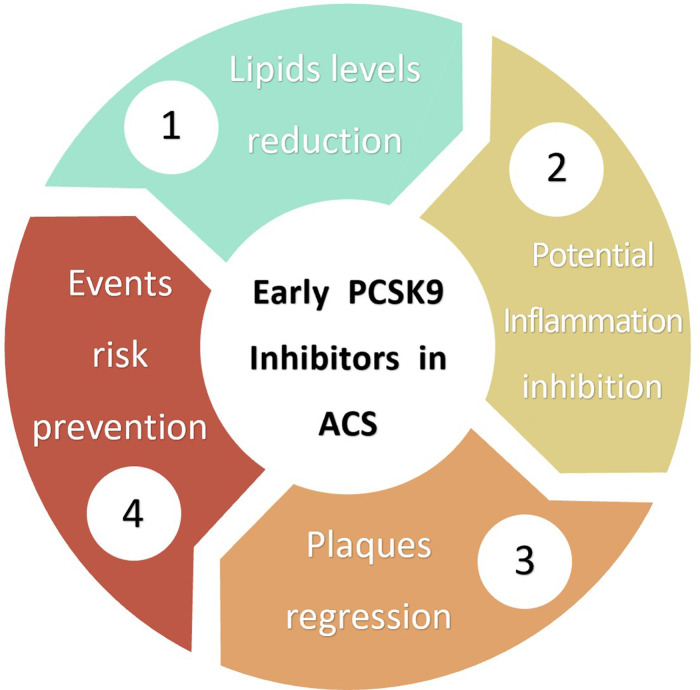
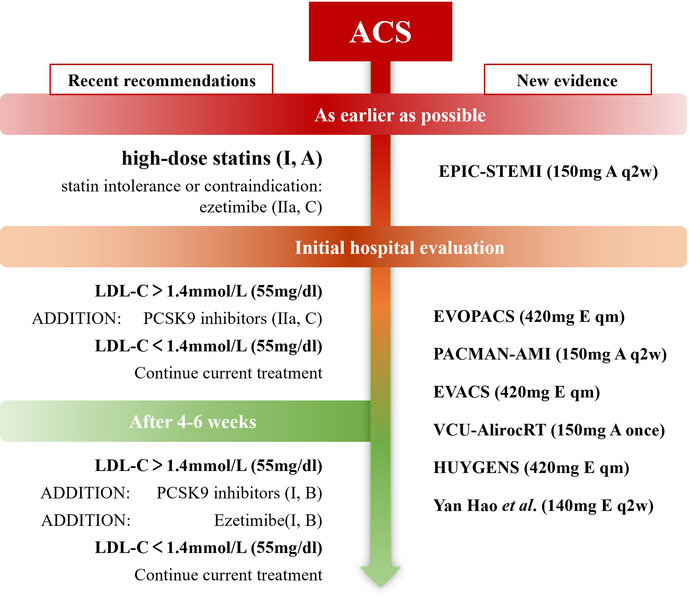
Proprotein convertase subtilisin/kexin type 9 (PCSK9) inhibitors, a new cholesterol-lowering strategy, can decrease low-density lipoprotein cholesterol (LDL-C) levels by inhibiting PCSK9 and reducing the degradation of LDL receptors; thus, they are impacting the management of dyslipidemia to the prevention of cardiovascular events. Recent guidelines recommend PCSK9 inhibitors for patients who fail to achieve target lipids after ezetimibe/statin therapy. As PCSK9 inhibitors have been demonstrated to significantly and safely reduce LDL-C, discussions have begun to explore its optimal timing in coronary artery disease, especially in subjects with acute coronary syndrome (ACS). Also, their additional benefits, such as anti-inflammatory effects, plaque regression effects, and cardiovascular event prevention, have become the focus of recent research. Several studies, including EPIC-STEMI, suggest the lipid-lowering effects of early PCSK9 inhibitors in ACS patients, while some studies such as PACMAN-AMI suggest that early PCSK9 inhibitors can decelerate plaque progression and reduce short-term risks of cardiovascular events. Thus, PCSK9 inhibitors are entering the era of early implementation. In this review, we are committed to summarizing the multidimensional benefits of early implementation of PCSK9 inhibitors in ACS.
Keywords: PCSK9 inhibitors; acute coronary syndrome; coronary heart disease; early implementation; low-density lipoprotein cholesterol.
© 2023 Chen and Chen.
Conflict of interest statement
The authors declare that the research was conducted in the absence of any commercial or financial relationships that could be construed as a potential conflict of interest.
Figures
References
-
- Ference BA, Ginsberg HN, Graham I, Ray KK, Packard CJ, Bruckert E, et al. Low-density lipoproteins cause atherosclerotic cardiovascular disease. 1. Evidence from genetic, epidemiologic, and clinical studies. A consensus statement from the European atherosclerosis society consensus panel. Eur Heart J. (2017) 38(32):2459–72. 10.1093/eurheartj/ehx144 - DOI - PMC - PubMed
Publication types
LinkOut - more resources
Full Text Sources
Research Materials
Miscellaneous
