


Progress and prospects on vaccine development against monkeypox infection
- PMID: 37201635
- PMCID: PMC10186953
- DOI: 10.1016/j.micpath.2023.106156
Progress and prospects on vaccine development against monkeypox infection
Abstract
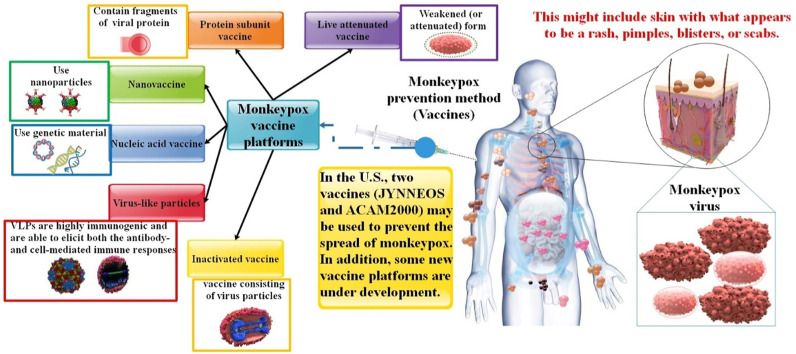
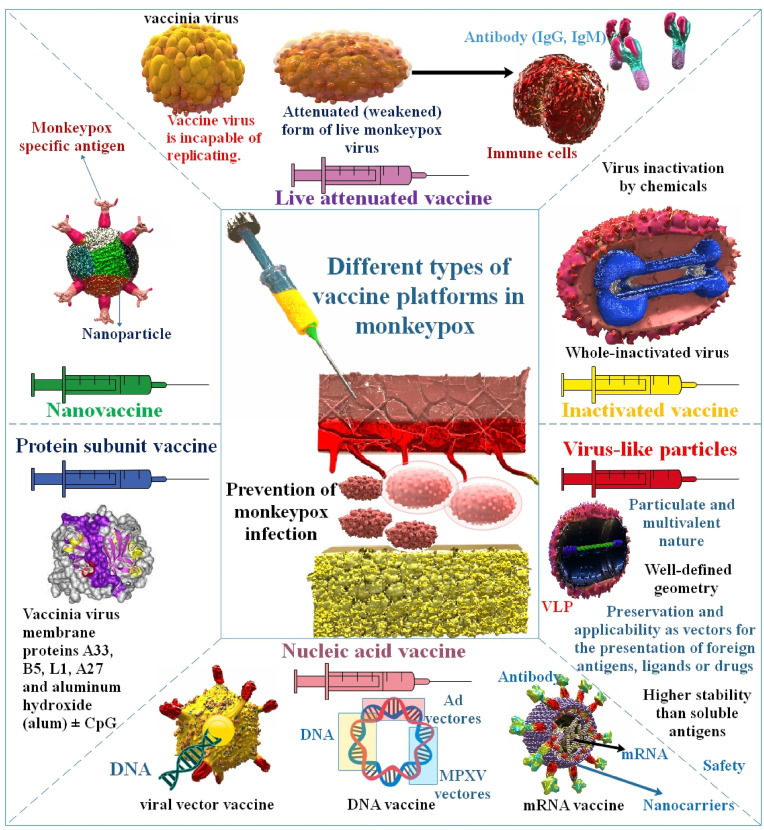
The monkeypox virus (MPOX) is an uncommon zoonotic illness brought on by an orthopoxvirus (OPXV). MPOX can occur with symptoms similar to smallpox. Since April 25, 2023, 110 nations have reported 87,113 confirmed cases and 111 fatalities. Moreover, the outspread prevalence of MPOX in Africa and a current outbreak of MPOX in the U.S. have made it clear that naturally occurring zoonotic OPXV infections remain a public health concern. Existing vaccines, though they provide cross-protection to MPOX, are not specific for the causative virus, and their effectiveness in the light of the current multi-country outbreak is still to be verified. Furthermore, as a sequel of the eradication and cessation of smallpox vaccination for four decades, MPOX found a possibility to re-emerge, but with distinct characteristics. The World Health Organization (WHO) suggested that nations use affordable MPOX vaccines within a framework of coordinated clinical effectiveness and safety evaluations. Vaccines administered in the smallpox control program and conferred immunity against MPOX. Currently, vaccines approved by WHO for use against MPOX are replicating (ACAM2000), low replicating (LC16m8), and non-replicating (MVA-BN). Although vaccines are accessible, investigations have demonstrated that smallpox vaccination is approximately 85% efficient in inhibiting MPOX. In addition, developing new vaccine methods against MPOX can help prevent this infection. To recognize the most efficient vaccine, it is essential to assess effects, including reactogenicity, safety, cytotoxicity effect, and vaccine-associated side effects, especially for high-risk and vulnerable people. Recently, several orthopoxvirus vaccines have been produced and are being evaluated. Hence, this review aims to provide an overview of the efforts dedicated to several types of vaccine candidates with different strategies for MPOX, including inactivated, live-attenuated, virus-like particles (VLPs), recombinant protein, nucleic acid, and nanoparticle-based vaccines, which are being developed and launched.
Keywords: Immunity; Monkeypox; Nanovaccine; Nucleic acid vaccine; Vaccine.
Copyright © 2023 Elsevier Ltd. All rights reserved.
Conflict of interest statement
Declaration of competing interest The authors declared no conflicts of interest regarding the research, authorship, and publication of this article.
Figures
References
-
- Wang J., et al. An overview of antivirals against monkeypox virus and other orthopoxviruses. J. Med. Chem. 2023 - PubMed
Publication types
MeSH terms
LinkOut - more resources
Full Text Sources
Medical
Miscellaneous
