


Clinical profile of trazodone users in a multisetting older population: data from the Italian GeroCovid Observational study
- PMID: 37204681
- PMCID: PMC10197031
- DOI: 10.1007/s41999-023-00790-1
Clinical profile of trazodone users in a multisetting older population: data from the Italian GeroCovid Observational study
Abstract
Background and objectives: Depression is highly prevalent in older adults, especially in those with dementia. Trazodone, an antidepressant, has shown to be effective in older patients with moderate anxiolytic and hypnotic activity; and a common off-label use is rising for managing behavioral and psychological symptoms of dementia (BPSD). The aim of the study is to comparatively assess the clinical profiles of older patients treated with trazodone or other antidepressants.
Methods: This cross-sectional study involved adults aged ≥ 60 years at risk of or affected with COVID-19 enrolled in the GeroCovid Observational study from acute wards, geriatric and dementia-specific outpatient clinics, as well as long-term care facilities (LTCF). Participants were grouped according to the use of trazodone, other antidepressants, or no antidepressant use.
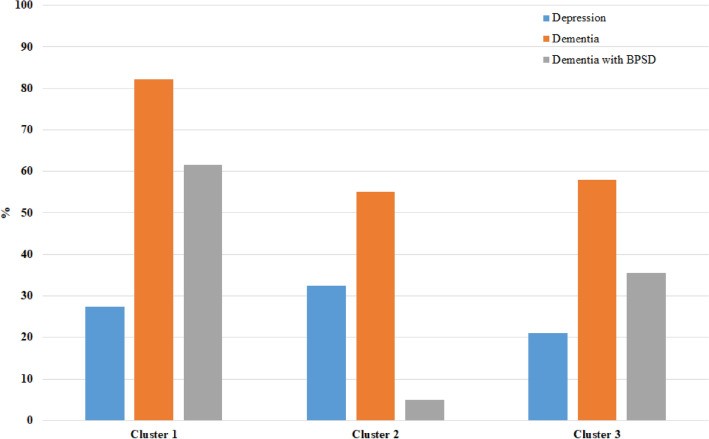
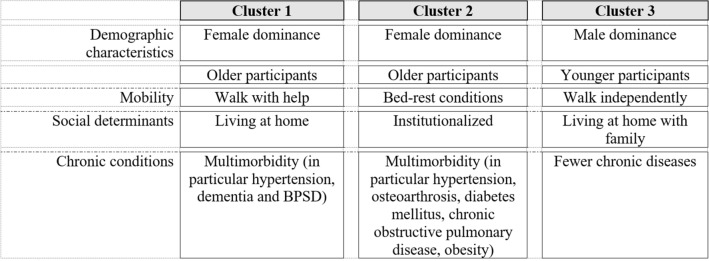
Results: Of the 3396 study participants (mean age 80.6 ± 9.1 years; 57.1% females), 10.8% used trazodone and 8.5% others antidepressants. Individuals treated with trazodone were older, more functionally dependent, and had a higher prevalence of dementia and BPSD than those using other antidepressants or no antidepressant use. Logistic regression analyses found that the presence of BPSD was associated with trazodone use (odds ratio (OR) 28.4, 95% confidence interval (CI) 18-44.7 for the outcome trazodone vs no antidepressants use, among participants without depression; OR 2.17, 95% CI 1.05-4.49 for the outcome trazodone vs no antidepressants use, among participants with depression). A cluster analysis of trazodone use identified three clusters: cluster 1 included mainly women, living at home with assistance, multimorbidity, dementia, BPSD, and depression; cluster 2 included mainly institutionalized women, with disabilities, depression, and dementia; cluster 3 included mostly men, often living at home unassisted, with better mobility performance, fewer chronic diseases, dementia, BPSD, and depression.
Discussion: The use of trazodone was highly prevalent in functionally dependent and comorbid older adults admitted to LTCF or living at home. Clinical conditions associated with its prescription included depression as well as BPSD.
Keywords: BPSD, Profile, Clinical characteristics; Dementia; Depression; Trazodone.
© 2023. The Author(s), under exclusive licence to European Geriatric Medicine Society.
Conflict of interest statement
The authors declare that the research was conducted in the absence of any commercial or financial relationships that could be construed as a potential conflict of interest.
Figures
References
Publication types
MeSH terms
Substances
LinkOut - more resources
Full Text Sources
Medical
