


The dose-response association between LEAP 1000 and birthweight - no clear mechanisms: a structural equation modeling approach
- PMID: 37208642
- PMCID: PMC10197393
- DOI: 10.1186/s12884-023-05707-1
The dose-response association between LEAP 1000 and birthweight - no clear mechanisms: a structural equation modeling approach
Abstract
Background: Birthweight is an important indicator of maternal and fetal health globally. The multifactorial origins of birthweight suggest holistic programs that target biological and social risk factors have great potential to improve birthweight. In this study, we examine the dose-response association of exposure to an unconditional cash transfer program before delivery with birthweight and explore the potential mediators of the association.
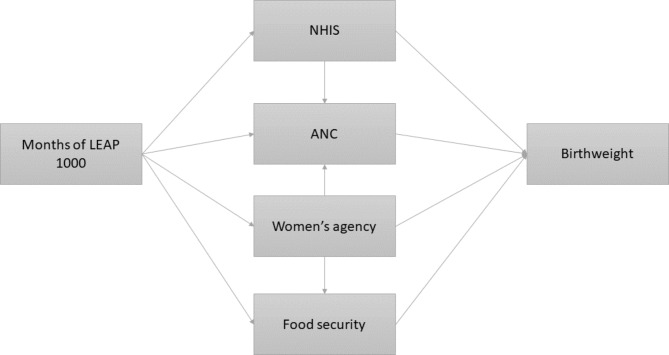
Methods: Data for this study come from the Livelihood Empowerment Against Poverty (LEAP) 1000 impact evaluation conducted between 2015 and 2017 among a panel sample of 2,331 pregnant and lactating women living in rural households of Northern Ghana. The LEAP 1000 program provided bi-monthly cash transfers and premium fee waivers to enroll in the National Health Insurance Scheme (NHIS). We used adjusted and unadjusted linear and logistic regression models to estimate the associations of months of LEAP 1000 exposure before delivery with birthweight and low birthweight, respectively. We used covariate-adjusted structural equation models (SEM) to examine mediation of the LEAP 1000 dose-response association with birthweight by household food insecurity and maternal-level (agency, NHIS enrollment, and antenatal care) factors.
Results: Our study included a sample of 1,439 infants with complete information on birthweight and date of birth. Nine percent of infants (N = 129) were exposed to LEAP 1000 before delivery. A 1-month increase in exposure to LEAP 1000 before delivery was associated with a 9-gram increase in birthweight and 7% reduced odds of low birthweight, on average, in adjusted models. We found no mediation effect by household food insecurity, NHIS enrollment, women's agency, or antenatal care visits.
Conclusions: LEAP 1000 cash transfer exposure before delivery was positively associated with birthweight, though we did not find any mediation by household- or maternal-level factors. The results of our mediation analyses may serve to inform program operations and improve targeting and programming to optimize health and well-being among this population.
Trial registration: The evaluation is registered in the International Initiative for Impact Evaluation's (3ie) Registry for International Development Impact Evaluations (RIDIESTUDY- ID-55942496d53af) and in the Pan African Clinical Trial Registry (PACTR202110669615387).
Keywords: Antenatal care; Birthweight; Cash transfers; Empowerment; Food insecurity; Ghana; LEAP 1000; SEM.
© 2023. The Author(s).
Conflict of interest statement
The authors have no competing interests to disclose.
Figures

References
MeSH terms
LinkOut - more resources
Full Text Sources
