


Intraspecific phylogeny of a Patagonian fescue: differentiation at molecular markers and morphological traits suggests hybridization at peripheral populations
- PMID: 37209108
- PMCID: PMC10332399
- DOI: 10.1093/aob/mcad060
Intraspecific phylogeny of a Patagonian fescue: differentiation at molecular markers and morphological traits suggests hybridization at peripheral populations
Abstract
Background and aims: Grasses of the Festuca genus have complex phylogenetic relations due to morphological similarities among species and interspecific hybridization processes. Within Patagonian fescues, information concerning phylogenetic relationships is very scarce. In Festuca pallescens, a widely distributed species, the high phenotypic variability and the occurrence of interspecific hybridization preclude a clear identification of the populations. Given the relevance of natural rangelands for livestock production and their high degradation due to climate change, conservation actions are needed and knowledge about genetic variation is required.
Methods: To unravel the intraspecific phylogenetic relations and to detect genetic differences, we studied 21 populations of the species along its natural geographical distribution by coupling both molecular [internal transcribed spacer (ITS) and trnL-F markers] and morpho-anatomical analyses. Bayesian inference, maximum likelihood and maximum parsimony methods were applied to assemble a phylogenetic tree, including other native species. The morphological data set was analysed by discriminant and cluster analyses.
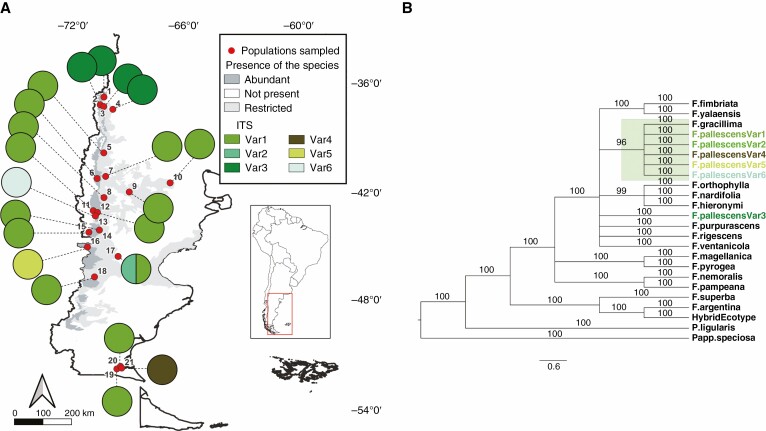
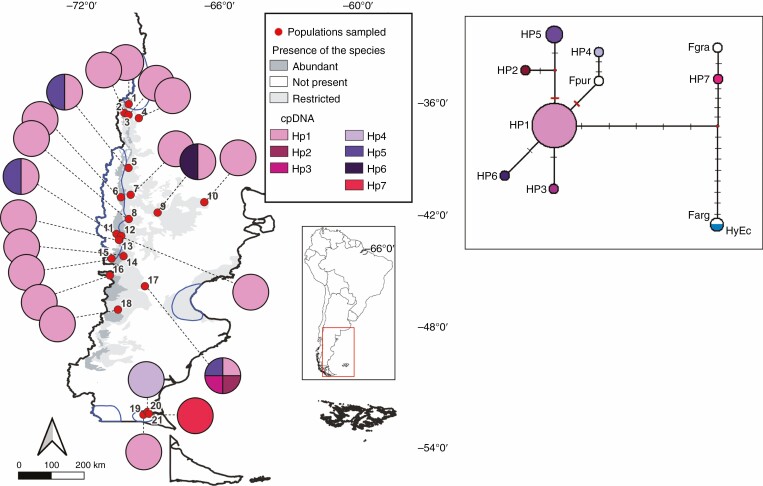
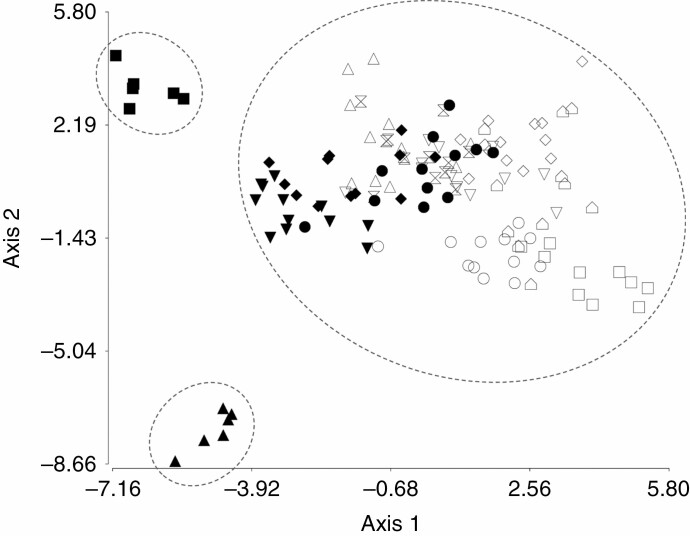
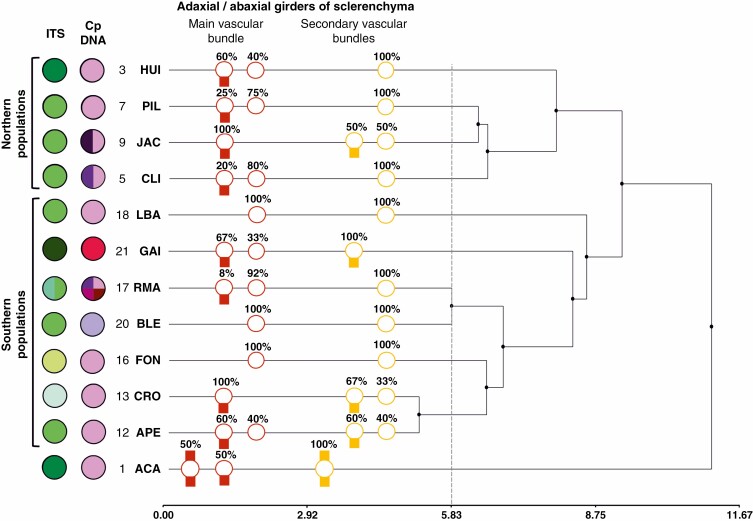
Key results: The combined information of the Bayesian tree (ITS marker), the geographical distribution of haplotype variants (trnL-F marker) and the morpho-anatomical traits, distinguished populations located at the margins of the distribution. Some of the variants detected were shared with other sympatric species of fescues.
Conclusions: These results suggest the occurrence of hybridization processes between species of the genus at peripheral sites characterized by suboptimal conditions, which might be key to the survival of these populations.
Keywords: Festuca; Festuca pallescens; ITS; Intraspecific genetic differentiation; Patagonia; chloroplast DNA markers; glacial refugia; hybridization; morpho-anatomical analyses; phylogenetic relationships; plant traits; speciation.
© The Author(s) 2023. Published by Oxford University Press on behalf of the Annals of Botany Company. All rights reserved. For permissions, please e-mail: journals.permissions@oup.com.
Figures
References
-
- Aiken SG, Darbyshire SJ, Lefkovitch LP.. 1985. Restricted taxonomic value of leaf sections in Canadian narrow-leaved Festuca (Poaceae). Canadian Journal of Botany 63: 995–1007. doi:10.1139/b85-135. - DOI
-
- Arana MV, Gallo LA, Vendramin GG, Pastorino MJ, Sebastiani F, Marchelli P.. 2010. High genetic variation in marginal fragmented populations at extreme climatic conditions of the Patagonian cypress Austrocedrus chilensis. Molecular Phylogenetics and Evolution 54: 941–949. ISSN 1055-7903. doi:10.1016/j.ympev.2009.11.007. - DOI - PubMed
-
- Azpilicueta MM, Marchelli P, Gallo LA.. 2009. The effects of Quaternary glaciations in Patagonia as evidenced by chloroplast DNA phylogeography of southern beech Nothofagus obliqua. Tree Genetics and Genomes 5: 561–571. doi:10.1007/s11295-009-0209-x. - DOI
-
- Azpilicueta MM, Pastorino M, Puntieri J, et al. . 2014. Robles in Lagunas de Epulauquen, Argentina: previous and recent evidence of their distinctive character. Revista Chilena de Historia Natural 87: 24–35. doi:10.1186/s40693-014-0024-0. - DOI
Publication types
MeSH terms
LinkOut - more resources
Full Text Sources
