


The first year of the COVID-19 pandemic in humanitarian settings: epidemiology, health service utilization, and health care seeking behavior in Bangui and surrounding areas, Central African Republic
- PMID: 37210535
- PMCID: PMC10199293
- DOI: 10.1186/s13031-023-00523-y
The first year of the COVID-19 pandemic in humanitarian settings: epidemiology, health service utilization, and health care seeking behavior in Bangui and surrounding areas, Central African Republic
Abstract
Background: Despite increasing evidence on COVID-19, few studies have been conducted in humanitarian settings and none have investigated the direct and indirect effects of the pandemic in the Central African Republic. We studied the COVID-19 epidemiology, health service utilization, and health care seeking behavior in the first year of the pandemic in Bangui and surrounding areas.
Methods: This mixed-methods study encompasses four components: descriptive epidemiological analysis of reported COVID-19 cases data; interrupted time series analysis of health service utilization using routine health service data; qualitative analysis of health care workers' perceptions of how health services were affected; and health care seeking behavior of community members with a household survey and focus group discussions.
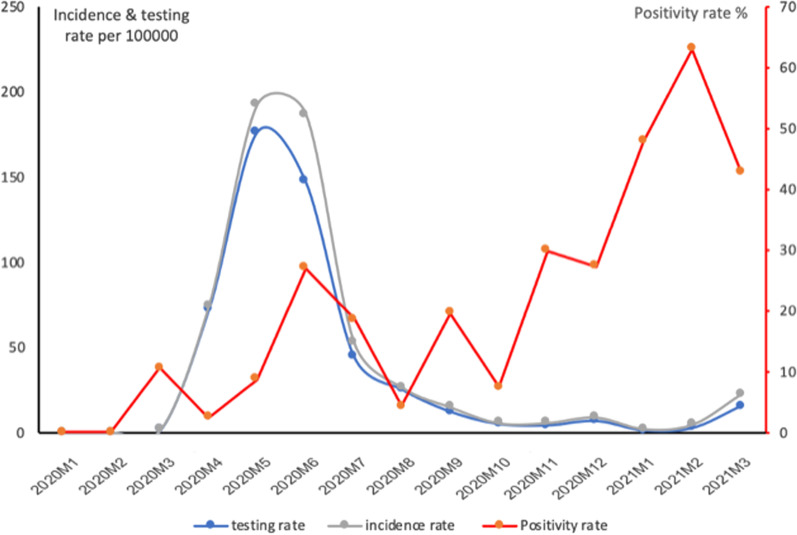
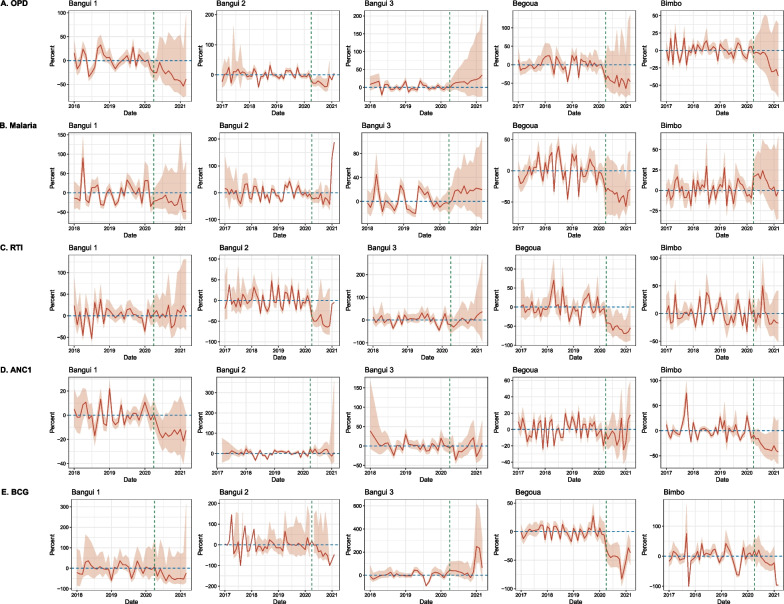
Results: The COVID-19 epidemiology in CAR aligns with that of most other countries with males representing most of the tested people and positive cases. Testing capacity was mainly concentrated in Bangui and skewed towards symptomatic cases, travelers, and certain professions. Test positivity was high, and many cases went undiagnosed. Decreases in outpatient department consultations, consultations for respiratory tract infections, and antenatal care were found in most study districts. Cumulative differences in districts ranged from - 46,000 outpatient department consultations in Begoua to + 7000 in Bangui 3; - 9337 respiratory tract infections consultations in Begoua to + 301 in Bangui 1; and from - 2895 antenatal care consultations in Bimbo to + 702 in Bangui 2. Consultations for suspected malaria showed mixed results while delivery of BCG vaccine doses increased. Fewer community members reported seeking care at the beginning of the pandemic compared to summer 2021, especially in urban areas. The fear of testing positive and complying with related restrictions were the main obstacles to seeking care.
Conclusions: A large underestimation of infections and decreased health care utilization characterized the first year of the COVID-19 pandemic in Bangui and surrounding area. Improved decentralized testing capacity and enhanced efforts to maintain health service utilization will be crucial for future epidemics. A better understanding of health care access is needed, which will require strengthening the national health information system to ensure reliable and complete data. Further research on how public health measures interact with security constraints is needed.
Keywords: COVID-19; Central African Republic; Health care seeking behavior; Health care utilization; Humanitarian settings.
© 2023. The Author(s).
Conflict of interest statement
The authors have declared that they have no competing interests.
Figures
References
-
- Johns Hopkins Coronavirus Resource Center. COVID-19 Dashboard, https://coronavirus.jhu.edu/map.html (2020, accessed 12 May 2021).
-
- Cameron E, Nuzzo JB, Bell J. Global Health Security Index, https://www.ghsindex.org (2019).
-
- IFRC, IOM, UNHCR, et al. Interim Guidance on Scaling-up COVID-19 Outbreak Readiness and Response Operations in camps and camp-like settings. Geneva, https://interagencystandingcommittee.org/other/interim-guidance-scaling-... (2020).
Grants and funding
- 720FDA20GR00228/United States Agency for International Development
- 720FDA20GR00228/United States Agency for International Development
- 720FDA20GR00228/United States Agency for International Development
- 720FDA20GR00228/United States Agency for International Development
- 720FDA20GR00228/United States Agency for International Development
LinkOut - more resources
Full Text Sources
