


Identifying the most important research, policy and practice questions for substance use, problematic alcohol use and behavioural addictions in autism (SABA-A): A priority setting partnership
- PMID: 37210935
- PMCID: PMC7614597
- DOI: 10.1016/j.comppsych.2023.152393
Identifying the most important research, policy and practice questions for substance use, problematic alcohol use and behavioural addictions in autism (SABA-A): A priority setting partnership
Abstract
Background: Autistic people are more likely to report problematic alcohol and other substance use when compared to the general population. Evidence suggests that up to one in three autistic adults may have an alcohol or other substance use disorder (AUD/SUD), although the evidence base for behavioural addictions is less clear. Autistic people may use substances or engage in potentially addictive behaviours as a means of coping with social anxiety, challenging life problems, or camouflaging in social contexts. Despite the prevalence and detrimental effects of AUD, SUD and behavioural addictions in community samples, literature focusing on the intersection between autism and these conditions is scarce, hindering health policy, research, and clinical practice.
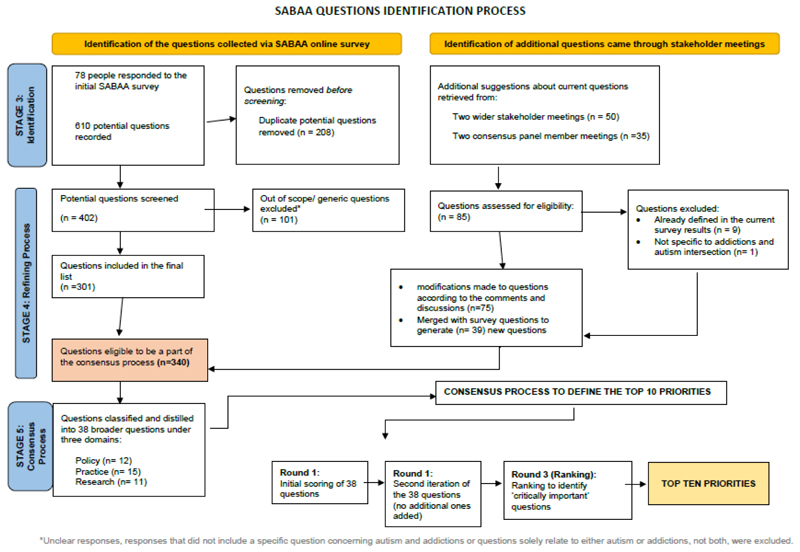
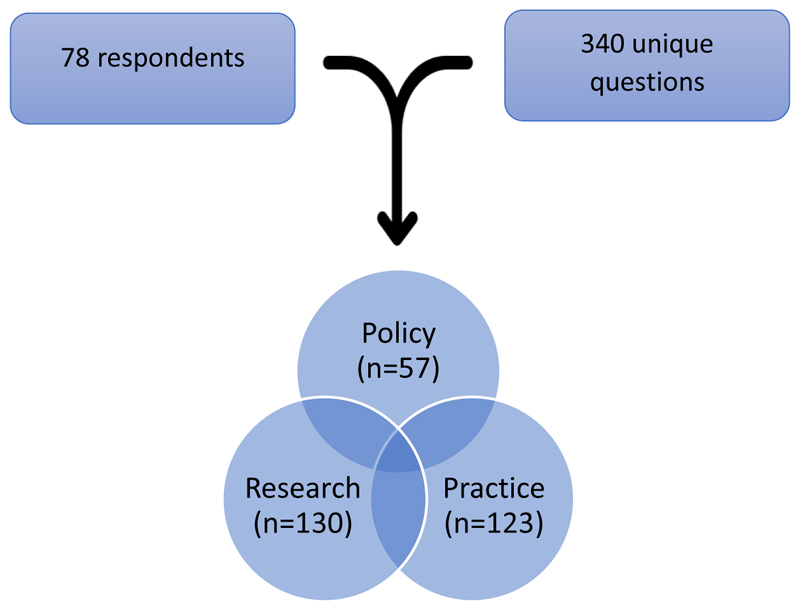
Methods: We aimed to identify the top 10 priorities to build the evidence for research, policy, and clinical practice at this intersection. A priority-setting partnership was used to address this aim, comprising an international steering committee and stakeholders from various backgrounds, including people with declared lived experience of autism and/or addiction. First, an online survey was used to identify what people considered key questions about Substance use, alcohol use, or behavioural addictions in autistic people (SABA-A). These initial questions were reviewed and amended by stakeholders, and then classified and refined to form the final list of top priorities via an online consensus process.
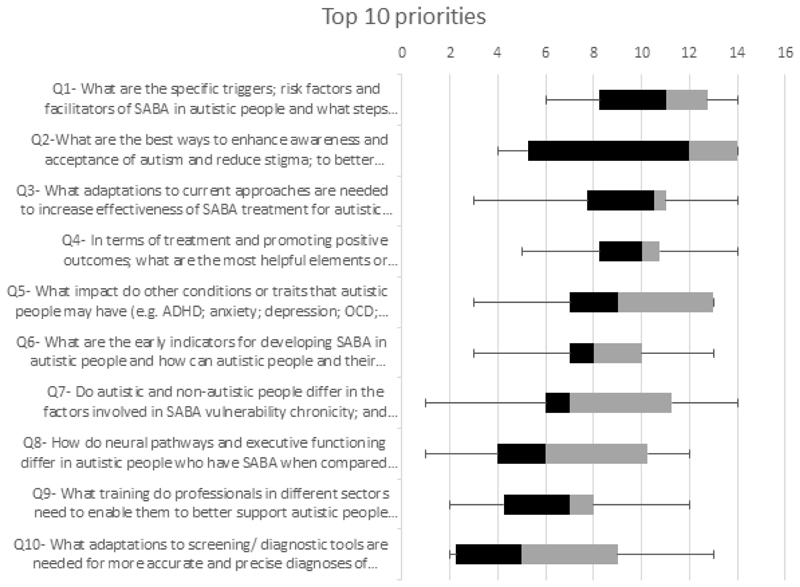
Outcomes: The top ten priorities were identified: three research, three policy, and four practice questions. Future research suggestions are discussed.
Keywords: Addiction; Autism; Gambling; Problematic alcohol use; Substance use.
Copyright © 2023 The Authors. Published by Elsevier Inc. All rights reserved.
Conflict of interest statement
Prof. Chamberlain’s involvement in this research was funded by a Wellcome Trust Clinical Fellowship (110049/Z/15/Z & 110049/Z/15/A). For the purpose of open access, the author has applied a CC BY public copyright license to any Author Accepted Manuscript version arising from this submission.
Prof. Chamberlain receives a stipend from Elsevier for editorial work. Prof. Grant has received research grants from Otsuka and Biohaven Pharmaceuticals. He receives yearly compensation from Springer Publishing for acting as Editor-in-Chief of the Journal of Gambling Studies and has received royalties from Oxford University Press, American Psychiatric Publishing, Inc., Norton Press, and McGraw Hill.
Professor Sinclair is National Specialty Advisor for Alcohol Dependence, NHS England Dr Robinson is National Specialty Adviser for Autism, NHS England Dr Day is president of the Society for the Study of Addiction
The other authors report no disclosures pertaining to the current manuscript.
Figures
References
-
- Kenny L, Hattersley C, Molins B, Buckley C, Povey C, Pellicano E. Which terms should be used to describe autism? Perspectives from the UK autism community. Autism. 2016;20(4):442–62. - PubMed
-
- Leigh JP, Du J. Brief Report: Forecasting the Economic Burden of Autism in 2015 and 2025 in the United States. Journal of Autism and Developmental Disorders. 2015;45(12):4135–9. - PubMed
