


Non-pharmacological interventions for the prevention of sexually transmitted infections (STIs) in older adults: A systematic review
- PMID: 37224103
- PMCID: PMC10208510
- DOI: 10.1371/journal.pone.0284324
Non-pharmacological interventions for the prevention of sexually transmitted infections (STIs) in older adults: A systematic review
Abstract
Background: STIs in older adults (adults aged 50 years and older) are on the rise due to variable levels of sex literacy and misperceived susceptibility to infections, among other factors. We systematically reviewed evidence on the effect of non-pharmacological interventions for the primary prevention of sexually transmitted infections (STIs) and high-risk sexual behaviour in older adults.
Methods: We searched EMBASE, MEDLINE, PSYCINFO, Global Health and the Cochrane Library from inception until March 9th, 2022. We included RCTs, cluster-randomised trials, quasi-RCTs, interrupted time series (ITS) and controlled and uncontrolled before-and-after studies of non-pharmacological primary prevention interventions (e.g. educational and behaviour change interventions) in older adults, reporting either qualitative or quantitative findings. At least two review authors independently assessed the eligibility of articles and extracted data on main characteristics, risk of bias and study findings. Narrative synthesis was performed.
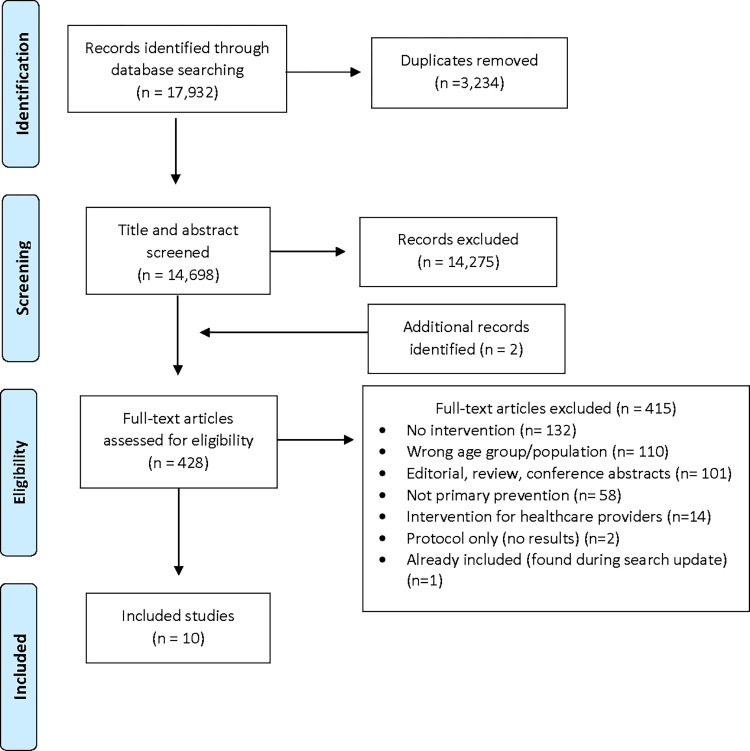
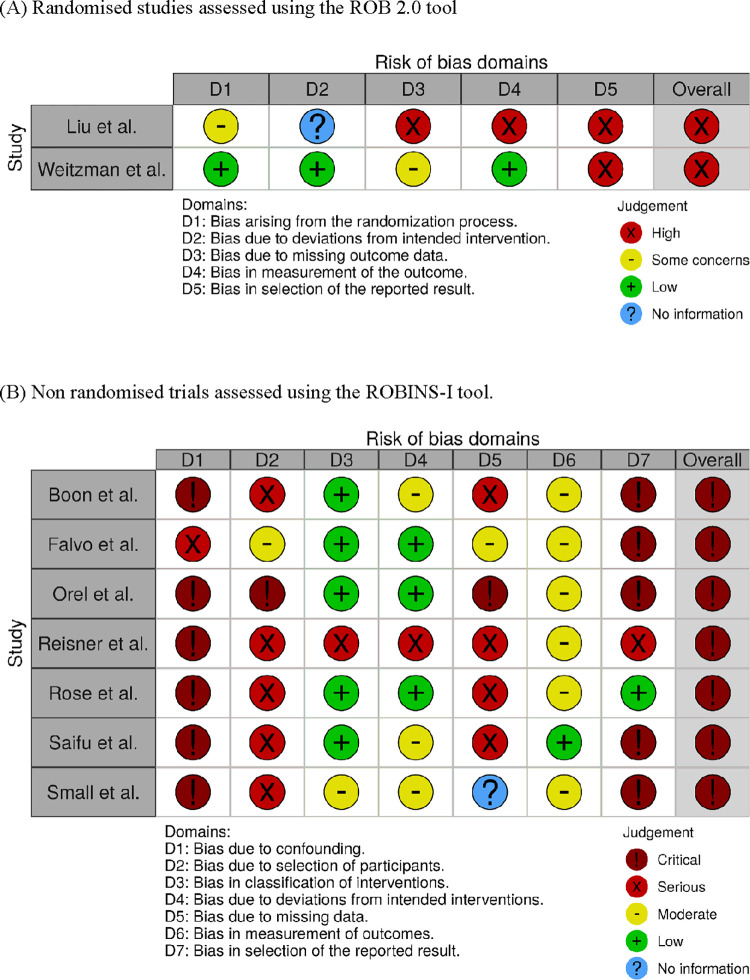
Results: Ten studies (two RCTs, seven quasi-experiment studies and one qualitative study) were found to be eligible for this review. These interventions were mainly information, education and communication activities (IECs) aimed at fostering participants' knowledge on STIs and safer sex, mostly focused on HIV. Most studies used self-reported outcomes measuring knowledge and behaviour change related to HIV, STIs and safer sex. Studies generally reported an increase in STI/HIV knowledge. However, risk of bias was high or critical across all studies.
Conclusions: Literature on non-pharmacological interventions for older adults is sparse, particularly outside the US and for STIs other than HIV. There is evidence that IECs may improve short-term knowledge about STIs however, it is not clear this translates into long-term improvement or behaviour change as all studies included in this review had follow-up times of 3 months or less. More robust and higher-quality studies are needed in order to confirm the effectiveness of non-pharmacological primary prevention interventions for reducing STIs in the older adult population.
Copyright: © 2023 Co et al. This is an open access article distributed under the terms of the Creative Commons Attribution License, which permits unrestricted use, distribution, and reproduction in any medium, provided the original author and source are credited.
Conflict of interest statement
This review was commissioned and funded by the World Health Organisation (WHO). Authors RS, TW, and AP are affiliated with WHO. This does not alter our adherence to PLOS ONE policies on sharing data and materials.
Figures
References
-
- World Health Organisation. Sexually transmitted infections (STIs) 2019 [Available from: https://www.who.int/news-room/fact-sheets/detail/sexually-transmitted-in....
-
- UK Health Security Agency. Sexually transmitted infections (STIs): annual data tables. s. r. Table 2: new STI diagnoses and rates by gender, age group and ethnic group, 2016 to 2020 2022 [Available from: https://www.gov.uk/government/statistics/sexually-transmitted-infections....
-
- Bodley-Tickell AT, Olowokure B, Bhaduri S, White DJ, Ward D, Ross JD, et al. Trends in sexually transmitted infections (other than HIV) in older people: analysis of data from an enhanced surveillance system. Sexually transmitted infections. 2008;84(4):312–7. doi: 10.1136/sti.2007.027847 - DOI - PubMed
Publication types
MeSH terms
Grants and funding
LinkOut - more resources
Full Text Sources
Medical
