


Effectiveness of worksite wellness programs based on physical activity to improve workers' health and productivity: a systematic review
- PMID: 37226273
- PMCID: PMC10207792
- DOI: 10.1186/s13643-023-02258-6
Effectiveness of worksite wellness programs based on physical activity to improve workers' health and productivity: a systematic review
Abstract
Background: Although the scientific literature has previously described the impact of worksite programs based on physical activity (WPPAs) on employees' productivity and health in different contexts, the effect of these programs has not been analyzed based on the characteristics or modalities of physical activity (PA) performed (e.g., aerobic exercise, strength training, flexibility). In addition, studies on WPPAs usually report health and productivity outcomes separately, not integrated into a single study. Knowing the health and economic-related impacts of a WPPAs could provide useful information for stakeholders and policy development.
Objective: The purpose of this review was as follows: (1) to analyze the effect of different modalities of WPPAs on employees' productivity and health and (2) to investigate the economic impact of WPPAs.
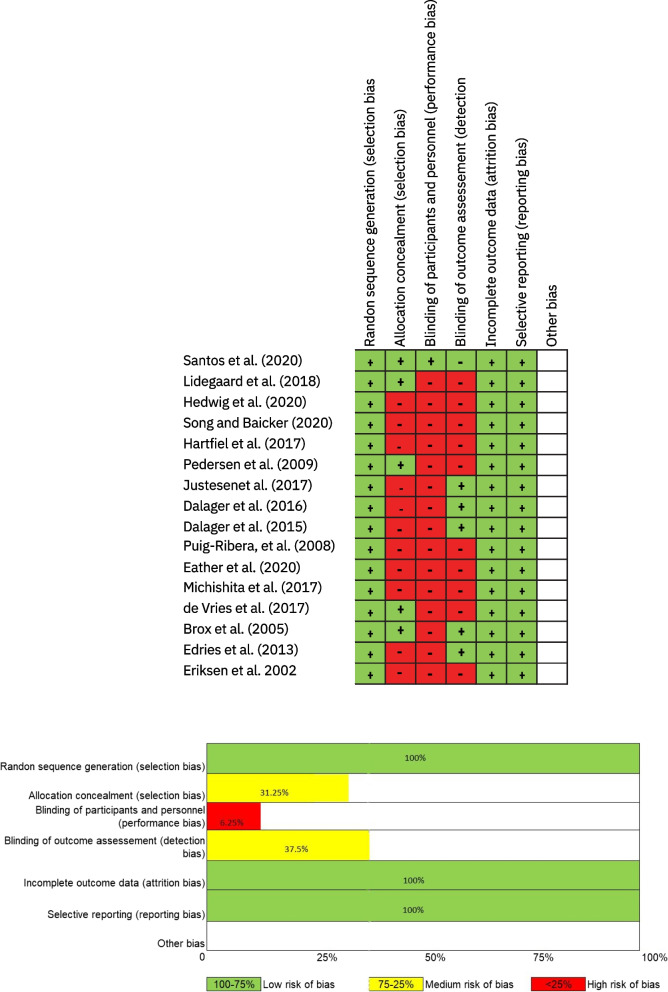
Methods: This systematic review is registered in PROSPERO (CRD42021230626) and complies with PRISMA guidelines. Only randomized controlled trials from 1997 to March 2021 were included. Two reviewers independently screened abstracts and full texts for study eligibility, extracted the data, and performed a quality assessment using the Cochrane Collaboration Risk-of-Bias Tool for randomized trials. Population, instruments, comparison, and outcome (PICO) elements were used to define eligibility criteria. Eight-hundred sixty relevant studies were found through electronic searches in PubMed, Web of Science, Medline, Scopus, and SPORTDiscus databases. Once the eligibility criteria were applied, a total of 16 papers were included.
Results: Workability was the productivity variable most positively impacted by WPPAs. Cardiorespiratory fitness, muscle strength, and musculoskeletal symptoms health variables improved in all the studies included. It was not possible to fully examine the effectiveness of each exercise modality because of the heterogeneity in methodology, duration, and working population. Finally, cost-effectiveness could not be analyzed because this information was not reported in most studies.
Conclusion: All types of WPPAs analyzed improved workers' productivity and health. However, the heterogeneity of WPPAs does not allow to identify which modality is more effective.
Keywords: Cardiorespiratory; Company; Employee; Exercise; Occupational health and safety; Work-ability.
© 2023. The Author(s).
Conflict of interest statement
The authors declare that they have no competing interests.
Figures

References
-
- Lee MP, Hudson H, Richards R, Chang C-C, Chosewood LC, Schill AL. Fundamentals of Total Worker Health ® approaches essential elements for advancing. DHHS Publ [Internet]. 2017;2017–112. Available from: https://www.cdc.gov/niosh/twh/fundamentals.html
-
- Costa BR, Ramos VE. Risk factors for work-related musculoskeletal disorders : a systematic review of recent longitudinal studies. Am J Ind Med. 2010;53(1):285–323. - PubMed
Publication types
MeSH terms
Grants and funding
LinkOut - more resources
Full Text Sources
