


Septuagenarians with acute type A aortic dissection undergoing extended aortic arch repair: a retrospective cohort study
- PMID: 37226875
- PMCID: PMC10389339
- DOI: 10.1097/JS9.0000000000000342
Septuagenarians with acute type A aortic dissection undergoing extended aortic arch repair: a retrospective cohort study
Abstract
Background: Extended arch repair in elderly patients with acute type A aortic dissection (ATAAD) remains challenging for cardiac surgeons. Data on extended arch repair for ATAAD in septuagenarians are scarce.
Materials and methods: Consecutive adult patients with ATAAD undergoing extended arch repair from January 2015 to December 2021 were identified. According to age at presentation, 714 eligible patients were entered into either an elderly group (septuagenarians, n =65) or a control group (patients aged less than 70, n =649). Using propensity score matching, 60 pairs of patients were successfully established at a 1:1 ratio. In-hospital outcomes (operative death and major postoperative morbidity) and midterm outcomes (survival and aortic reintervention) were compared before and after matching.
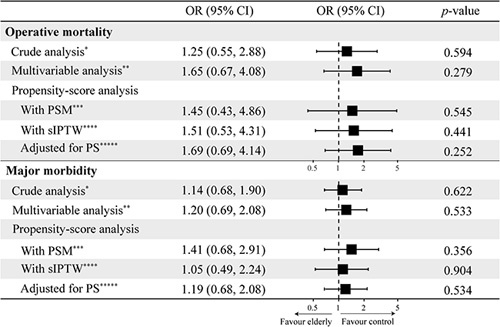
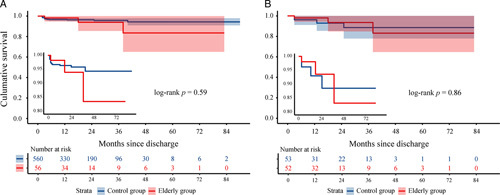
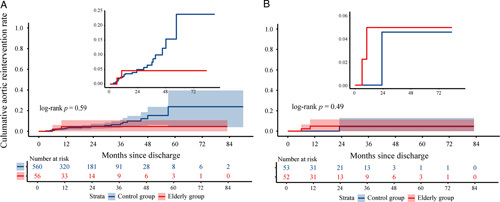
Results: Operative death occurred in 64 patients (9.0%), including seven septuagenarians (10.8%) and 57 (8.8%) from the control group, without significant differences between groups before and after matching ( P =0.593 and 0.774, respectively). Major postoperative morbidity was observed in 298 patients (41.7%), including 29 (44.6%) in the elderly group and 269 (41.4%) in the control group ( P =0.622). Age-based grouping was not significantly associated with operative mortality or major postoperative morbidity in the crude, multivariable, and propensity score analyses. The 5-year cumulative survival and cumulative aortic reintervention rates in the elderly group were 83.5 and 4.6%, respectively, which were not statistically different from those in the control group before and after matching.
Conclusions: Extended arch repair may be safely and effectively performed in septuagenarians with ATAAD, with in-hospital and midterm outcomes comparable to those obtained in patients aged less than 70 years.
Copyright © 2023 The Author(s). Published by Wolters Kluwer Health, Inc.
Conflict of interest statement
All authors declare that the research was conducted in the absence of any commercial or financial relationships that could be construed as a potential conflict of interest.
Sponsorships or competing interests that may be relevant to content are disclosed at the end of this article.
Figures
References
-
- Ikeno Y, Yokawa K, Yamanaka K, et al. Total arch replacement in octogenarians and nonagenarians: a single-center 18-year experience. J Thorac Cardiovasc Surg 2020;160:346–56 e341. - PubMed
-
- Hata M, Sezai A, Niino T, et al. Should emergency surgical intervention be performed for an octogenarian with type A acute aortic dissection? J Thorac Cardiovasc Surg 2008;135:1042–1046. - PubMed
-
- Beckmann E, Martens A, Kaufeld T, et al. Is total aortic arch replacement with the frozen elephant trunk procedure reasonable in elderly patients? Eur J Cardiothorac Surg 2021;60:131–137. - PubMed
-
- Mehta RH, O’Gara PT, Bossone E, et al. Acute type A aortic dissection in the elderly: clinical characteristics, management, and outcomes in the current era. J Am Coll Cardiol 2002;40:685–692. - PubMed
MeSH terms
LinkOut - more resources
Full Text Sources
