. 2023 Sep 15;29(18):3603-3611.
doi: 10.1158/1078-0432.CCR-23-0536.

Targeting Replication Stress and Chemotherapy Resistance with a Combination of Sacituzumab Govitecan and Berzosertib: A Phase I Clinical Trial

Affiliations

Targeting Replication Stress and Chemotherapy Resistance with a Combination of Sacituzumab Govitecan and Berzosertib: A Phase I Clinical Trial

Melissa L Abel et al. Clin Cancer Res. .

Abstract

Purpose: Despite promising preclinical studies, toxicities have precluded combinations of chemotherapy and DNA damage response (DDR) inhibitors. We hypothesized that tumor-targeted chemotherapy delivery might enable clinical translation of such combinations.

Patients and methods: In a phase I trial, we combined sacituzumab govitecan, antibody-drug conjugate (ADC) that delivers topoisomerase-1 inhibitor SN-38 to tumors expressing Trop-2, with ataxia telangiectasia and Rad3-related (ATR) inhibitor berzosertib. Twelve patients were enrolled across three dose levels.

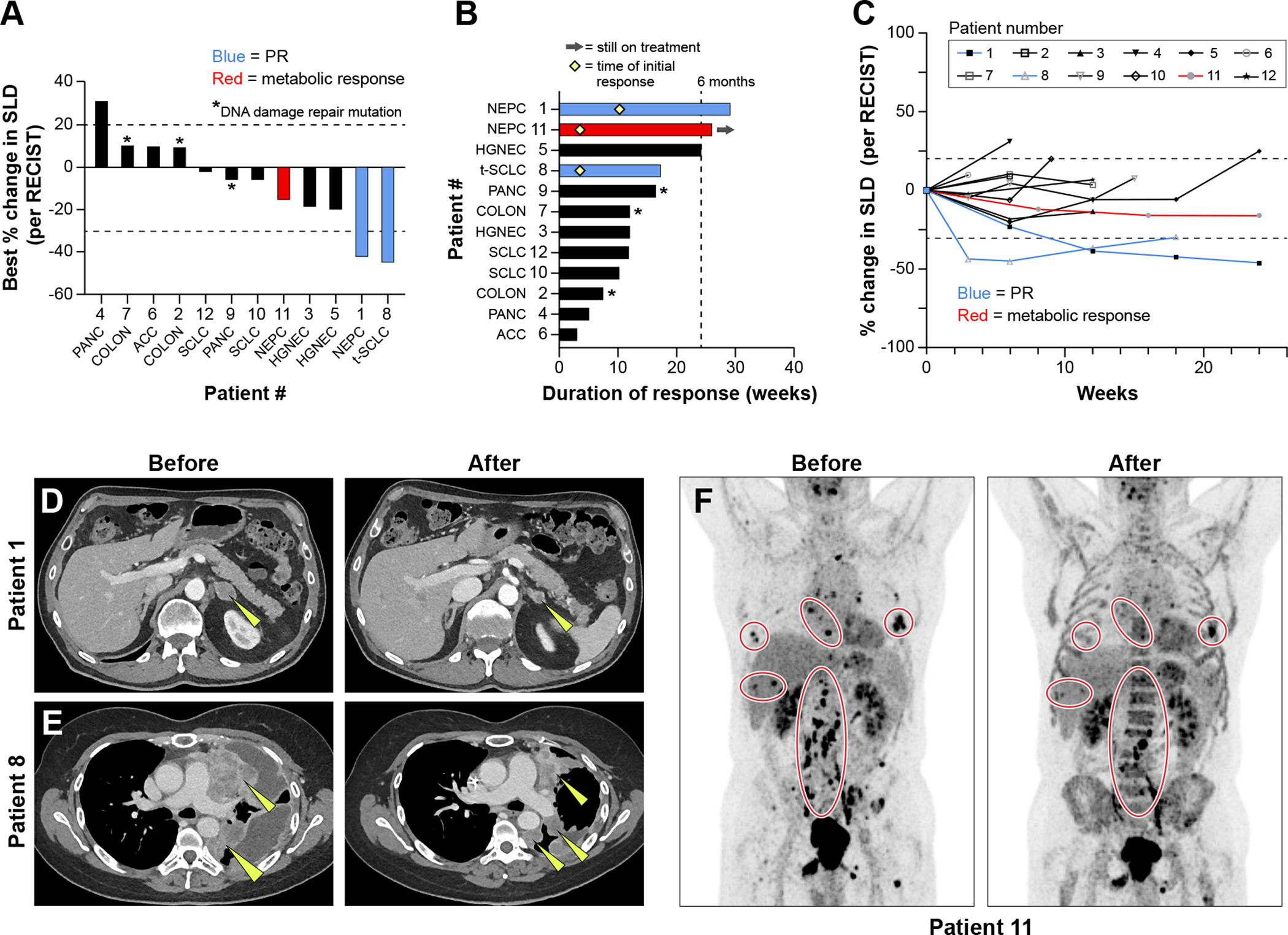
Results: Treatment was well tolerated, with improved safety over conventional chemotherapy-based combinations, allowing escalation to the highest dose. No dose-limiting toxicities or clinically relevant ≥grade 4 adverse events occurred. Tumor regressions were observed in 2 patients with neuroendocrine prostate cancer, and a patient with small cell lung cancer transformed from EGFR-mutant non-small cell lung cancer.

Conclusions: ADC-based delivery of cytotoxic payloads represents a new paradigm to increase efficacy of DDR inhibitors. See related commentary by Berg and Choudhury, p. 3557.


Conflict of interest statement

Conflict of Interest Statement

AT report research funding to the institution from the following entities: EMD Serono Research & Development Institute; AstraZeneca; Tarveda Therapeutics; Immunomedics and Prolynx. The remaining authors declare no potential conflicts of interest.

Figures
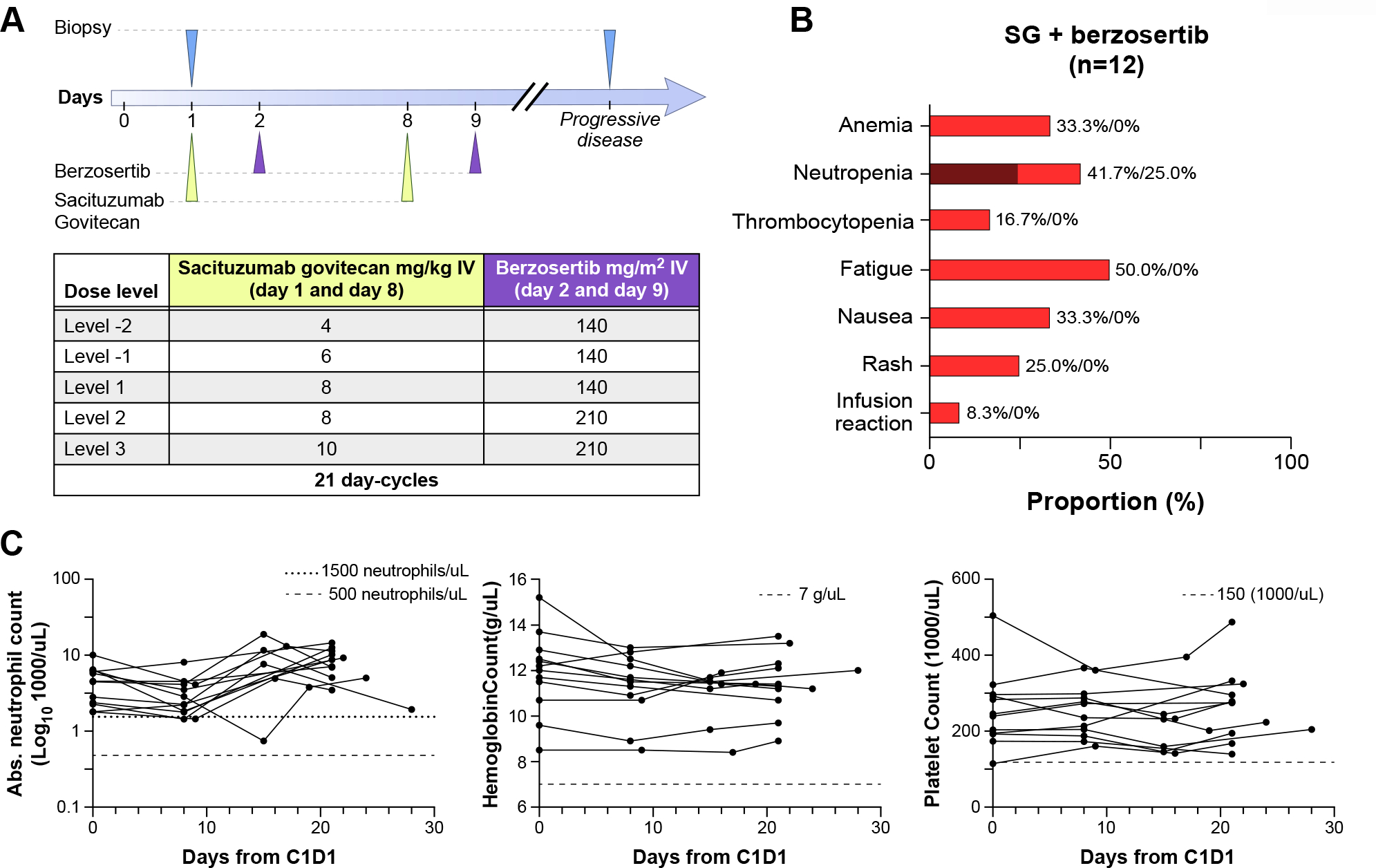
Figure 1.
Figure 1.
Trial design and safety of sacituzumab govitecan and berzosertib combination. A: Trial design and dose escalation schema. B: Adverse events, labeled as red for grade 1–2 and dark red for grade 3–4[25]. C: Blood cell count trends for all patients across cycle 1, showing minimal hematologic toxicity related to treatment.
Figure 2.
Figure 2.
Efficacy of sacituzumab govitecan and berzosertib combination. A: Tumor responses based on maximum change in tumor dimensions from baseline. Each bar represents a patient’s tumor response, corresponding with the assigned patient number. Patients who experienced a partial response per RECIST criteria are annotated in blue, and those with a metabolic response on PET imaging are annotated in red. B: Efficacy based on duration of response, including timing of partial responses, indicated with a yellow diamond, when applicable. C: Efficacy based on change in tumor dimensions from baseline over time. D. Patient 1 with NEPC experienced a partial response, with yellow arrows annotating target lesions. E: Patient 8 with SCLC transformed from EGFR-mutated NSCLC experienced a partial response with a decrease in size of multiple lung masses, as indicated by yellow arrows. F: Patient 11 with de novo NEPC had a metabolic response to therapy across many metastatic sites as shown on PET imaging. SLD: sum of the total diameter of target lesions PR: Partial Response per RECIST criteria PANC = pancreatic adenocarcinoma, COLON = colon adenocarcinoma, ACC = adrenocortical carcinoma, SCLC = small cell lung cancer, NSCLC = non-small cell lung cancer, t-SCLC = SCLC transformed from NSCLC, NEPC = neuroendocrine prostate cancer, HGNEC = high grade neuroendocrine carcinoma
Figure 3.
Figure 3.
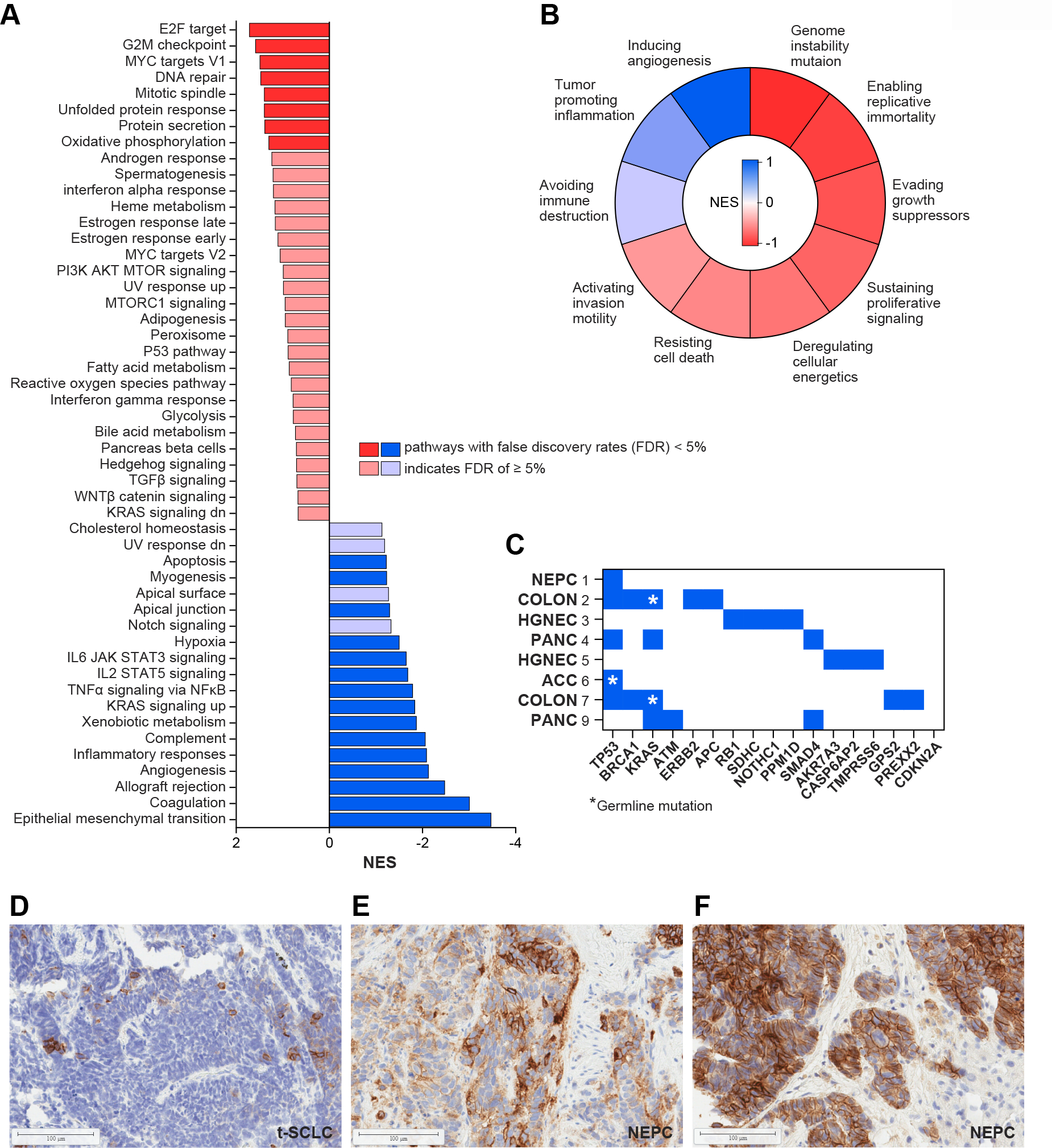
Predictors of benefit to sacituzumab govitecan and berzosertib combination A: RNA sequencing of tumors from patients with clinical benefit (n=2) and without clinical benefit (n=5). GSEA using the Hallmark signature showed that tumors with clinical benefit were enriched for genes associated with replication stress and proliferation and were de-enriched for immune and inflammatory pathways. B: GSEA using the Hallmarks of Cancers signature showing that tumors with clinical benefit were enriched for pathways associated with genome instability. C: Summary of whole exome sequencing results. Blue squares indicate presence of a gene mutation in tumor tissue, with germline mutations indicated by a yellow asterisk. D. Trop-2 IHC from Patient 8 with SCLC transformed from EGFR-mutated NSCLC showed minimal expression. Patients 11 (E) and 1 (F) with NEPC both had IHC with high Trop2 expression. GSEA: gene set enrichment analysis NES: normalized enrichment score SCLC: small cell lung cancer NSCLC: non-small cell lung cancer t-SCLC: transformed SCLC

Comment in

References

    1. Harper JW and Elledge SJ, The DNA damage response: Ten years after. Molecular Cell, 2007. 28(5): p. 739–745. - PubMed
    1. Pilie PG, et al., State-of-the-art strategies for targeting the DNA damage response in cancer. Nature Reviews Clinical Oncology, 2019. 16(2): p. 81–104. - PMC - PubMed
    1. Lord CJ and Ashworth A, BRCAness revisited. Nature Reviews Cancer, 2016. 16(2): p. 110–120. - PubMed
    1. Hendrickson AEW, et al., A Phase I Clinical Trial of the Poly(ADP-ribose) Polymerase Inhibitor Veliparib and Weekly Topotecan in Patients with Solid Tumors. Clinical Cancer Research, 2018. 24(4): p. 744–752. - PMC - PubMed
    1. LoRusso PM, et al., Phase I Safety, Pharmacokinetic, and Pharmacodynamic Study of the Poly(ADP-ribose) Polymerase (PARP) Inhibitor Veliparib (ABT-888) in Combination with Irinotecan in Patients with Advanced Solid Tumors. Clinical Cancer Research, 2016. 22(13): p. 3227–3237. - PMC - PubMed

Publication types

MeSH terms