


Self-perceived loneliness and depression during the Covid-19 pandemic: a two-wave replication study
- PMID: 37228475
- PMCID: PMC10171408
- DOI: 10.14324/111.444/ucloe.000051
Self-perceived loneliness and depression during the Covid-19 pandemic: a two-wave replication study
Abstract
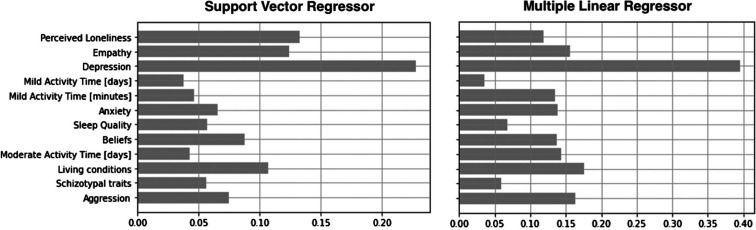
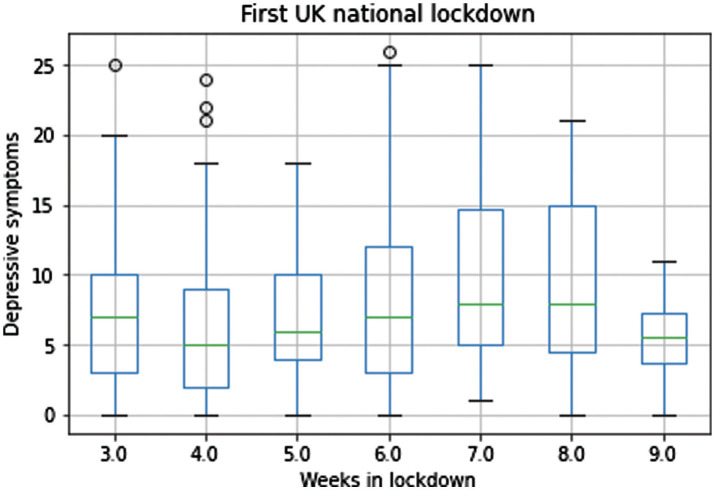
The global Covid-19 pandemic has forced countries to impose strict lockdown restrictions and mandatory stay-at-home orders with varying impacts on individual's health. Combining a data-driven machine learning paradigm and a statistical approach, our previous paper documented a U-shaped pattern in levels of self-perceived loneliness in both the UK and Greek populations during the first lockdown (17 April to 17 July 2020). The current paper aimed to test the robustness of these results by focusing on data from the first and second lockdown waves in the UK. We tested a) the impact of the chosen model on the identification of the most time-sensitive variable in the period spent in lockdown. Two new machine learning models - namely, support vector regressor (SVR) and multiple linear regressor (MLR) were adopted to identify the most time-sensitive variable in the UK dataset from Wave 1 (n = 435). In the second part of the study, we tested b) whether the pattern of self-perceived loneliness found in the first UK national lockdown was generalisable to the second wave of the UK lockdown (17 October 2020 to 31 January 2021). To do so, data from Wave 2 of the UK lockdown (n = 263) was used to conduct a graphical inspection of the week-by-week distribution of self-perceived loneliness scores. In both SVR and MLR models, depressive symptoms resulted to be the most time-sensitive variable during the lockdown period. Statistical analysis of depressive symptoms by week of lockdown resulted in a U-shaped pattern between weeks 3 and 7 of Wave 1 of the UK national lockdown. Furthermore, although the sample size by week in Wave 2 was too small to have a meaningful statistical insight, a graphical U-shaped distribution between weeks 3 and 9 of lockdown was observed. Consistent with past studies, these preliminary results suggest that self-perceived loneliness and depressive symptoms may be two of the most relevant symptoms to address when imposing lockdown restrictions.
Keywords: Covid-19; SARS-CoV-2; depression; global study; lockdown; loneliness; machine learning.
© 2022 The Authors.
Conflict of interest statement
Research ethics statementThis study was pre-registered (https://osf.io/4nj3g/) on 17 April 2020 and ethical approval for the COVID-19 Social Study was granted by the University College London Institute of Education Ethics and Review Committee in April 2020 (REC 1331; [24]). The study is GDPR compliant.Consent for publication statementThe authors declare that research participants’ informed consent to publication of findings – including photos, videos and any personal or identifiable information – was secured prior to publication.Conflicts of interest statementThe author declares no conflict of interest with this work.The author declares no conflict of interest with this work.
Figures

References
-
- World Health Organization. [Accessed 14 September 2021];Coronavirus Disease 2019 – Situation Report – 51. 2020 Available from: https://www.who.int/docs/default-source/coronaviruse/situation-reports/2....
LinkOut - more resources
Full Text Sources
Miscellaneous