


Gastroesophageal reflux in lockdown
- PMID: 37228859
- PMCID: PMC10203906
- DOI: 10.2144/fsoa-2023-0042
Gastroesophageal reflux in lockdown
Abstract
Aim: This study examines the changes in gastroesophageal reflux disease (GERD) symptom frequency among patients with GERD throughout the COVID-19 pandemic.
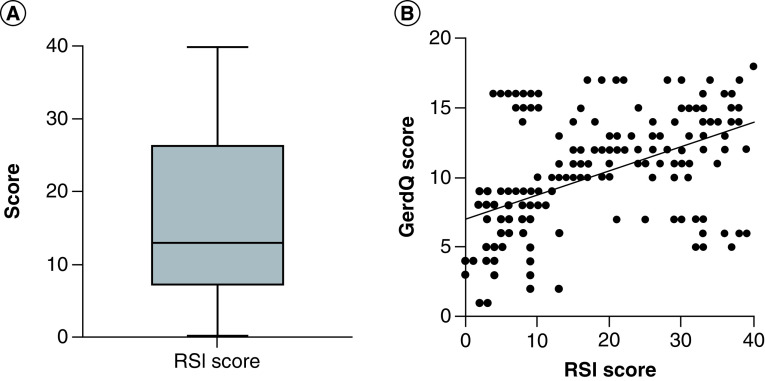
Methods: A structured questionnaire was distributed among 198 GERD patients. The questionnaire consisted of a demographic characteristic assessment, the GerdQ questionnaire, and a reflux symptom index (RSI) questionnaire.
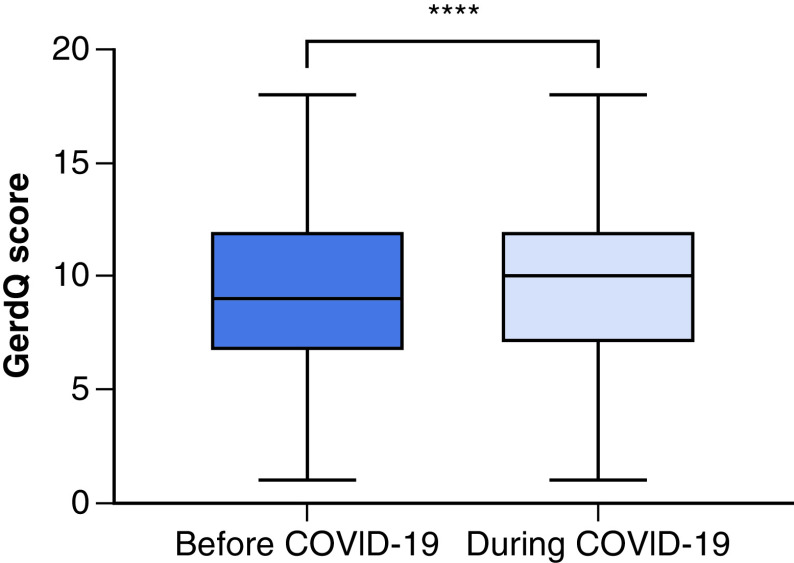
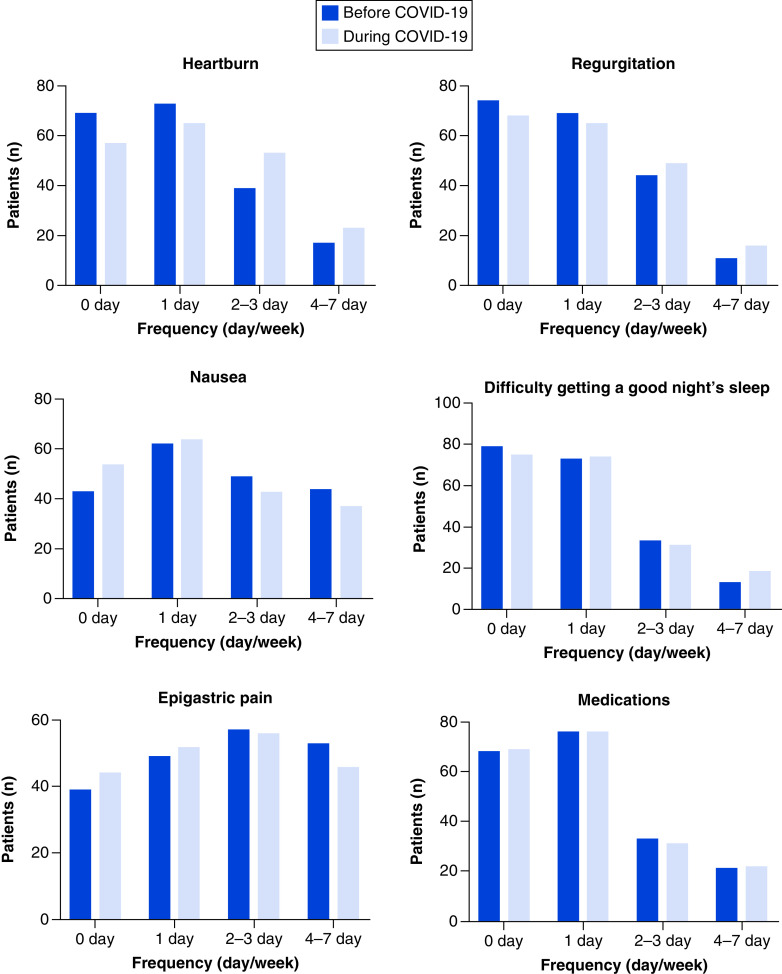
Result & conclusion: A statistically significant increase in GerdQ score was identified among participants during the COVID-19 pandemic (t = 7.055, df = 209, p < 0.001), who had experienced an increase in the frequency of positive predictors of GERD and a decrease in the frequency of negative predictors of GERD. The COVID-19 pandemic and its related lockdown countermeasures may have led to exacerbating and worsening GERD symptoms.
Keywords: COVID-19; COVID-19 lockdown; gastroesophageal reflux; gastroesophageal reflux disease; gastrointestinal system.
Plain language summary
There is a lack of decisive research into the impacts of the COVID-19 pandemic and its lockdown countermeasures on patients with GERD. We investigated the changes in symptomatic frequency among GERD patients in Jordan during the COVID-19 pandemic in a cross-sectional study involving 198 GERD patients. A statistically significant number of participants experienced an increase in the frequency of positive predictors of GERD, and a decrease in the frequency of negative predictors of GERD. In addition, the impacts of GERD itself were also found to have increased during the pandemic, with patients struggling to sleep or attain additional medication to treat their condition.
© 2023 Hafez Al-momani.
Figures
References
-
- Hoffmann M, Kleine-Weber H, Krüger N, Müller M, Drosten C, Pöhlmann S. The novel coronavirus 2019 (2019-nCoV) uses the SARS-coronavirus receptor ACE2 and the cellular protease TMPRSS2 for entry into target cells. BioRxiv 1–23 10.1101/2020.01.31.929042 (2020). - DOI
-
- Zhang H, Kang Z, Gong H et al. The digestive system is a potential route of 2019-nCov infection: a bioinformatics analysis based on single-cell transcriptomes. BioRxiv 1–26 10.1101/2020.01.30.927806 (2020). - DOI
LinkOut - more resources
Full Text Sources
Miscellaneous
