Meta-Analysis
. 2023 Jun;8(6):1176-1186.
doi: 10.1038/s41564-023-01375-1. Epub 2023 May 25.

Coronavirus sampling and surveillance in bats from 1996-2019: a systematic review and meta-analysis

Affiliations
Meta-Analysis

Coronavirus sampling and surveillance in bats from 1996-2019: a systematic review and meta-analysis

Lily E Cohen et al. Nat Microbiol. 2023 Jun.

Abstract

The emergence of SARS-CoV-2 highlights a need for evidence-based strategies to monitor bat viruses. We performed a systematic review of coronavirus sampling (testing for RNA positivity) in bats globally. We identified 110 studies published between 2005 and 2020 that collectively reported positivity from 89,752 bat samples. We compiled 2,274 records of infection prevalence at the finest methodological, spatiotemporal and phylogenetic level of detail possible from public records into an open, static database named datacov, together with metadata on sampling and diagnostic methods. We found substantial heterogeneity in viral prevalence across studies, reflecting spatiotemporal variation in viral dynamics and methodological differences. Meta-analysis identified sample type and sampling design as the best predictors of prevalence, with virus detection maximized in rectal and faecal samples and by repeat sampling of the same site. Fewer than one in five studies collected and reported longitudinal data, and euthanasia did not improve virus detection. We show that bat sampling before the SARS-CoV-2 pandemic was concentrated in China, with research gaps in South Asia, the Americas and sub-Saharan Africa, and in subfamilies of phyllostomid bats. We propose that surveillance strategies should address these gaps to improve global health security and enable the origins of zoonotic coronaviruses to be identified.


Conflict of interest statement

The authors declare no competing interests.

Figures
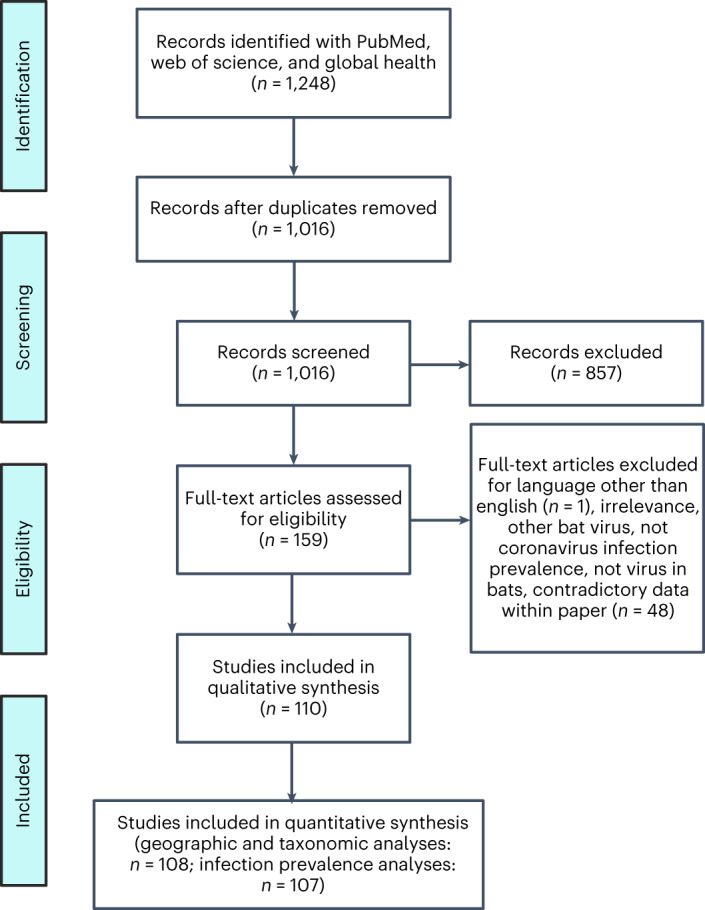
Fig. 1
Fig. 1
PRISMA reporting for systematic review and meta-analysis.
Fig. 2
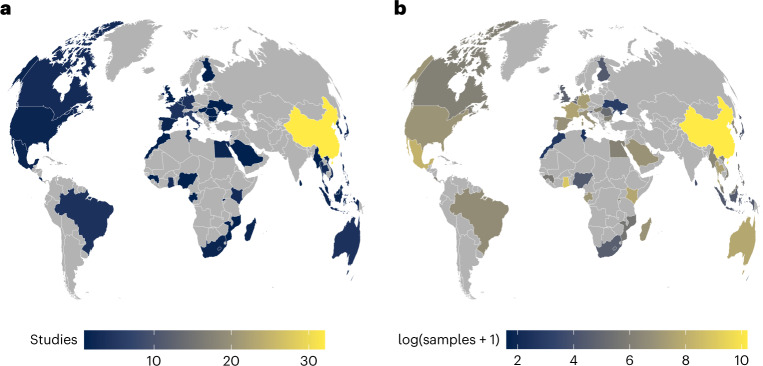
Fig. 2. Geographic distribution of bat coronavirus sampling effort.
Geographic distribution is defined by the number of studies per country (a) and the number of samples tested per country (b). Sampled countries varied in having 1 to 32 bat coronavirus studies (a), with the number of total samples tested ranging from 4 to 26,051 (b). A disproportionate number of bat coronavirus studies and testable samples were conducted and assayed in China, probably reflecting interest in the subgenus Sarbecovirus and the risk of future SARS-like virus emergence. Many areas were severely understudied, particularly relative to ecological and evolutionary risk factors for emergence. In particular, sampling in Central and South America, sub-Saharan Africa and Central and South Asia was notably limited.
Fig. 3
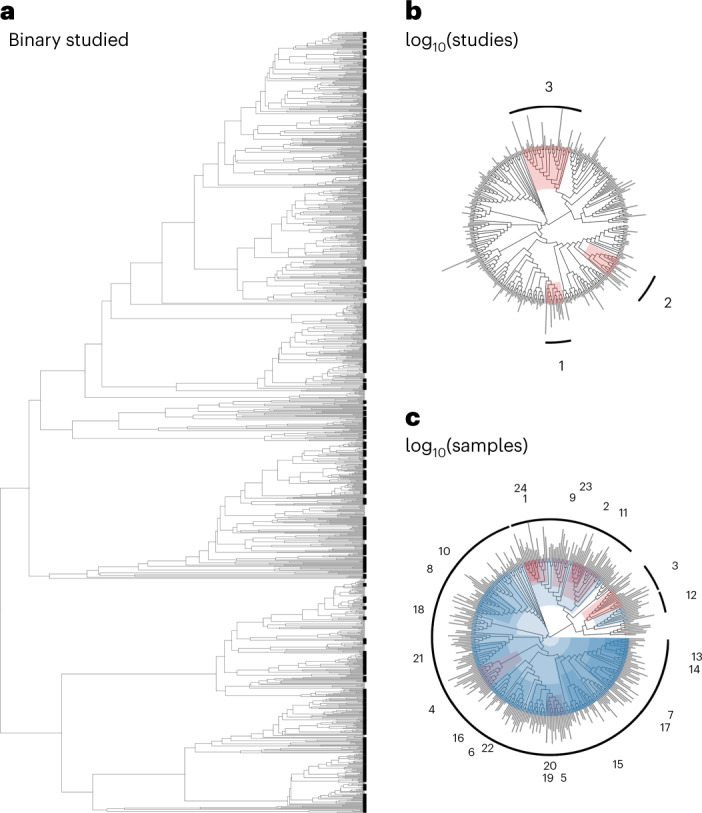
Fig. 3. Evolutionary distribution of bat coronavirus sampling effort.
Sampling effort is defined as whether a bat species has been sampled (a), the number of studies (b) and the number of samples tested (c). Clades identified by phylogenetic factorization with greater or lesser sampling effort compared with a paraphyletic remainder are shown in red and blue, respectively, alongside clade numbers per analysis. Phylogenetic factorization did not identify any taxonomic patterns in binary sampling effort across the bat phylogeny (a), but did identify a number of bat clades within sampled bat species that have been particularly well-sampled for coronaviruses, both in terms of number of studies (b; Supplementary Table 8) and number of samples (c; Supplementary Table 9, only the first 24 phylogenetic factors are displayed). For analyses of total studies and tested samples, segment length corresponds to the relative degree of sampling effort.
Fig. 4
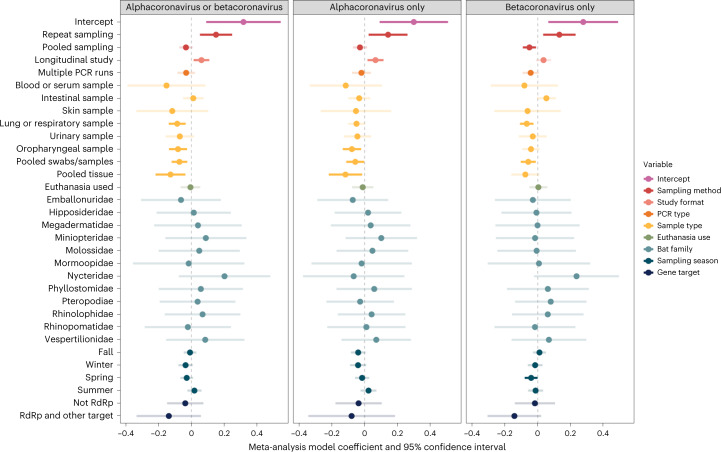
Fig. 4. Methodological and biological predictors of coronavirus prevalence in wild bats.
Phylogenetic meta-analysis model coefficients and 95% confidence intervals, estimated using REML for each of our three datasets. Colours indicate the nine variables included in each model (binary covariates for sampling season). Estimate confidence intervals are shaded by whether they cross zero (the vertical dashed line), with increased transparency denoting non-significant effects. The intercept contains the following reference levels: single sampling (sampling method); cross-sectional study (study format); single PCR (PCR type); faecal, rectal or anal sample (sample type); euthanasia not used (euthanasia use); Craseonycteridae (bat family); not fall, not winter, not spring and not summer (sampling season); and RNA-dependent RNA polymerase (RdRp) only (gene target). Sample sizes are 1,854 prevalence estimates for all coronaviruses, 1,553 prevalence estimates for only alphacoronaviruses and 1,428 prevalence estimates for only betacoronaviruses.

References

    1. Anthony SJ, et al. Global patterns in coronavirus diversity. Virus Evol. 2017;3:vex012. doi: 10.1093/ve/vex012. - DOI - PMC - PubMed
    1. Lednicky JA, et al. Independent infections of porcine deltacoronavirus among Haitian children. Nature. 2021;600:133–137. doi: 10.1038/s41586-021-04111-z. - DOI - PMC - PubMed
    1. Zhu Z, et al. From SARS and MERS to COVID-19: a brief summary and comparison of severe acute respiratory infections caused by three highly pathogenic human coronaviruses. Respir. Res. 2020;21:1–14. doi: 10.1186/s12931-020-01479-w. - DOI - PMC - PubMed
    1. Woo PCY, et al. Molecular diversity of coronaviruses in bats. Virology. 2006;351:180–187. doi: 10.1016/j.virol.2006.02.041. - DOI - PMC - PubMed
    1. Woo PCY, et al. Discovery of seven novel mammalian and avian coronaviruses in the genus Deltacoronavirus supports bat coronaviruses as the gene source of Alphacoronavirus and Betacoronavirus and avian coronaviruses as the gene source of Gammacoronavirus and Deltacoronavirus. J. Virol. 2012;86:3995–4008. doi: 10.1128/JVI.06540-11. - DOI - PMC - PubMed

Publication types