


Effects of GLP-1 receptor agonists on neurological complications of diabetes
- PMID: 37231200
- PMCID: PMC10404567
- DOI: 10.1007/s11154-023-09807-3
Effects of GLP-1 receptor agonists on neurological complications of diabetes
Abstract
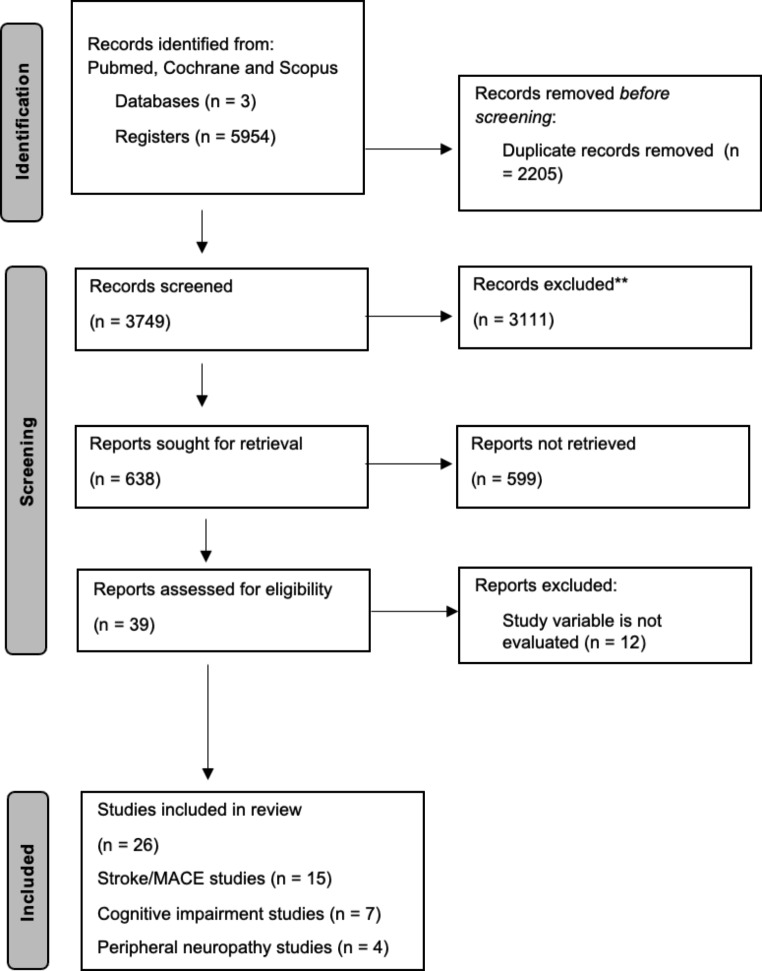
Emerging evidence suggests that treatment with glucagon-like peptide-1 receptor agonists (GLP-1 RAs) could be an interesting treatment strategy to reduce neurological complications such as stroke, cognitive impairment, and peripheral neuropathy. We performed a systematic review to examine the evidence concerning the effects of GLP-1 RAs on neurological complications of diabetes. The databases used were Pubmed, Scopus and Cochrane. We selected clinical trials which analysed the effect of GLP-1 RAs on stroke, cognitive impairment, and peripheral neuropathy. We found a total of 19 studies: 8 studies include stroke or major cardiovascular events, 7 involve cognitive impairment and 4 include peripheral neuropathy. Semaglutide subcutaneous and dulaglutide reduced stroke cases. Liraglutide, albiglutide, oral semaglutide and efpeglenatide, were not shown to reduce the number of strokes but did reduce major cardiovascular events. Exenatide, dulaglutide and liraglutide improved general cognition but no significant effect on diabetic peripheral neuropathy has been reported with GLP-1 RAs. GLP-1 RAs are promising drugs that seem to be useful in the reduction of some neurological complications of diabetes. However, more studies are needed.
Keywords: Alzheimer’s disease; Cardiovascular disease; Cognitive impairment; Peripheral neuropathy; Stroke.
© 2023. The Author(s).
Conflict of interest statement
The authors have no competing interests to declare that are relevant to the content of this article.
References
-
- ShouJ,ZhouL,ZhuSetal.Diabetes is an Independent Risk Factor for Stroke Recurrence in Stroke Patients: A Meta-analysis.J Stroke Cerebrovasc Dis2015;24:1961–1968. - PubMed
-
- VanBusselFCG,BackesWH,HofmanPAMetal.Altered hippocampal white matter connectivity in Type 2 Diabetes mellitus and memory decrements.J. Neuroendocrinol.2016;3:12366. - PubMed
