. 2023 Sep;17(5):1376-1386.
doi: 10.1177/19322968231178549. Epub 2023 May 26.

The Need for Data Standards and Implementation Policies to Integrate Insulin Delivery Data Into the Electronic Health Record

Affiliations

The Need for Data Standards and Implementation Policies to Integrate Insulin Delivery Data Into the Electronic Health Record

Juan C Espinoza et al. J Diabetes Sci Technol. 2023 Sep.

Abstract

Integration of insulin dosing data into the electronic health record (EHR), combined with other patient-generated health care data, would facilitate the use of wirelessly connected insulin delivery systems, including smart insulin pens, insulin pumps, and advanced hybrid closed-loop systems. In 2022, Diabetes Technology Society developed the Integration of Continuous Glucose Monitoring Data into the EHR (iCoDE) Project, which is the first consensus standard for integrating data from a wearable device into the EHR. The iCoDE Standard is a comprehensive guide for any health care delivery organization or hospital for automatically integrating continuous glucose monitoring data into the EHR. Diabetes Technology Society is following iCoDE with the Integration of Connected Diabetes Device Data into the EHR (iCoDE-2) Project, to similarly provide guidance for integrating insulin delivery data into the EHR alongside continuous glucose monitoring data.

Keywords: data integration; data standard; diabetes devices; electronic health record; insulin dosing.


Conflict of interest statement

The author(s) declared the following potential conflicts of interest with respect to the research, authorship, and/or publication of this article: J.C.E. is a consultant for Sanofi, has received speaker fees from Glooko, and receives grant support from the FDA and NIH. J.J.S. is a consultant for Lifescan Diabetes Institute. D.C.K. is a consultant to Better Therapeutics, EOFlow, Integrity, Lifecare, Nevro, Novo Nordisk, Sanofi, and Thirdwayv. A.M.Y., J.H., and R.L. have nothing relevant to disclose.

Figures

Figure 1.
Figure 1.
Medtronic MiniMed 780G system CareLink report. The long vertical red line shows that the sensor glucose level is >120 mg/dL and that the maximum automatic basal delivery is occurring, so that auto-corrections can begin as shown by the little blue lines. Up to 12 auto-corrections per hour can be delivered. Source: Figure courtesy of Medtronic Diabetes.
Figure 2.
Figure 2.
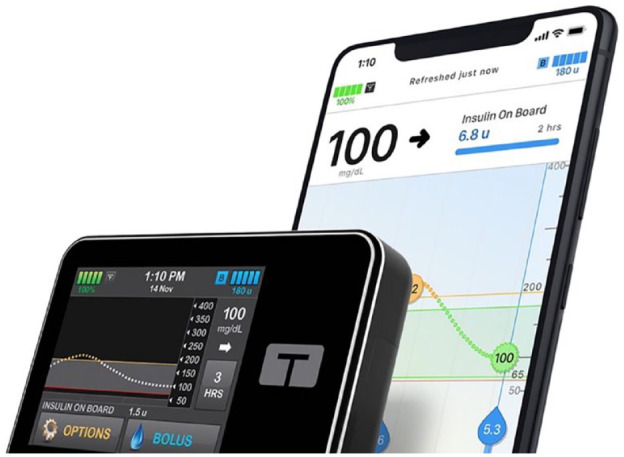
t:slim X2 insulin pump and t:connect mobile app with mobile bolus. Source: Figure courtesy of Tandem Diabetes Care.
Figure 3.
Figure 3.
t:connect Therapy timeline. Figure is a de-identified report.
Figure 4.
Figure 4.
Glooko Week View report displaying information from two days of Omnipod 5 Automated Insulin Delivery System use in manual mode. Figure is a de-identified report.
Figure 5.
Figure 5.
Bigfoot Biomedical insulin dosing data visualization. Source: Figure courtesy of Bigfoot Biomedical.
Figure 6.
Figure 6.
Medtronic InPen 14-day report. Source: Figure courtesy of Medtronic Diabetes.
Figure 7.
Figure 7.
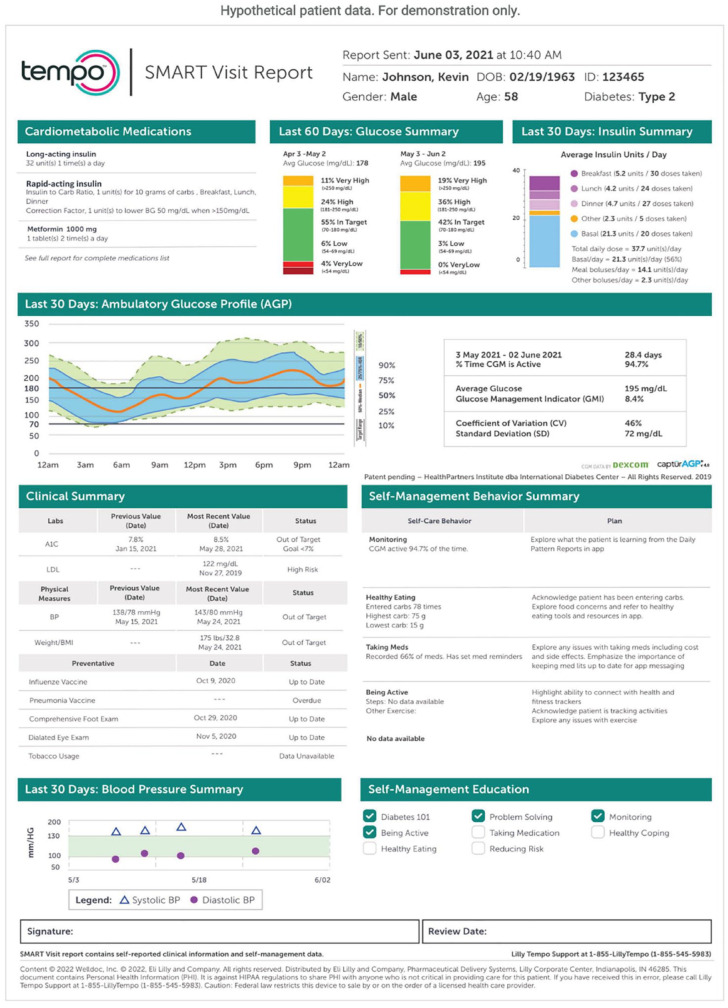
“Summary page” from the Tempo Insights smart visit report in a hypothetical patient using a basal/bolus regimen and a Dexcom G6 continuous glucose monitor (CGM). Source: Figure courtesy of Eli Lilly and Company.
Figure 8.
Figure 8.
Data from SoloSmart pen cap displayed in the Health2Sync app. Source: Figure courtesy of Sanofi.
Figure 9.
Figure 9.
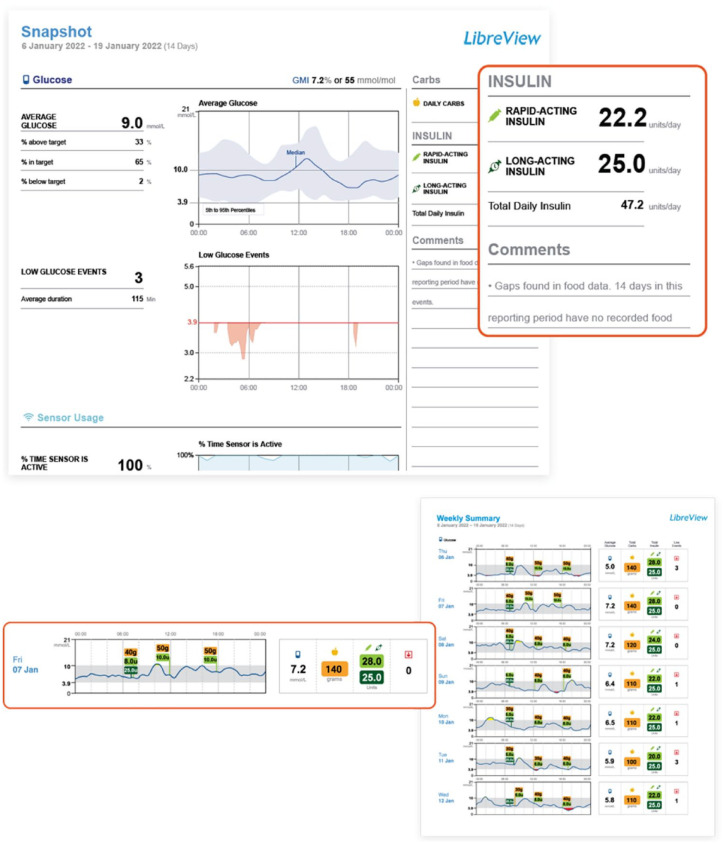
Two views of FreeStyle LibreLink after connecting with NovoPen 6 or NovoPen Echo Plus. Source: Figure courtesy of Novo Nordisk.
Figure 10.
Figure 10.
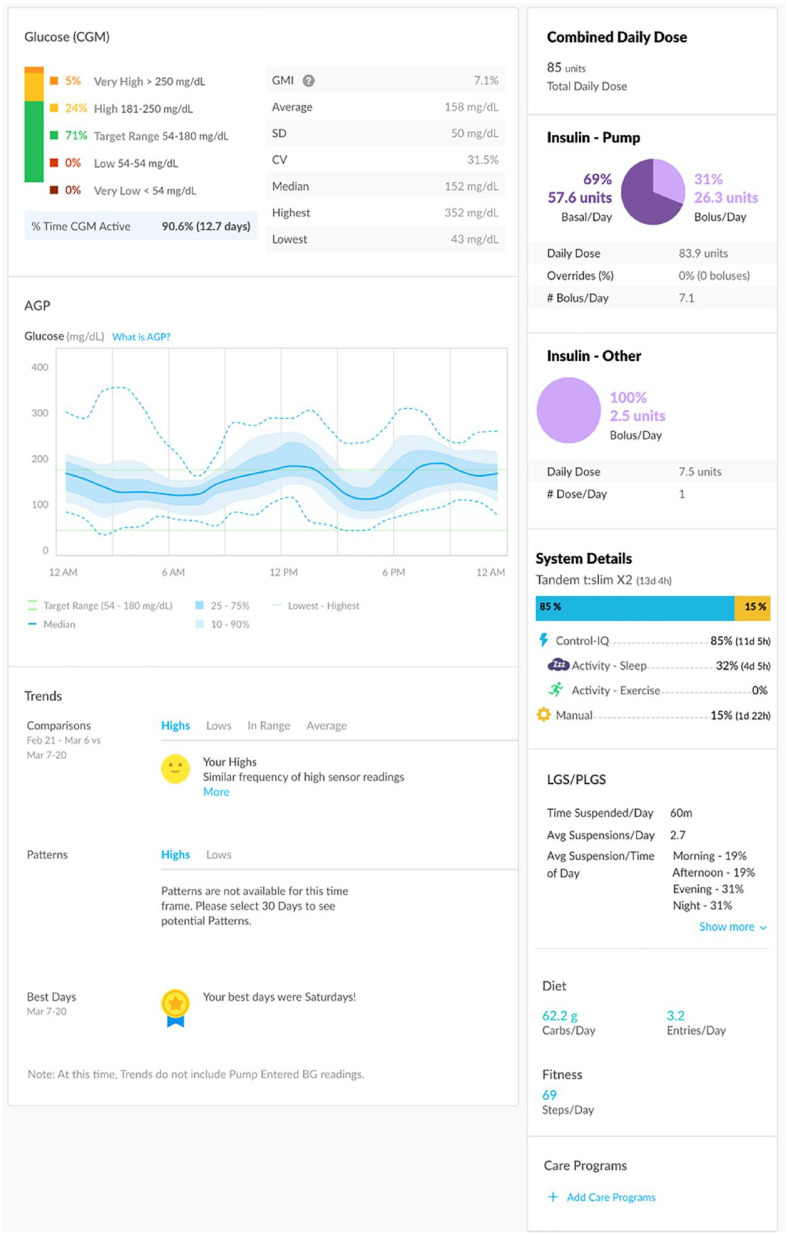
Glooko insulin dosing data platform. Abbreviation: AGP, ambulatory glucose profile; CGM, continuous glucose monitor; CV, coefficient of variation; GMI, glucose management indicator. Source: Figure courtesy of Glooko.
Figure 11.
Figure 11.
Tidepool insulin dosing data visualization. Abbreviation: BGM, blood glucose monitor; CGM, continuous glucose monitor. Source: Figure courtesy of Tidepool.
Figure 12.
Figure 12.
The iCoDE logo. Abbreviation: iCoDE, Integration of Continuous Glucose Monitor Data into the Electronic Health Record.
Figure 13.
Figure 13.
The iCoDE-2 logo. Abbreviation: iCoDE-2, integration of Connected Diabetes Device Data into the Electronic Health Record.

References

    1. Espinoza J, Klonoff DC, Vidmar A, et al. iCoDE June 22, 2022, Steering Committee Meeting Summary Report. https://www.diabetestechnology.org/icode/. Published 2022. Accessed March 23, 2023. - PMC - PubMed
    1. Xu NY, Nguyen KT, DuBord AY, et al. The launch of the iCoDE standard project. J Diabetes Sci Technol. 2022;16(4):887-895. doi: 10.1177/19322968221093662. - DOI - PMC - PubMed
    1. Espinoza J, Xu NY, Nguyen KT, Klonoff DC. The need for data standards and implementation policies to integrate CGM data into the electronic health record. J Diabetes Sci Technol. 2023;17:495-502. doi: 10.1177/19322968211058148. - DOI - PMC - PubMed
    1. Kuritzky L, Reid TS, Wysham CH. Practical guidance on effective basal insulin titration for primary care providers. Clin Diabetes. 2019;37(4):368-376. doi: 10.2337/cd18-0091. - DOI - PMC - PubMed
    1. Wolpert H, Polonsky WH, Rodbard D. Insulin metrics: need for development of consensus standards for reporting of insulin dosing data. Diabetes Technol Ther. 2021;23(7):522-526. doi: 10.1089/dia.2020.0631. - DOI - PubMed

Publication types