


Evaluation of Phytochemical Screening, Pigment Content, In Vitro Antioxidant, Antibacterial Potential and GC-MS Metabolite Profiling of Green Seaweed Caulerpa racemosa
- PMID: 37233472
- PMCID: PMC10224334
- DOI: 10.3390/md21050278
Evaluation of Phytochemical Screening, Pigment Content, In Vitro Antioxidant, Antibacterial Potential and GC-MS Metabolite Profiling of Green Seaweed Caulerpa racemosa
Abstract
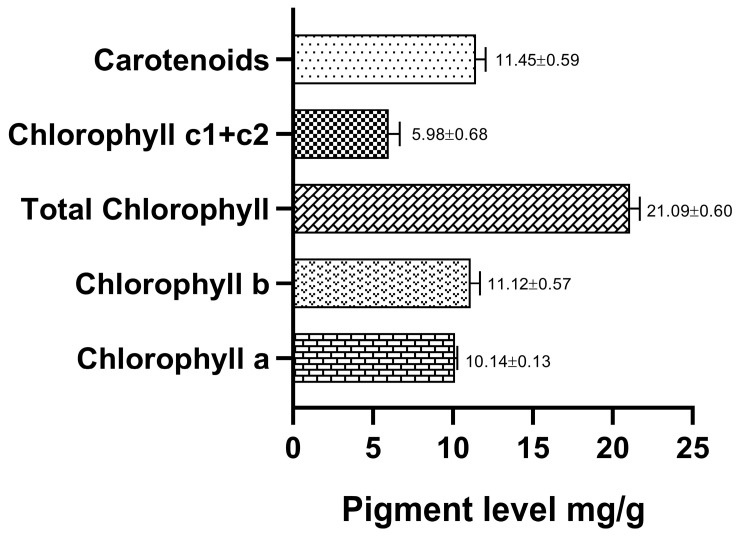
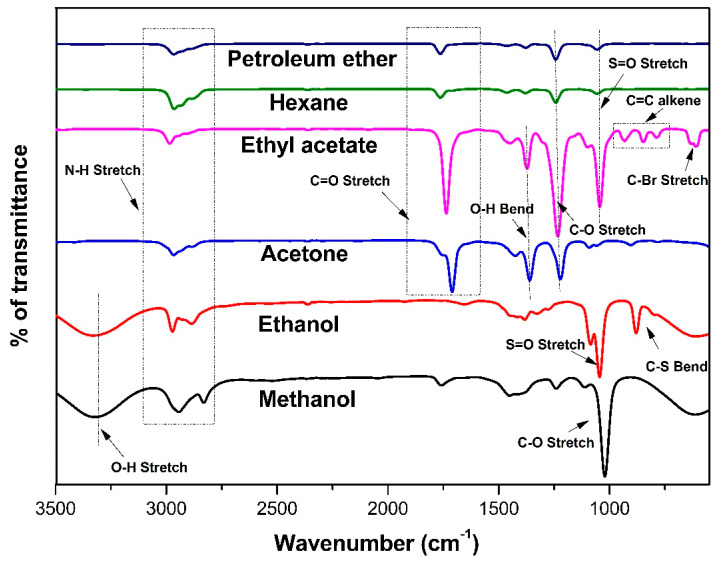
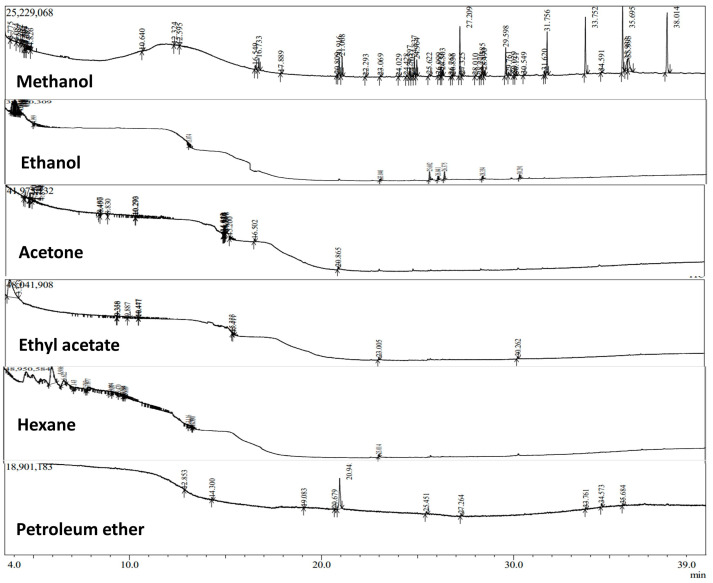
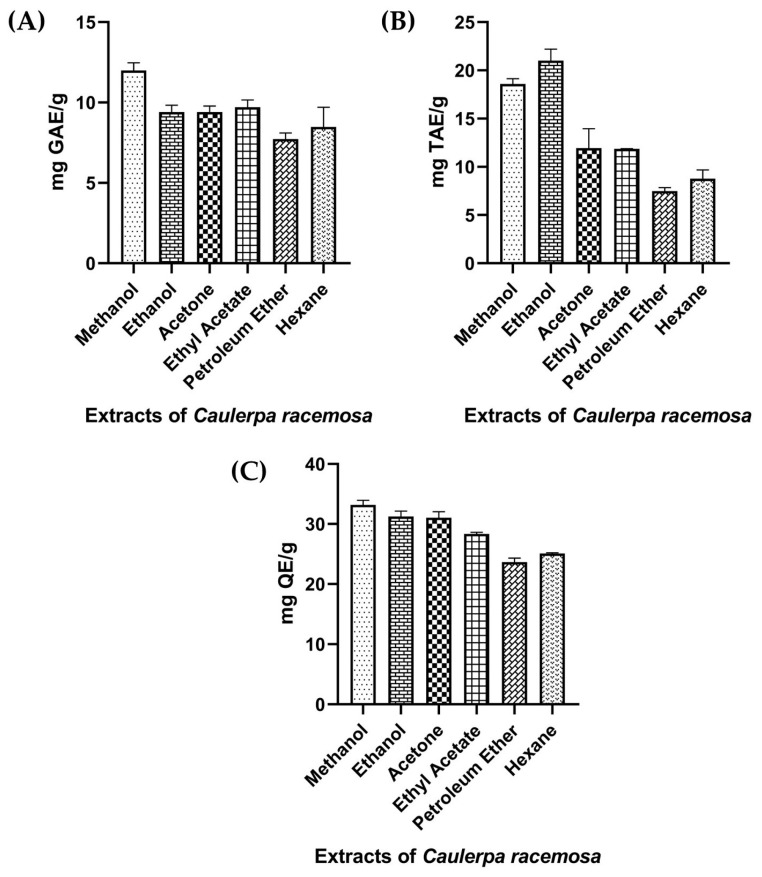
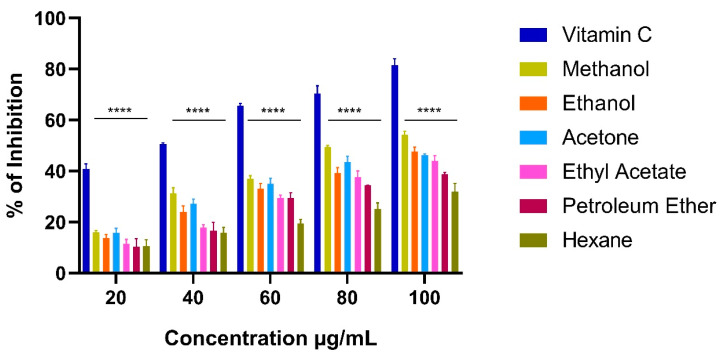
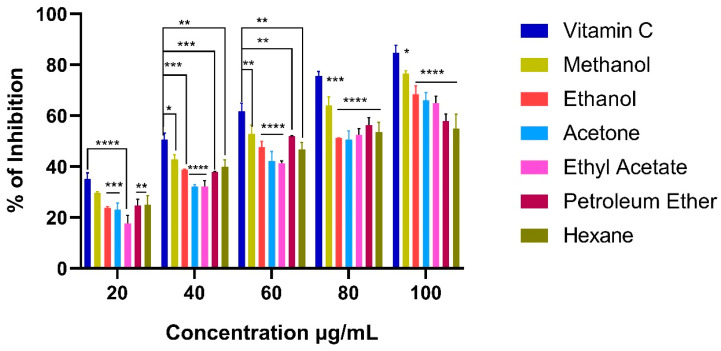
Exploration of seaweeds to unravel their bioactive metabolites from the perspective of wider applications gained substantial importance. The present study was performed to investigate the total phenolic, flavonoid, tannin content, antioxidant activity and antibacterial potential of various solvent extracts of green seaweed Caulerpa racemosa. The methanolic extract showed higher phenolic (11.99 ± 0.48 mg gallic acid equivalents/g), tannin (18.59 ± 0.54 mg tannic acid equivalents/g) and flavonoid (33.17 ± 0.76 mg quercetin equivalents/g) content than other extracts. Antioxidant activity was determined by using 2,2-diphenylpicrylhydrazyl (DPPH) and 2,2'-azino-bis(3-ethylbenzothiazoline-6-sulfonic acid) (ABTS) assay with different concentrations of C. racemosa extracts. The methanolic extract showed higher scavenging potential in both the DPPH and ABTS activity with the inhibition value of 54.21 ± 1.39% and 76.62 ± 1.08%, respectively. Bioactive profiling was also identified by using Gas chromatography-mass spectrometry (GC-MS) and Fourier transform infrared (FT-IR) techniques. These studies revealed the presence of valuable bioactive compounds in C. racemosa extracts and these compounds might be responsible for antimicrobial, antioxidant, anticancer and anti-mutagenic properties. Major compounds identified in GC-MS were 3,7,11,15-Tetramethyl-2-hexadecen-1-ol, 3-hexadecene and Phthalic acid. In terms of antibacterial activity, C. racemosa has promising antibacterial potential against aquatic pathogens Aeromonas hydrophila, Aeromonas veronii and Aeromonas salmonicida. Further evaluation studies focusing aquatic related aspects would reveal the novel bioproperties and applications of C. racemosa.
Keywords: GC-MS; antibacterial activity; antioxidant activity; bioactive compounds; seaweed.
Conflict of interest statement
The authors declare no conflict of interest.
Figures
References
-
- Mahendran S., Sankaralingam S., Muthuramalinga Sethu S., Kathiresan D., Muthumani M., Kousalya L., Palpperumal S., Harinathan B. Evaluation of Antioxidant and Cytotoxicity Activities of Polyphenol Extracted from Brown Seaweed Sargassum Tenerrimum Biomass. Biomass Convers. Biorefinery. 2022:1–7. doi: 10.1007/s13399-022-02301-x. - DOI
-
- Zainuddin E.N., Anshary H., Huyyirnah H., Hiola R., Baxa D.V. Antibacterial Activity of Caulerpa racemosa against Pathogenic Bacteria Promoting “Ice-Ice” Disease in the Red Alga Gracilaria Verrucosa. J. Appl. Phycol. 2019;31:3201–3212. doi: 10.1007/s10811-019-01805-w. - DOI
-
- Ganesan A.R., Tiwari U., Rajauria G. Seaweed Nutraceuticals and Their Therapeutic Role in Disease Prevention. Food Sci. Hum. Wellness. 2019;8:252–263. doi: 10.1016/j.fshw.2019.08.001. - DOI
-
- Buschmann A.H., Camus C., Infante J., Neori A., Israel Á., Hernández-González M.C., Pereda S.V., Gomez-Pinchetti J.L., Golberg A., Tadmor-Shalev N., et al. Seaweed Production: Overview of the Global State of Exploitation, Farming and Emerging Research Activity. Eur. J. Phycol. 2017;52:391–406. doi: 10.1080/09670262.2017.1365175. - DOI
MeSH terms
Substances
Grants and funding
LinkOut - more resources
Full Text Sources
Miscellaneous
