


Barriers and facilitators of HPV vaccination in sub-saharan Africa: a systematic review
- PMID: 37237329
- PMCID: PMC10214362
- DOI: 10.1186/s12889-023-15842-1
Barriers and facilitators of HPV vaccination in sub-saharan Africa: a systematic review
Abstract
Background: Human Papilloma Virus (HPV) is the most common sexually transmitted infection worldwide. Globally, both men and women have a 50% risk of being infected at least once in their life. HPV prevalence is among the highest in sub-Saharan Africa (SSA), at an average of 24%. HPV causes different types of cancers, including cervical cancer (CC), which is the leading cause of cancer deaths among women in SSA. HPV-vaccination has been proven to be effective in reducing HPV induced cancers. SSA countries are delayed in reaching the WHO's target of fully vaccinating 90% of girls within the age of 15 by 2030. Our systematic review aims to identify barriers and facilitators of HPV-vaccination in SSA to inform national implementation strategies in the region.
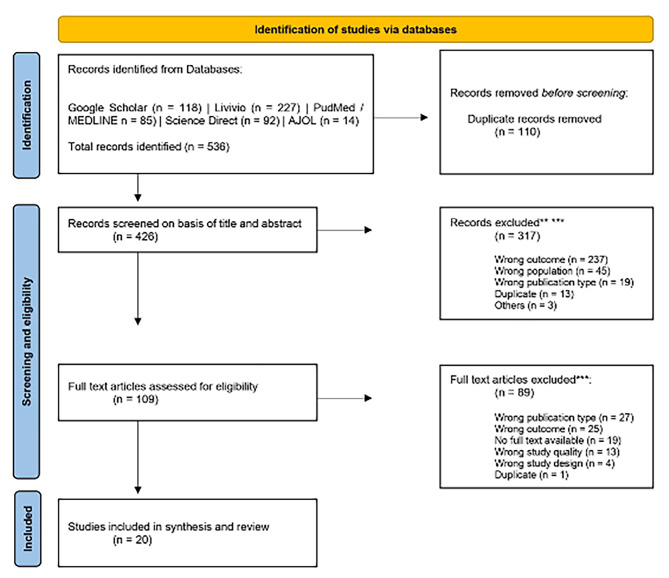
Methods: This is a mixed method systematic review based on the PRISMA statement and The Joanna Briggs Institute Reviewers' Manual. Search strategies were adapted to each selected database: PubMed/MEDLINE, Livivo, Google Scholar, Science Direct, and African Journals Online for papers published in English, Italian, German, French and Spanish between 1 December 2011 and 31 December 2021. Zotero and Rayyan were the software used for data management. The appraisal was conducted by three independent reviewers.
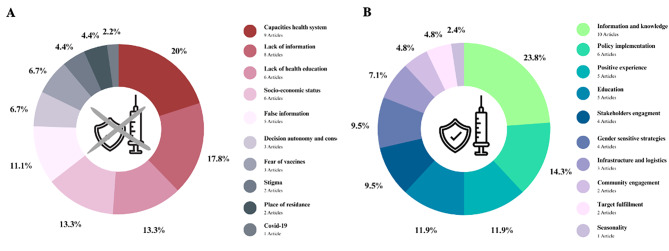
Results: A total of 20 articles were selected for appraisal from an initial 536 articles. Barriers included: limited health system capacities, socio-economic status, stigma, fear and costs of vaccines, negative experience with vaccinations, COVID-19 pandemic, lack of correct information, health education (HE) and consent. Additionally, we found that boys are scarcely considered for HPV-vaccination by parents and stakeholders. Facilitators included: information and knowledge, policy implementation, positive experience with vaccinations, HE, stakeholders' engagement, women's empowerment, community engagement, seasonality, and target-oriented vaccination campaigns.
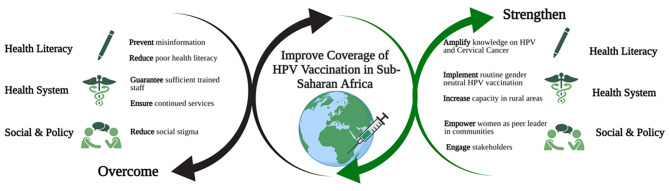
Conclusions: This review synthesizes barriers and facilitators of HPV-vaccinations in SSA. Addressing these can contribute to the implementation of more effective HPV immunization programs targeted at eliminating CC in line with the WHO 90/70/90 strategy.
Registration and funding: Protocol ID: CRD42022338609 registered in the International Prospective Register of Systematic Reviews (PROSPERO). Partial funds: German Centre for Infection research (DZIF) project NAMASTE: 8,008,803,819.
Keywords: Human papillomavirus viruses [Mesh]; Papillomavirus Vaccines [Mesh]; Sub-Saharan Africa [Mesh]; Uterine cervical neoplasms [Mesh].
© 2023. The Author(s).
Conflict of interest statement
The authors declare no competing interests.
Figures
References
Publication types
MeSH terms
Substances
Grants and funding
LinkOut - more resources
Full Text Sources
Medical
Research Materials
