


The neutrophil to lymphocyte ratio (NLR) positively correlates with the presence and severity of metabolic syndrome in obese adults, but not in obese children/adolescents
- PMID: 37237368
- PMCID: PMC10224327
- DOI: 10.1186/s12902-023-01369-4
The neutrophil to lymphocyte ratio (NLR) positively correlates with the presence and severity of metabolic syndrome in obese adults, but not in obese children/adolescents
Abstract
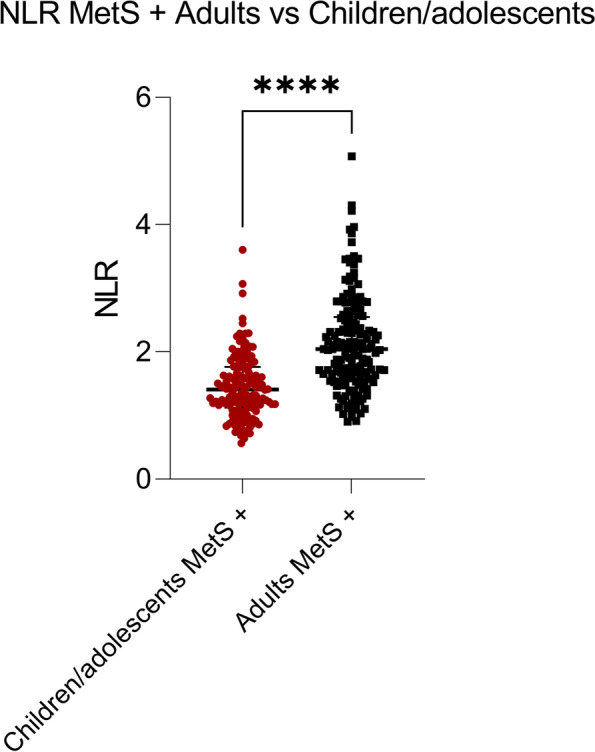
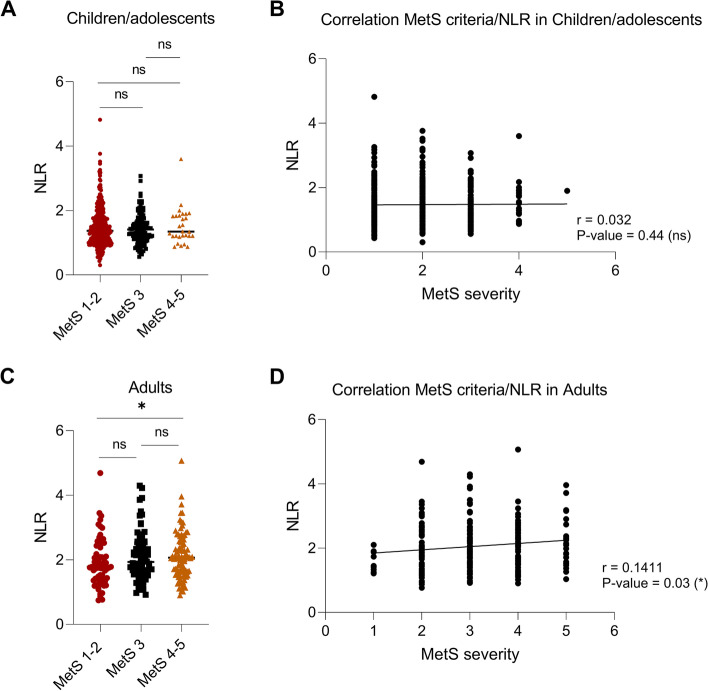
Metabolic syndrome (MetS) associated with obesity is a pathological condition increasing worldwide. Recent studies have demonstrated that the neutrophil to lymphocyte ratio (NLR) can be successfully used to stage MetS in obese adults. The aim of the study was to evaluate NLR values in 552 children/adolescents (M 219, F 333; 14.8 [12.9-16.3] years) and 231 adults (M 88, F 143; 52.3 [36.4-63.3] years) with morbid obesity, subdivided into subgroups according with the presence or absence of MetS. Adult patients with obesity showed a higher prevalence of MetS compared to the pediatric population (71% vs 26%), associated with a greater number of subjects with 3 and 4-5 altered components for MetS. NLR was higher (P-value = 0.041) in adults with MetS compared with those without. NLR values also positively correlated with the severity grade of the syndrome (P-value = 0.032). By contrast, in pediatric subjects with obesity with MetS, NLR values were comparable with those recorded in subjects without MetS (P-value = 0.861), no correlation being found with MetS severity (P-value = 0.441). Our study confirms the importance of NLR as an inflammatory indicator associated with MetS in adult subjects with severe obesity, while it excludes a similar role in children/adolescents.
Keywords: Adults; Children/adolescents; Metabolic syndrome; Neutrophil to lymphocyte ratio; Obesity.
© 2023. The Author(s).
Conflict of interest statement
The authors declare no competing interests.
Figures

References
-
- World Health Organisation (WHO). Obesity and Overweight. 2021. Available online: https://www.who.int/news-room/fact-sheets/detail/obesity-and-overweight.
-
- Abarca-Gómez L, Abdeen ZA, Hamid ZA, Abu-Rmeileh NM, Acosta-Cazares B, Acuin C, et al. Worldwide trends in body-mass index, underweight, overweight, and obesity from 1975 to 2016: a pooled analysis of 2416 population-based measurement studies in 128·9 million children, adolescents, and adults. Lancet. 2017;390(10113):2627–2642. doi: 10.1016/S0140-6736(17)32129-3. - DOI - PMC - PubMed
MeSH terms
LinkOut - more resources
Full Text Sources
Medical
