


Antifungals: From Pharmacokinetics to Clinical Practice
- PMID: 37237787
- PMCID: PMC10215229
- DOI: 10.3390/antibiotics12050884
Antifungals: From Pharmacokinetics to Clinical Practice
Abstract
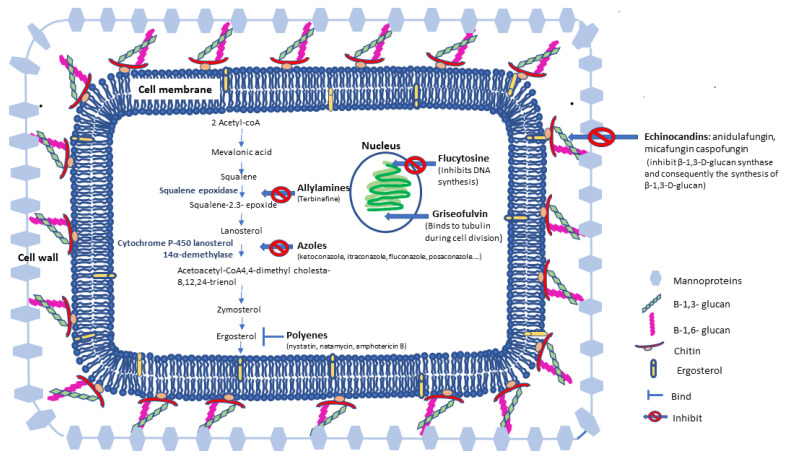
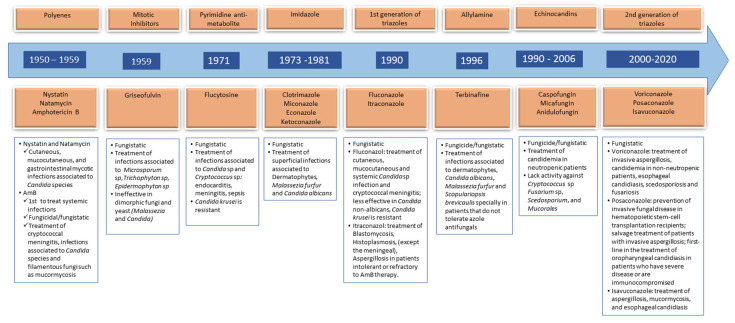
The use of antifungal drugs started in the 1950s with polyenes nystatin, natamycin and amphotericin B-deoxycholate (AmB). Until the present day, AmB has been considered to be a hallmark in the treatment of invasive systemic fungal infections. Nevertheless, the success and the use of AmB were associated with severe adverse effects which stimulated the development of new antifungal drugs such as azoles, pyrimidine antimetabolite, mitotic inhibitors, allylamines and echinochandins. However, all of these drugs presented one or more limitations associated with adverse reactions, administration route and more recently the development of resistance. To worsen this scenario, there has been an increase in fungal infections, especially in invasive systemic fungal infections that are particularly difficult to diagnose and treat. In 2022, the World Health Organization (WHO) published the first fungal priority pathogens list, alerting people to the increased incidence of invasive systemic fungal infections and to the associated risk of mortality/morbidity. The report also emphasized the need to rationally use existing drugs and develop new drugs. In this review, we performed an overview of the history of antifungals and their classification, mechanism of action, pharmacokinetic/pharmacodynamic (PK/PD) characteristics and clinical applications. In parallel, we also addressed the contribution of fungi biology and genetics to the development of resistance to antifungal drugs. Considering that drug effectiveness also depends on the mammalian host, we provide an overview on the roles of therapeutic drug monitoring and pharmacogenomics as means to improve the outcome, prevent/reduce antifungal toxicity and prevent the emergence of antifungal resistance. Finally, we present the new antifungals and their main characteristics.
Keywords: antifungal drugs; antifungal resistance; azole antifungals; echinocandins; fungi; pharmacogenomics; polyene antifungals; therapeutic drug monitoring.
Conflict of interest statement
The authors declare no conflict of interest.
Figures
References
-
- Jefferys E. A scheme for the numerical classification of fungi. Bull. Br. Mycol. Soc. 1972;6:25–29. doi: 10.1016/S0007-1528(72)80012-9. - DOI
-
- Gilliland R.B. Yeast classification. J. Inst. Brew. 1971;77:276–284. doi: 10.1002/j.2050-0416.1971.tb06946.x. - DOI
-
- Talbot P.H.B. Principles of Fungal Taxonomy. Palgrave; London, UK: 1971. Fungi with a plasmodial thallus division myxomycota: Slime-moulds Affinity with Other Organisms; pp. 99–108.
Publication types
LinkOut - more resources
Full Text Sources
