


Harnessing the Dual Antimicrobial Mechanism of Action with Fe(8-Hydroxyquinoline)3 to Develop a Topical Ointment for Mupirocin-Resistant MRSA Infections
- PMID: 37237789
- PMCID: PMC10215364
- DOI: 10.3390/antibiotics12050886
Harnessing the Dual Antimicrobial Mechanism of Action with Fe(8-Hydroxyquinoline)3 to Develop a Topical Ointment for Mupirocin-Resistant MRSA Infections
Abstract
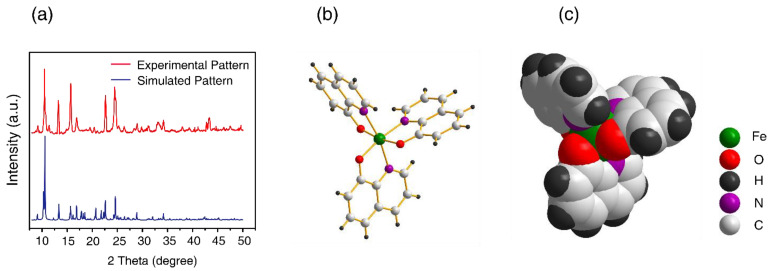
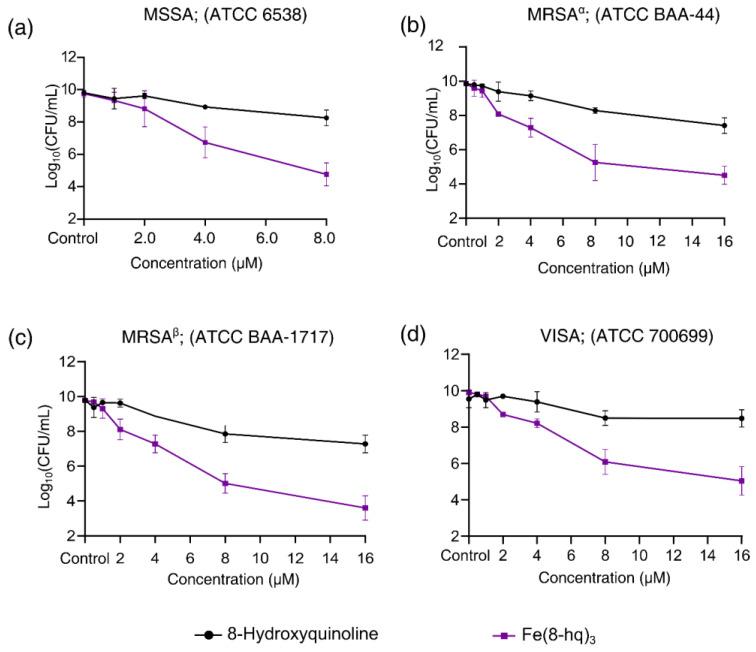
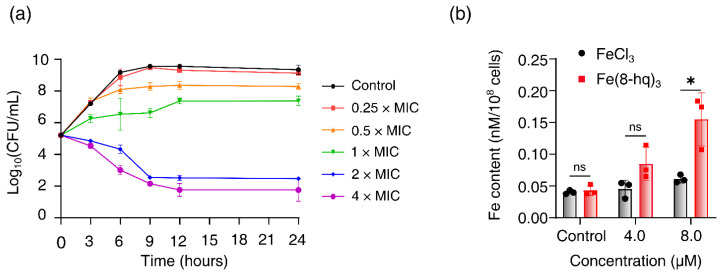
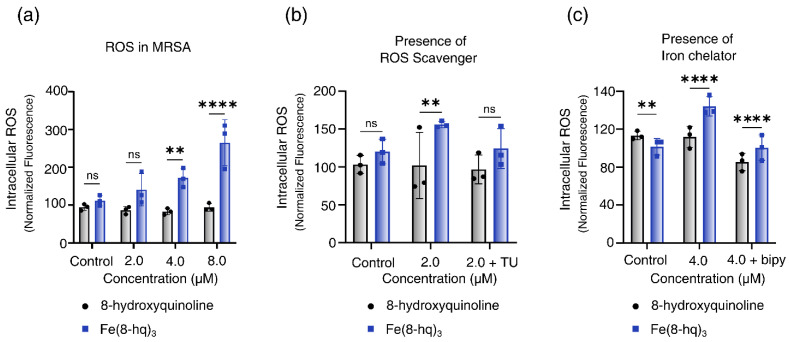
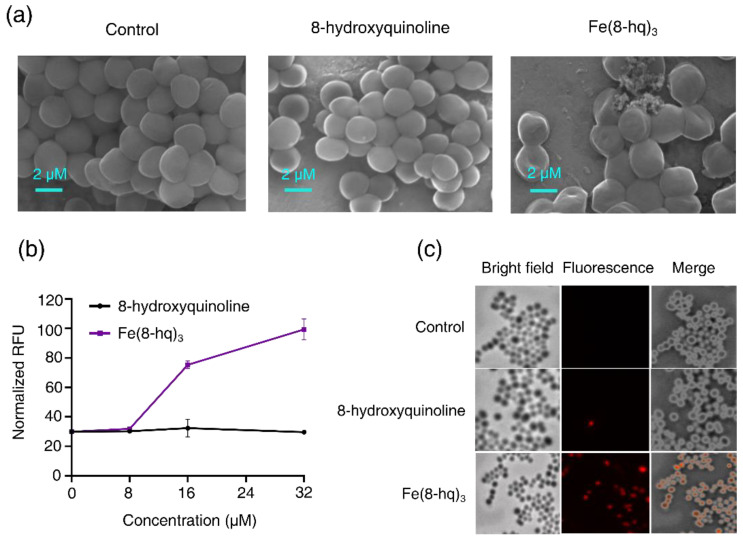
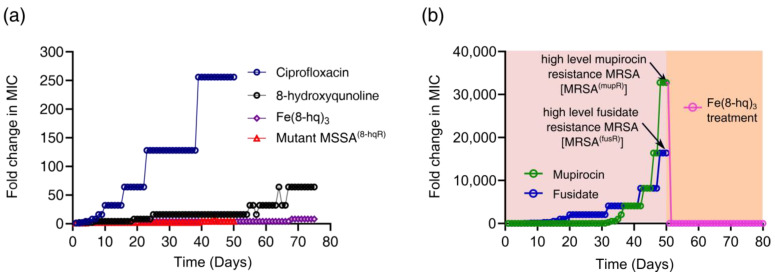
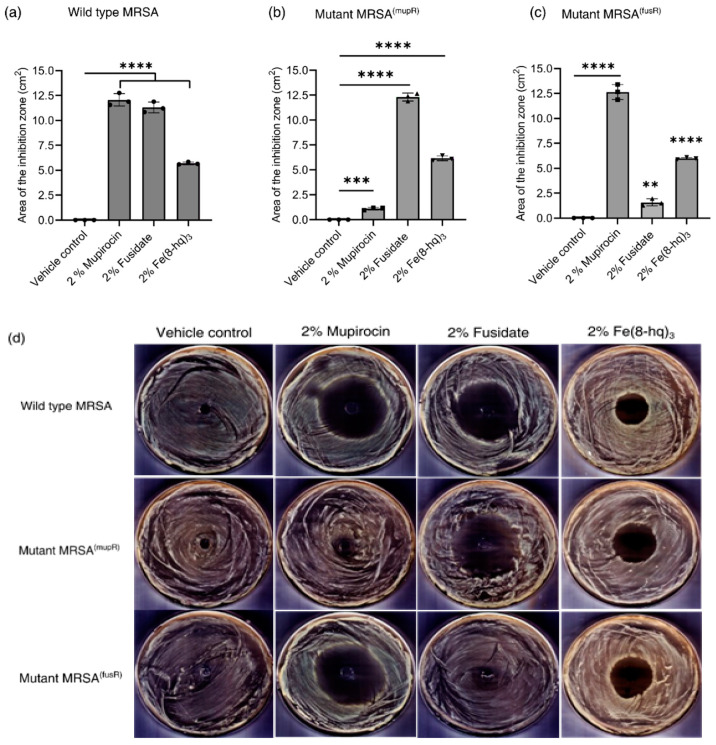
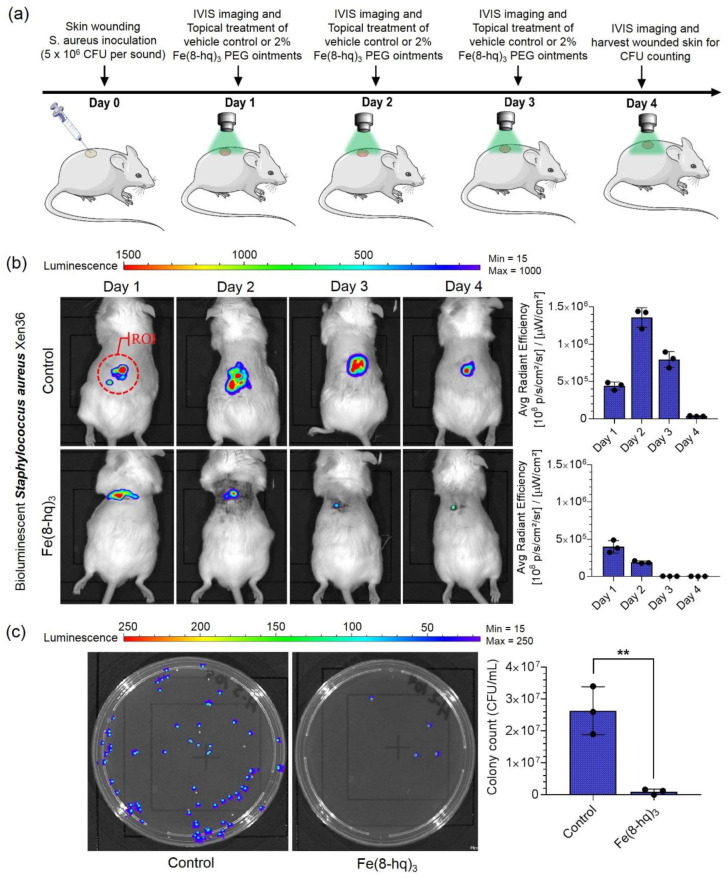
8-Hydroxyquinoline (8-hq) exhibits potent antimicrobial activity against Staphylococcus aureus (SA) bacteria with MIC = 16.0-32.0 µM owing to its ability to chelate metal ions such as Mn2+, Zn2+, and Cu2+ to disrupt metal homeostasis in bacterial cells. We demonstrate that Fe(8-hq)3, the 1:3 complex formed between Fe(III) and 8-hq, can readily transport Fe(III) across the bacterial cell membrane and deliver iron into the bacterial cell, thus, harnessing a dual antimicrobial mechanism of action that combines the bactericidal activity of iron with the metal chelating effect of 8-hq to kill bacteria. As a result, the antimicrobial potency of Fe(8-hq)3 is significantly enhanced in comparison with 8-hq. Resistance development by SA toward Fe(8-hq)3 is considerably delayed as compared with ciprofloxacin and 8-hq. Fe(8-hq)3 can also overcome the 8-hq and mupirocin resistance developed in the SA mutant and MRSA mutant bacteria, respectively. Fe(8-hq)3 can stimulate M1-like macrophage polarization of RAW 264.7 cells to kill the SA internalized in such macrophages. Fe(8-hq)3 exhibits a synergistic effect with both ciprofloxacin and imipenem, showing potential for combination therapies with topical and systemic antibiotics for more serious MRSA infections. The in vivo antimicrobial efficacy of a 2% Fe(8-hq)3 topical ointment is confirmed by the use of a murine model with skin wound infection by bioluminescent SA with a reduction of the bacterial burden by 99 ± 0.5%, indicating that this non-antibiotic iron complex has therapeutic potential for skin and soft tissue infections (SSTIs).
Keywords: Fe-based antimicrobials; Fenton reaction; bacterial iron metabolism; metal chelation; methicillin-resistant Staphylococcus aureus.
Conflict of interest statement
Authors declare no conflict of interest.
Figures
References
-
- Hajikhani B., Goudarzi M., Kakavandi S., Amini S., Zamani S., van Belkum A., Goudarzi H., Dadashi M. The global prevalence of fusidic acid resistance in clinical isolates of Staphylococcus aureus: A systematic review and meta-analysis. Antimicrob. Resist. Infect. Control. 2021;10:75. doi: 10.1186/s13756-021-00943-6. - DOI - PMC - PubMed
LinkOut - more resources
Full Text Sources
Molecular Biology Databases
Research Materials
