Review
. 2023 Apr 25;13(5):717.
doi: 10.3390/brainsci13050717.

A Comprehensive Review of Physical Therapy Interventions for Stroke Rehabilitation: Impairment-Based Approaches and Functional Goals

Affiliations
Review

A Comprehensive Review of Physical Therapy Interventions for Stroke Rehabilitation: Impairment-Based Approaches and Functional Goals

Jawaria Shahid et al. Brain Sci. .

Abstract

Stroke is the fourth leading cause of mortality and is estimated to be one of the major reasons for long-lasting disability worldwide. There are limited studies that describe the application of physical therapy interventions to prevent disabilities in stroke survivors and promote recovery after a stroke. In this review, we have described a wide range of interventions based on impairments, activity limitations, and goals in recovery during different stages of a stroke. This article mainly focuses on stroke rehabilitation tactics, including those for sensory function impairments, motor learning programs, hemianopia and unilateral neglect, flexibility and joint integrity, strength training, hypertonicity, postural control, and gait training. We conclude that, aside from medicine, stroke rehabilitation must address specific functional limitations to allow for group activities and superior use of a hemiparetic extremity. Medical doctors are often surprised by the variety of physiotherapeutic techniques available; they are unfamiliar with the approaches of researchers such as Bobath, Coulter, and Brunnstrom, among others, as well as the scientific reasoning behind these techniques.

Keywords: neurological injury; physical therapy; prognosis; rehabilitation; stroke.


Conflict of interest statement

The authors declare no conflict of interest.

Figures
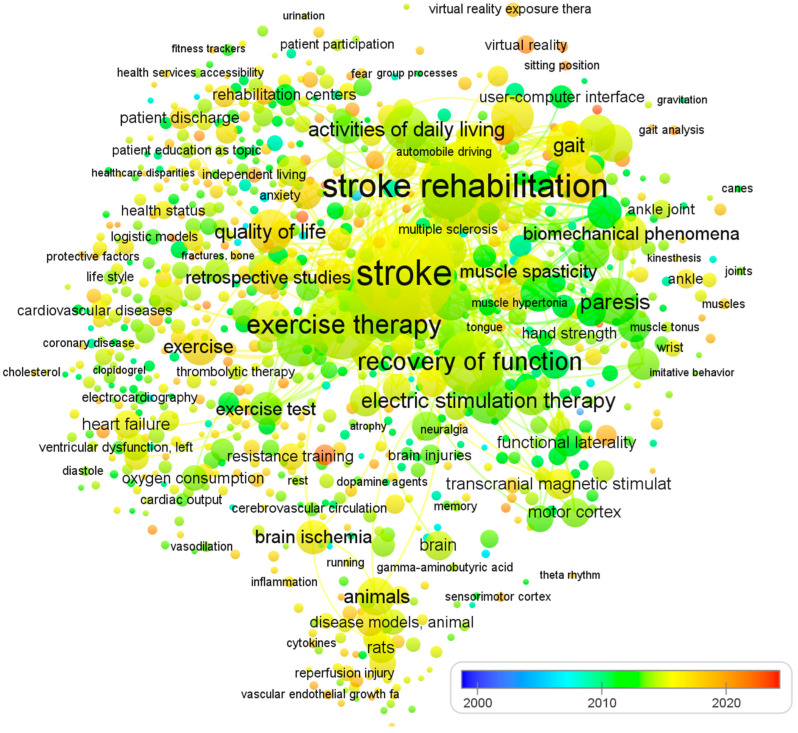
Figure 1
Figure 1
The visualization of co-occurring keywords in PubMed. The size of the nodes is determined by the number of articles published, while the spot colors represent the mean published time. If a keyword is depicted in a blue hue, it means that it was published earlier on average. Conversely, if it is represented in red, it implies that the keyword is relatively new.
Figure 2
Figure 2
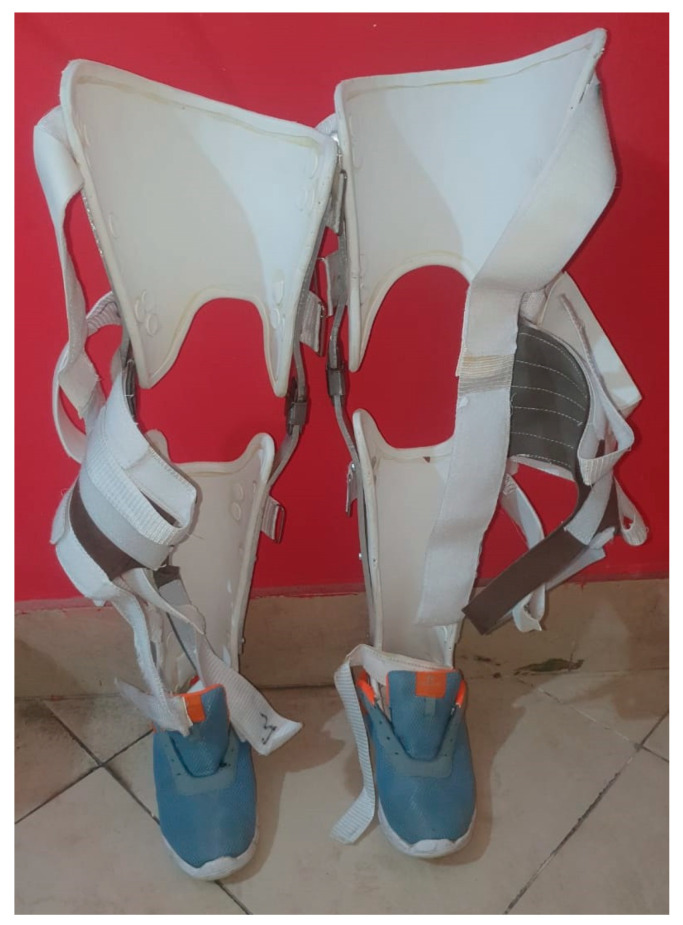
KAFO for paraplegic patients with knee contractures.
Figure 3
Figure 3
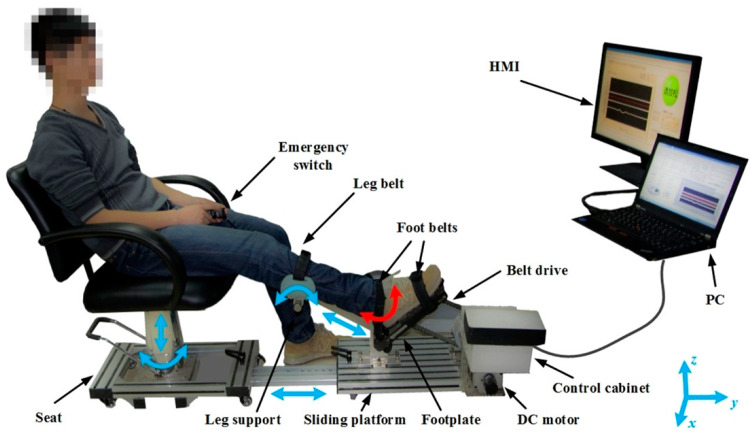
Robot-assisted therapy for lower limbs [60]. It comprises of a sliding platform, an adjustable seat, a robotic footplate, a leg support, an actuator, a control cabinet, emergency switches, and a human–machine interface (HMI). The red arrow shows the active movement of the ankle joint, while the blue arrows indicate the passive adjustable degrees of freedom. Image reused under the Creative Commons attribution license.
Figure 4
Figure 4
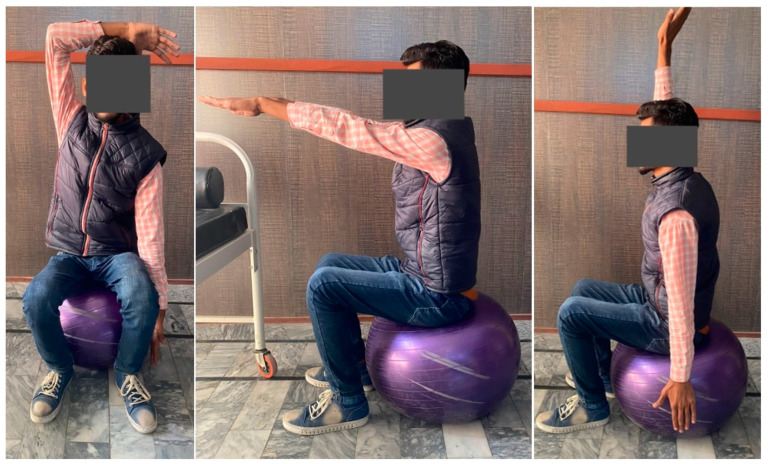
Strength and balance training using a Swiss ball. Pictures were taken with consent of a person.
Figure 5
Figure 5
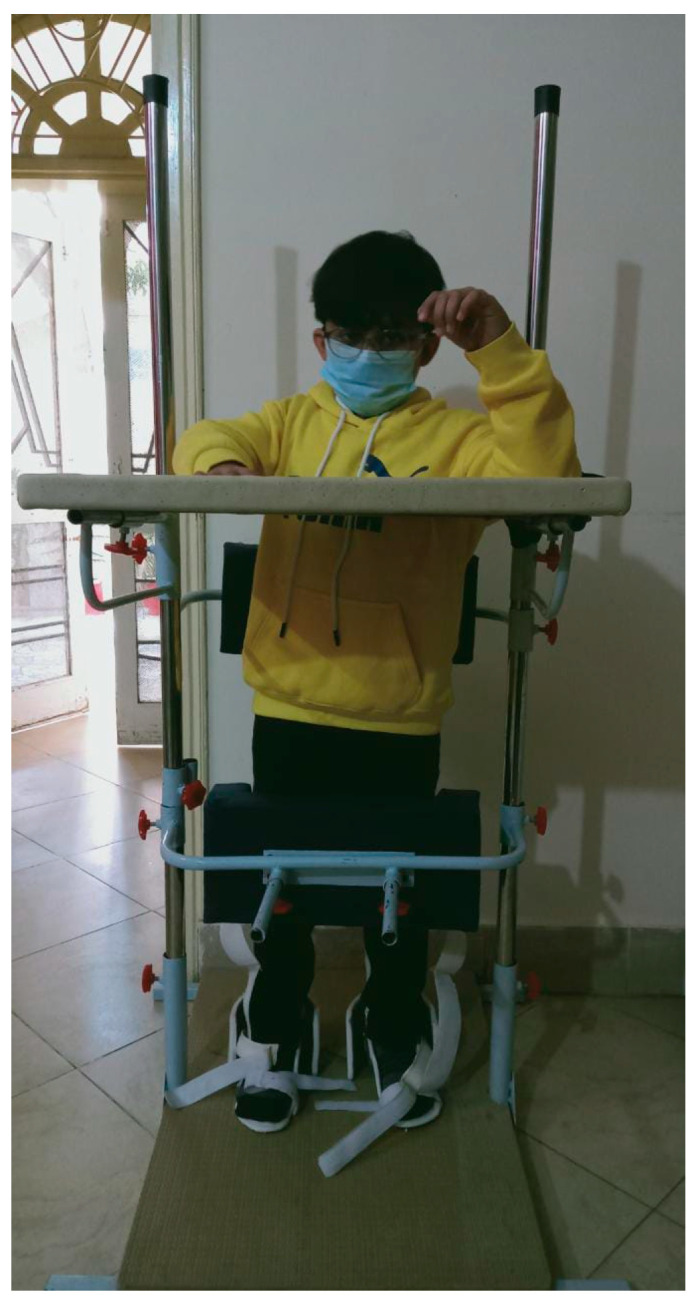
Standing board for posture control. Pictures were taken with consent of a person.
Figure 6
Figure 6
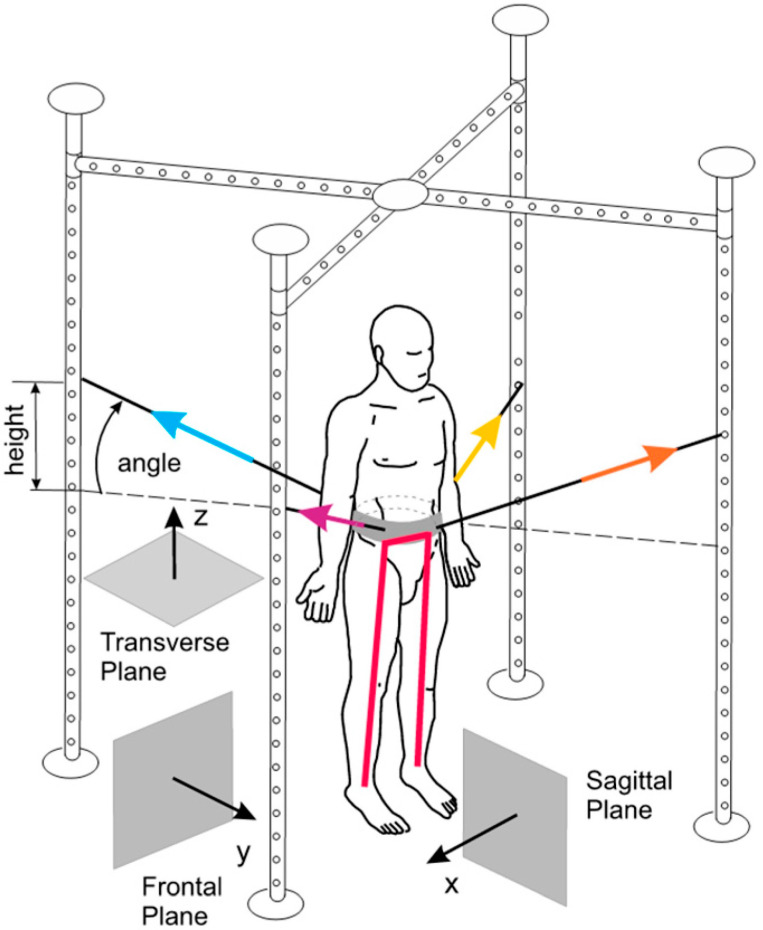
The SPIDER net equipment, part of the SPIDER program (strengthening program of intensive developmental exercises and activities for reaching maximal potential), utilizes reference planes and expander forces in standard anatomical positions [74]. Image is obtained from and reused under the Creative Commons attribution license.
Figure 7
Figure 7
Electromyographic biofeedback [82]. Image reused under the Creative Commons attribution license.
Figure 8
Figure 8
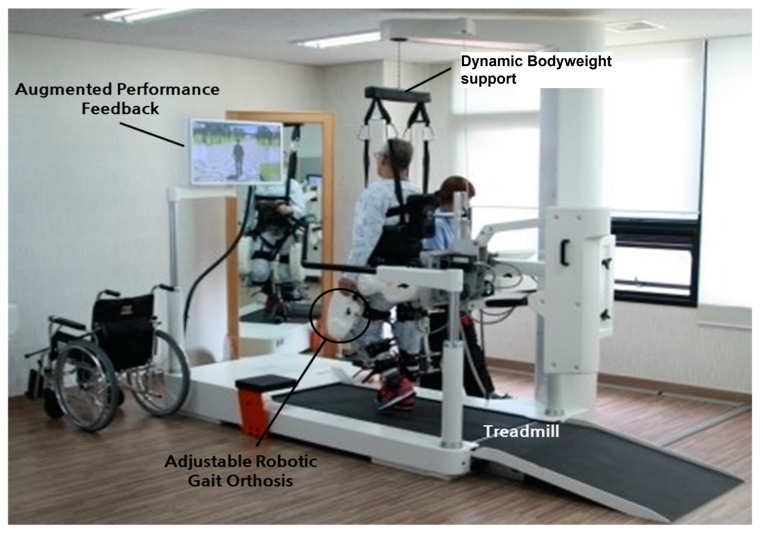
Setup of robot-assisted gait training [94]. Image reused under the Creative Commons attribution license.
Figure 9
Figure 9
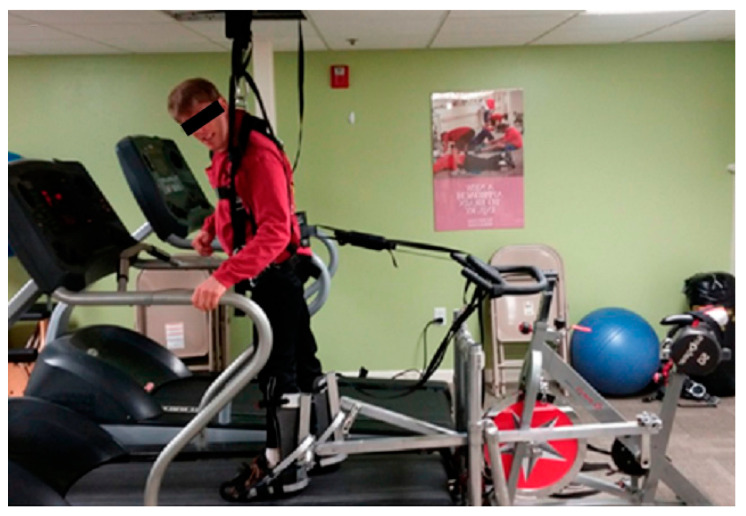
Bodyweight-supported treadmill training [98]. Image reused under the Creative Commons attribution license.

References

    1. Wang Q., Wang K., Ma Y., Li S., Xu Y. Serum Galectin-3 as a Potential Predictive Biomarker Is Associated with Poststroke Cognitive Impairment. Oxidative Med. Cell. Longev. 2021;2021:5827812. doi: 10.1155/2021/5827812. - DOI - PMC - PubMed
    1. Cheng J., Wang W., Xu J., Yin L., Liu Y., Wu J. Trends in Stroke Mortality Rate—China, 2004–2019. China CDC Wkly. 2022;4:513–517. doi: 10.46234/ccdcw2022.113. - DOI - PMC - PubMed
    1. Saunders D.H., Sanderson M., Hayes S., Johnson L., Kramer S., Carter D.D., Jarvis H., Brazzelli M., Mead G.E. Physical Fitness Training for Stroke Patients. Cochrane Database Syst. Rev. 2020;2020:CD003316. doi: 10.1002/14651858.CD003316.pub7. - DOI - PMC - PubMed
    1. Kozyolkin O., Kuznietsov A., Novikova L. Prediction of the Lethal Outcome of Acute Recurrent Cerebral Ischemic Hemispheric Stroke. Medicina. 2019;55:311. doi: 10.3390/medicina55060311. - DOI - PMC - PubMed
    1. Lawrence M., Lennon O., Faulkner J. Stroke Secondary Prevention: Everyone’s Business. Healthcare. 2022;10:2236. doi: 10.3390/healthcare10112236. - DOI - PMC - PubMed

LinkOut - more resources