


Morphological and Optical Coherence Tomography Aspects of Non-Carious Cervical Lesions
- PMID: 37240942
- PMCID: PMC10221090
- DOI: 10.3390/jpm13050772
Morphological and Optical Coherence Tomography Aspects of Non-Carious Cervical Lesions
Abstract
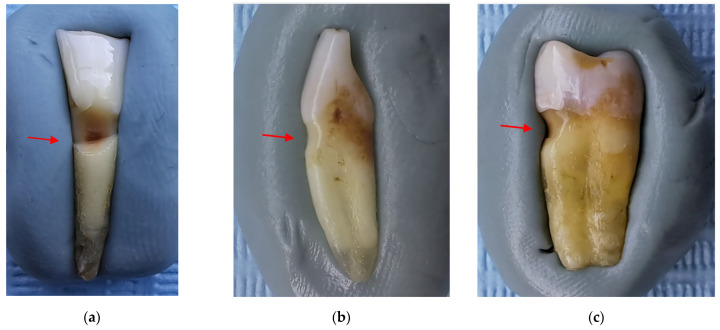
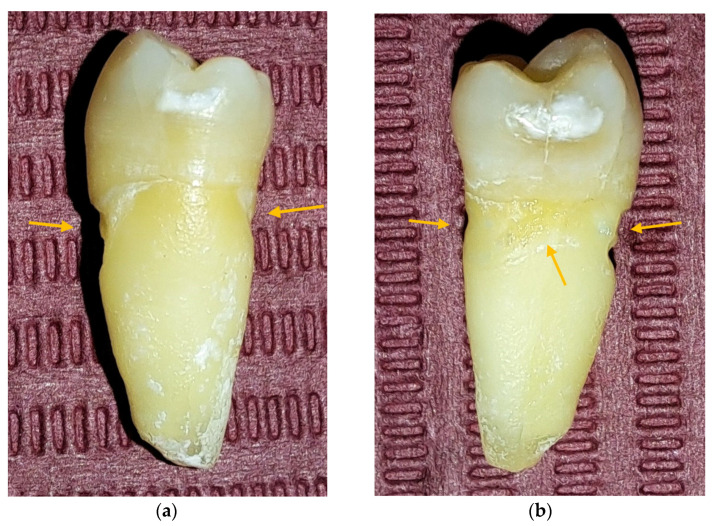
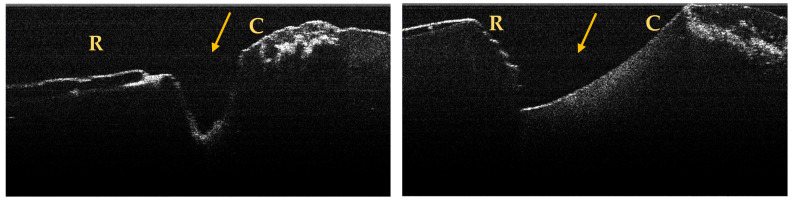
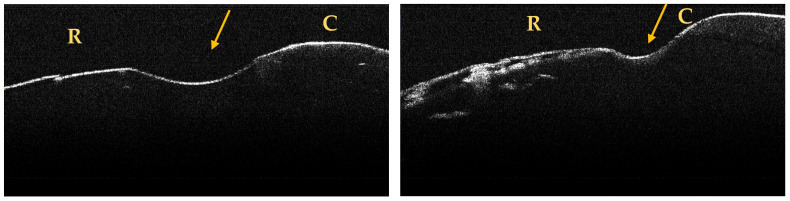
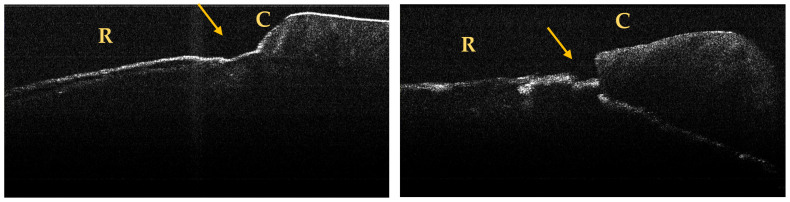
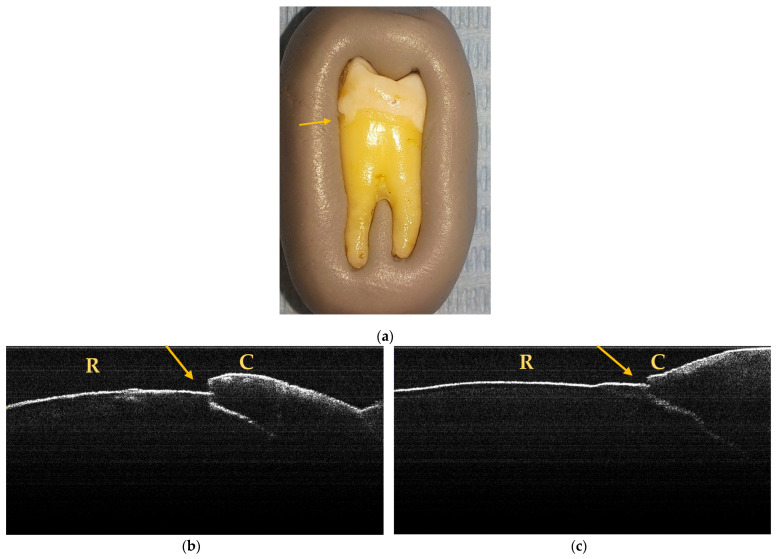
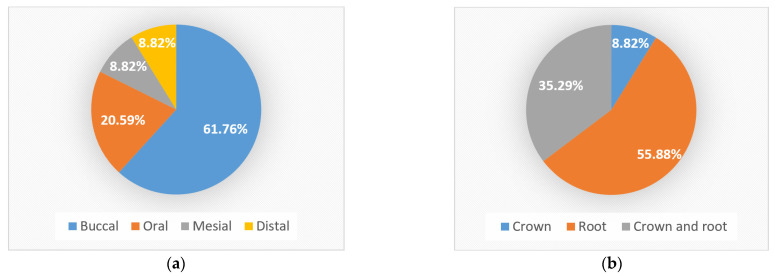
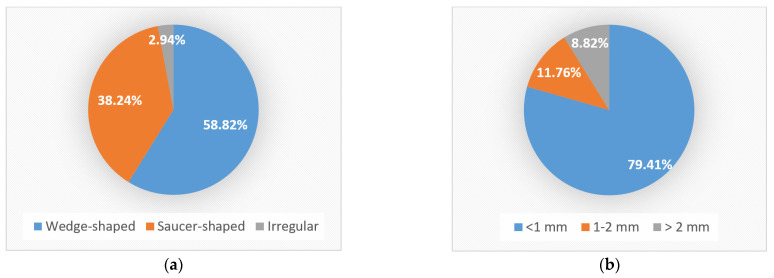
Non-carious cervical lesions (NCCLs) are considered the irreversible losses of dental hard tissues at the cemento-enamel junction, in the absence of acute trauma and dental caries. The aim of this study was to highlight the presence of NCCLs in cervical areas based on specific macroscopic aspects in order to establish their clinical form, size and location and to confirm the role of optical coherence tomography (OCT) examination in the early diagnosis of these lesions. For this study, 52 extracted teeth were used, which did not have endodontic treatments, fillings or carious lesions in the cervical area. All teeth were examined macroscopically and OCT was used to evaluate the degree of occlusal wear, the presence and clinical form of NCCLs. Most NCCLs were identified on the buccal surfaces of the premolars. The most frequently encountered clinical form was the wedge-shaped form, with a radicular location. NCCLs present most frequently in the wedge-shaped form. Teeth that presented several NCCLs were identified. The OCT examination is an adjunct method to evaluate the clinical forms of NCCL.
Keywords: non-carious cervical lesions; optical coherence tomography; wedge shaped.
Conflict of interest statement
The authors declare no conflict of interest.
Figures
References
-
- Femiano F., Sorice R., Femiano R., Femiano L., Nucci L., Grassia V., Annunziata M., Baldi A., Scotti N., Nastri L. Clinical Behavior of the Gingival Margin following Conservative “Coronally Dynamic” Restorations in the Presence of Non-Carious Cervical Lesions Associated with Gingival Recession: A Pilot Study. Dent. J. 2022;10:132. doi: 10.3390/dj10070132. - DOI - PMC - PubMed
-
- Koc Vural U., Meral E., Ergin E., Gürgan S. Twenty-four-month clinical performance of a glass hybrid restorative in non-carious cervical lesions of patients with bruxism: A split-mouth, randomized clinical trial. Clin. Oral Investig. 2019;24:1229–1238. doi: 10.1007/s00784-019-02986-x. - DOI - PubMed
-
- Hunter J. The Natural History of Human Teeth: Explaining Their Structure, Use, Formation, Growth, and Diseases. J. Johnson; London, UK: 1778. pp. 98–100.
LinkOut - more resources
Full Text Sources
