


Fungal Viruses Unveiled: A Comprehensive Review of Mycoviruses
- PMID: 37243288
- PMCID: PMC10224137
- DOI: 10.3390/v15051202
Fungal Viruses Unveiled: A Comprehensive Review of Mycoviruses
Erratum in
-
Correction: Hough et al. Fungal Viruses Unveiled: A Comprehensive Review of Mycoviruses. Viruses 2023, 15, 1202.Viruses. 2024 Apr 19;16(4):632. doi: 10.3390/v16040632. Viruses. 2024. PMID: 38675997 Free PMC article.
Abstract
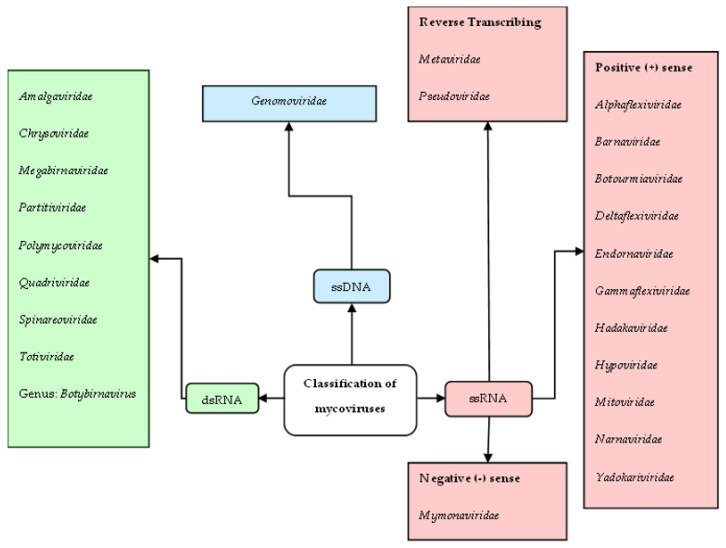
Mycoviruses (viruses of fungi) are ubiquitous throughout the fungal kingdom and are currently classified into 23 viral families and the genus botybirnavirus by the International Committee on the Taxonomy of Viruses (ICTV). The primary focus of mycoviral research has been on mycoviruses that infect plant pathogenic fungi, due to the ability of some to reduce the virulence of their host and thus act as potential biocontrol against these fungi. However, mycoviruses lack extracellular transmission mechanisms and rely on intercellular transmission through the hyphal anastomosis, which impedes successful transmission between different fungal strains. This review provides a comprehensive overview of mycoviruses, including their origins, host range, taxonomic classification into families, effects on their fungal counterparts, and the techniques employed in their discovery. The application of mycoviruses as biocontrol agents of plant pathogenic fungi is also discussed.
Keywords: biocontrol; diversity; hypervirulence; hypovirulence; mycoviruses; taxonomy; transmission.
Conflict of interest statement
The authors declare no conflict of interest.
Figures
References
-
- Walker P.J., Siddell S.G., Lefkowitz E.J., Mushegian A.R., Adriaenssens E.M., Dempsey D.M., Dutilh B.E., Harrach B., Harrison R.L., Hendrickson R.C. Changes to virus taxonomy and the Statutes ratified by the International Committee on Taxonomy of Viruses (2020) Arch. Virol. 2020;165:2737–2748. doi: 10.1007/s00705-020-04752-x. - DOI - PubMed
Publication types
MeSH terms
LinkOut - more resources
Full Text Sources
