


Update on Biomarkers for the Stratification of Indeterminate Pulmonary Nodules
- PMID: 37244587
- PMCID: PMC10645597
- DOI: 10.1016/j.chest.2023.05.025
Update on Biomarkers for the Stratification of Indeterminate Pulmonary Nodules
Abstract
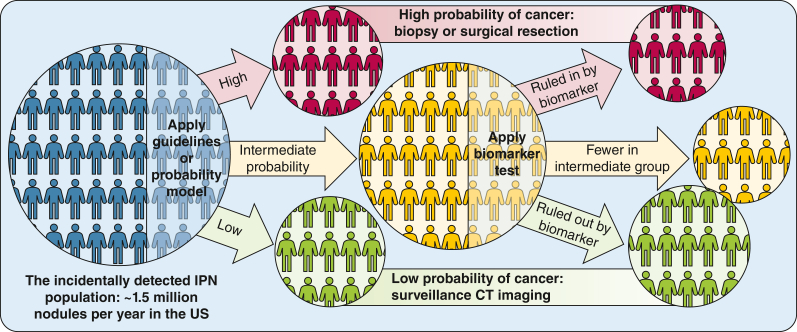
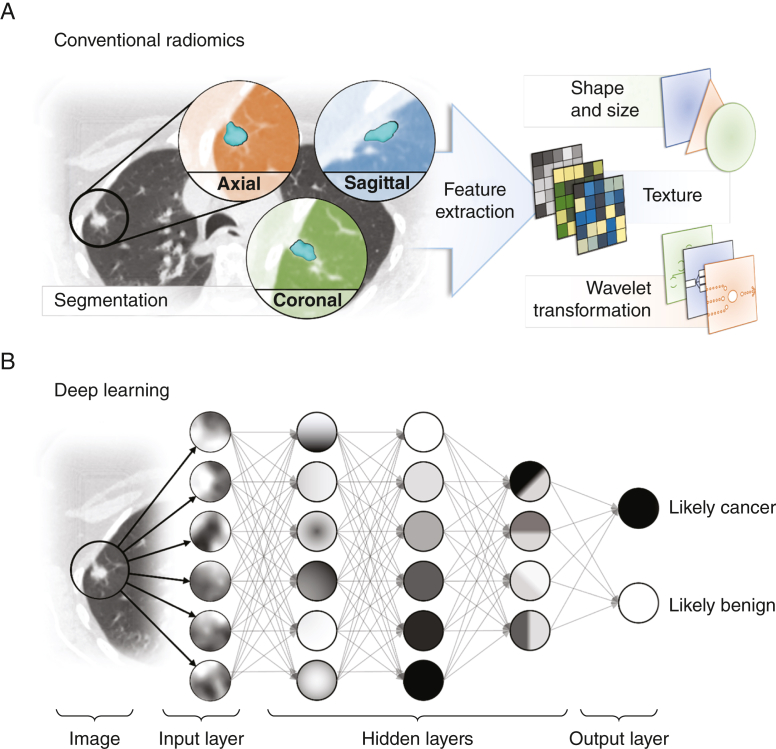
Lung cancer is the leading cause of cancer-related deaths. Early detection and diagnosis are critical, as survival decreases with advanced stages. Approximately 1.6 million nodules are incidentally detected every year on chest CT scan images in the United States. This number of nodules identified is likely much larger after accounting for screening-detected nodules. Most of these nodules, whether incidentally or screening detected, are benign. Despite this, many patients undergo unnecessary invasive procedures to rule out cancer because our current stratification approaches are suboptimal, particularly for intermediate probability nodules. Thus, noninvasive strategies are urgently needed. Biomarkers have been developed to assist through the continuum of lung cancer care and include blood protein-based biomarkers, liquid biopsies, quantitative imaging analysis (radiomics), exhaled volatile organic compounds, and bronchial or nasal epithelium genomic classifiers, among others. Although many biomarkers have been developed, few have been integrated into clinical practice as they lack clinical utility studies showing improved patient-centered outcomes. Rapid technologic advances and large network collaborative efforts will continue to drive the discovery and validation of many novel biomarkers. Ultimately, however, randomized clinical utility studies showing improved patient outcomes will be required to bring biomarkers into clinical practice.
Keywords: biomarkers; early detection; indeterminate pulmonary nodules; lung cancer.
Copyright © 2023 American College of Chest Physicians. Published by Elsevier Inc. All rights reserved.
Figures
References
-
- Gould M.K., Tang T., Liu I.L., et al. Recent trends in the identification of incidental pulmonary nodules. Am J Respir Crit Care Med. 2015;192(10):1208–1214. - PubMed
-
- Lokhandwala T., Bittoni M.A., Dann R.A., et al. Costs of diagnostic assessment for lung cancer: a Medicare claims analysis. Clin Lung Cancer. 2017;18(1):e27–e34. - PubMed
-
- Yang D., Zhang X., Powell C.A., et al. Probability of cancer in high-risk patients predicted by the protein-based lung cancer biomarker panel in China: LCBP study. Cancer. 2018;124(2):262–270. - PubMed
Publication types
MeSH terms
Substances
Grants and funding
LinkOut - more resources
Full Text Sources
Medical
