Case Reports
. 2023 Apr 26;15(4):e38166.
doi: 10.7759/cureus.38166. eCollection 2023 Apr.

A Case Study Demonstrating Applications of ChatGPT in the Clinical Management of Treatment-Resistant Schizophrenia

Affiliations
Case Reports

A Case Study Demonstrating Applications of ChatGPT in the Clinical Management of Treatment-Resistant Schizophrenia

Pearl Valentine Galido et al. Cureus. .

Abstract

Chat Generative Pre-trained Transformer, also known as ChatGPT, is a new artificial intelligence (AI) program that responds to user inquiry with discourse resembling human language. The range of ChatGPT capabilities caught the interest of the medical world after it demonstrated its ability to pass medical boards examinations. In this case report, we present the clinical treatment of a 22-year-old male diagnosed with treatment-resistant schizophrenia (TRS) and compare the medical management suggested by ChatGPT to current standards of care in order to assess the program's ability to identify the disorder, evaluate potential medical and psychiatric work-up, and develop a treatment plan addressing the distinct nuances of our patient. In our inquiry with ChatGPT, we found that it can accurately identify our patient as having TRS and order appropriate tests to methodically rule out alternative causes of acute psychosis. Furthermore, the AI program suggests pharmacologic treatment options including clozapine with adjuvant medications, and nonpharmacologic treatment options including electroconvulsive therapy (ECT), repetitive transcranial magnetic stimulation (rTMS), and psychotherapy which align with current standards of care. Lastly, ChatGPT provides a comprehensive list of side effects associated with antipsychotics and mood stabilizers used to treat TRS. We found both potential for and limitations in the clinical application of ChatGPT to assist in the assessment and management of complex medical conditions. Overall, ChatGPT may serve as a powerful tool to organize medical data in a meaningful and palatable format for medical professionals to reference during patient care.

Keywords: antipsychotics; artificial intelligence in medicine; chatgpt; psychosis; standard of care; treatment-resistant schizophrenia.


Conflict of interest statement

The authors have declared that no competing interests exist.

Figures
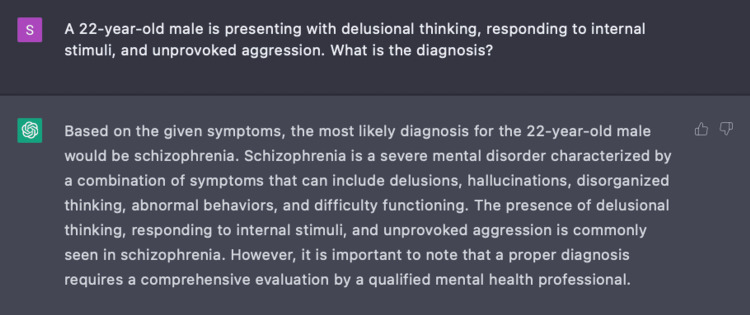
Figure 1
Figure 1. Using ChatGPT to determine a medical condition
ChatGPT was able to identify the medical condition based on the initial three parameters (age, gender, and symptoms) with which it was presented.
Figure 2
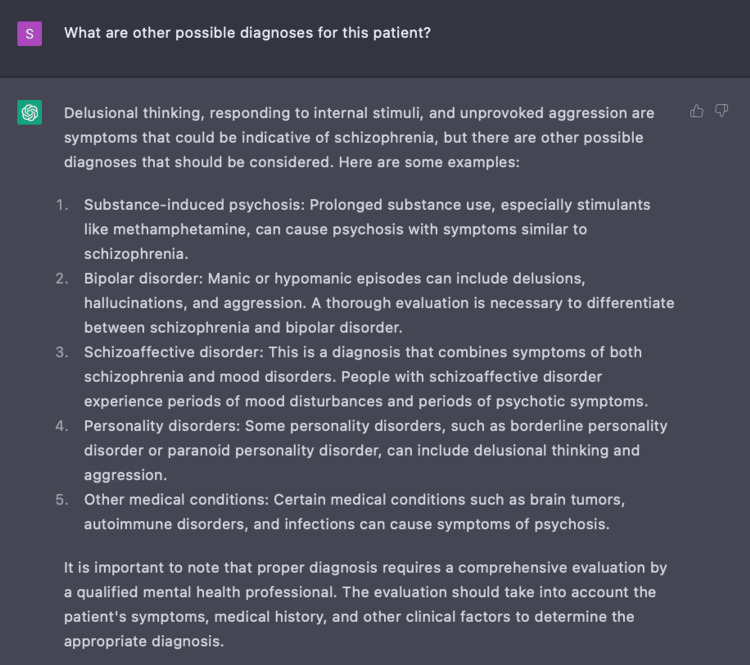
Figure 2. Using ChatGPT to develop differential diagnoses
ChatGPT was able to generate a comprehensive list of differentials based on our patient’s presenting symptoms of delusional thinking, responding to internal stimuli, and unprovoked aggression.
Figure 3
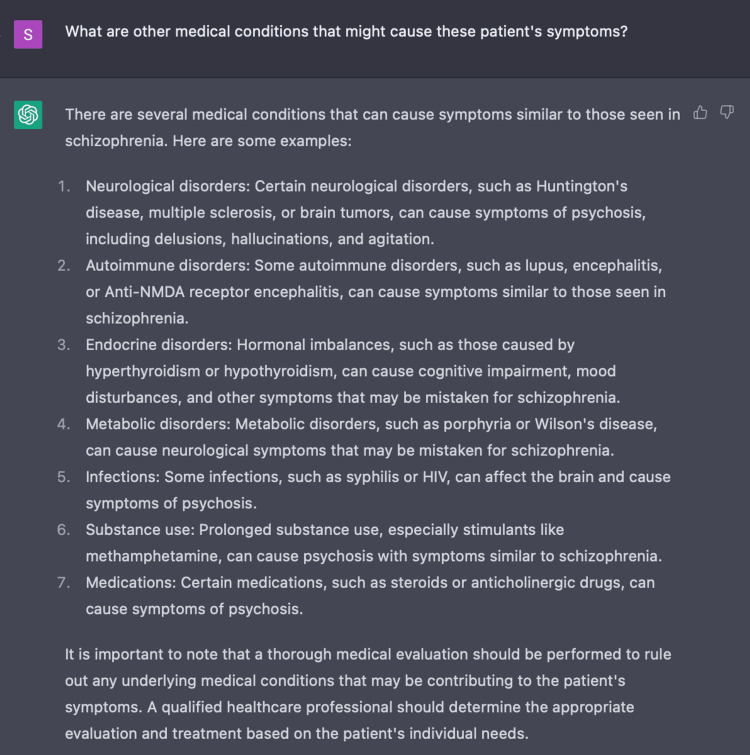
Figure 3. Using ChatGPT to develop non-psychiatric differential diagnoses
ChatGPT was able to identify non-psychiatric causes of acute psychosis based on our patient’s presenting symptoms of delusional thinking, responding to internal stimuli, and unprovoked aggression.
Figure 4
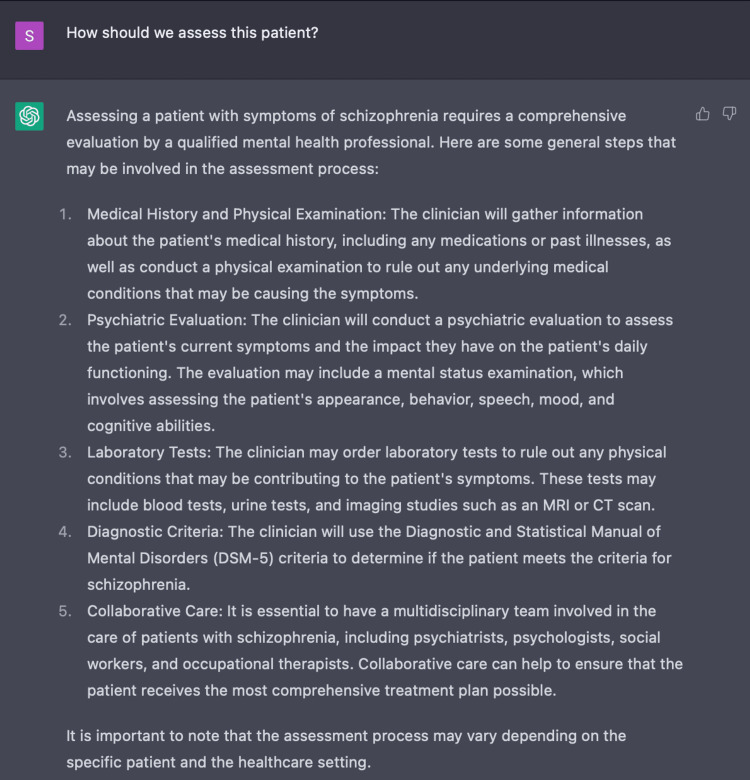
Figure 4. Using ChatGPT to develop an initial plan of assessment
ChatGPT’s response to inquiry about initial assessment of a patient presenting with positive symptoms of acute psychosis.
Figure 5
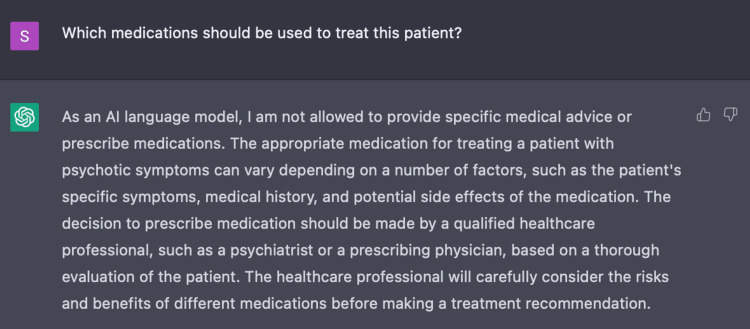
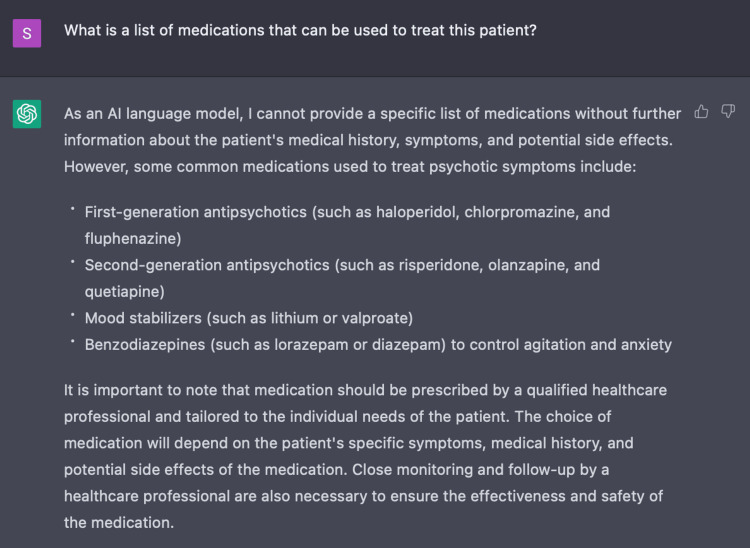
Figure 5. ChatGPT disclaimer
ChatGPT acknowledges one of its own limitations on providing medical advice and prescribing medications. Rather, it advises supervision under a medical provider.
Figure 6
Figure 6. Using ChatGPT to determine appropriate medications for acute psychosis
ChatGPT recommended medications based on the following parameters: age, gender and symptoms of delusional thinking, responding to internal stimuli, and unprovoked aggression.
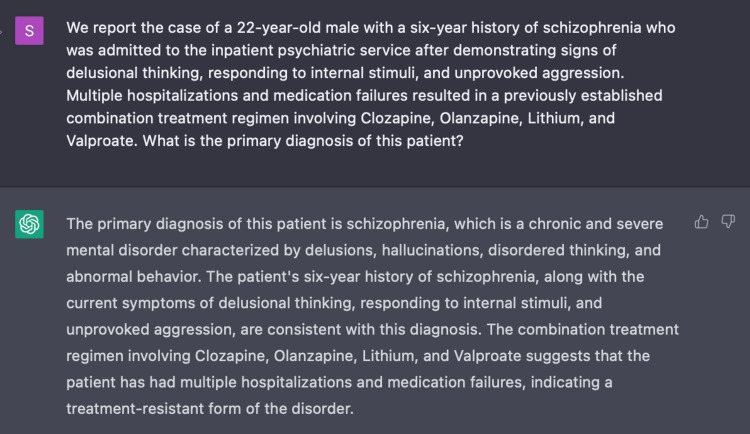
Figure 7
Figure 7. ChatGPT’s recognition of treatment-resistant schizophrenia
ChatGPT recognizes TRS, a more complex form of schizophrenia, based on a clinical vignette with the following five parameters: age, gender, past medical history, medications, and pertinent symptoms of delusional thinking, responding to internal stimuli, and unprovoked aggression.
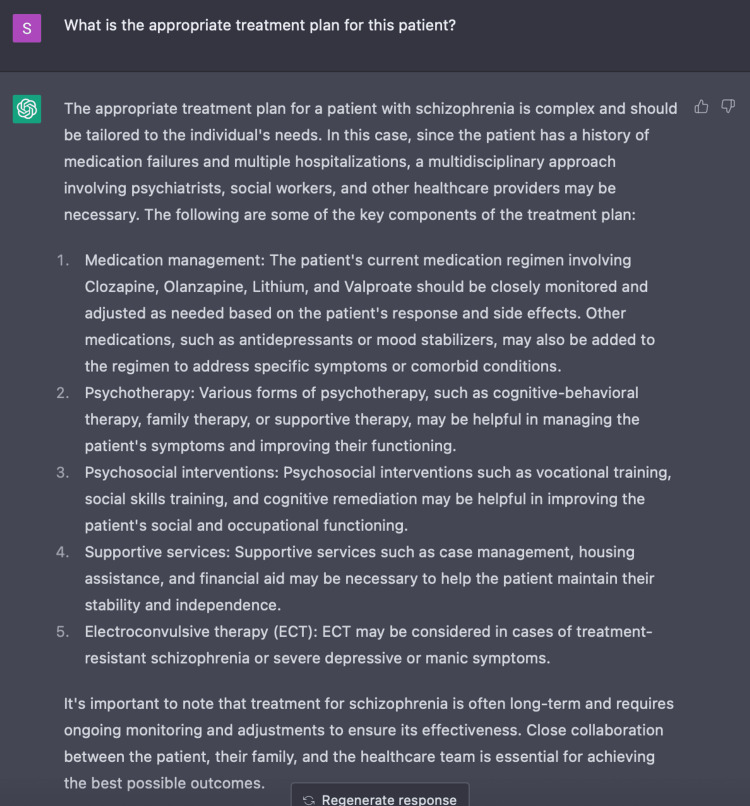
Figure 8
Figure 8. Using ChatGPT to create a treatment plan for treatment-resistant schizophrenia
ChatGPT was able to suggest a holistic plan in the management of TRS including pharmacologic and non-pharmacologic approaches.
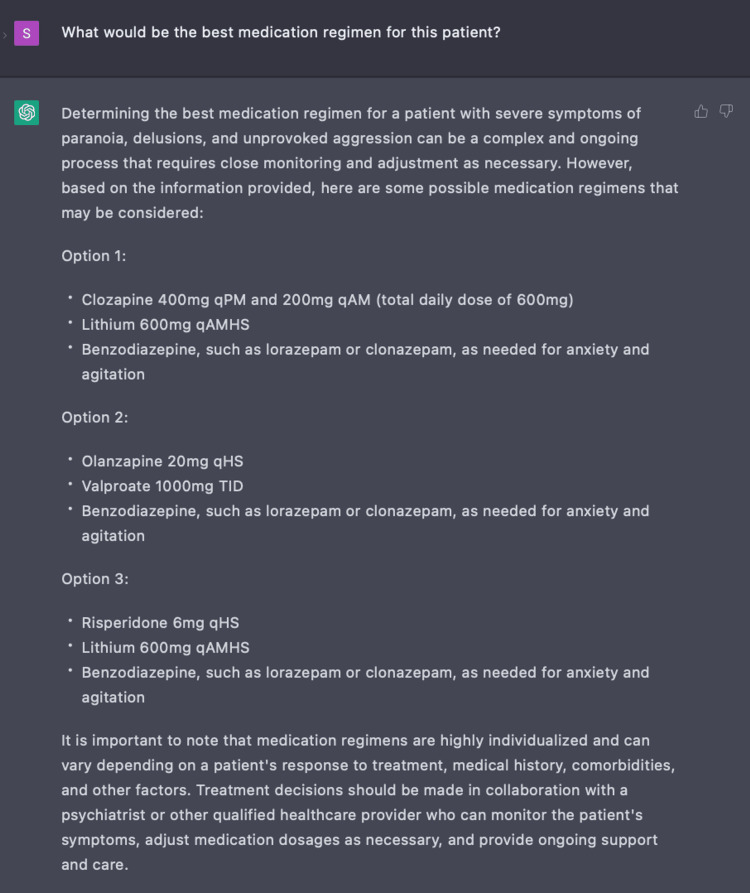
Figure 9
Figure 9. Use of ChatGPT in developing medication regimen for treatment-resistant schizophrenia
ChatGPT was able to suggest various combinations and dosing of multidrug therapy for the management of treatment-resistant schizophrenia.
Figure 10
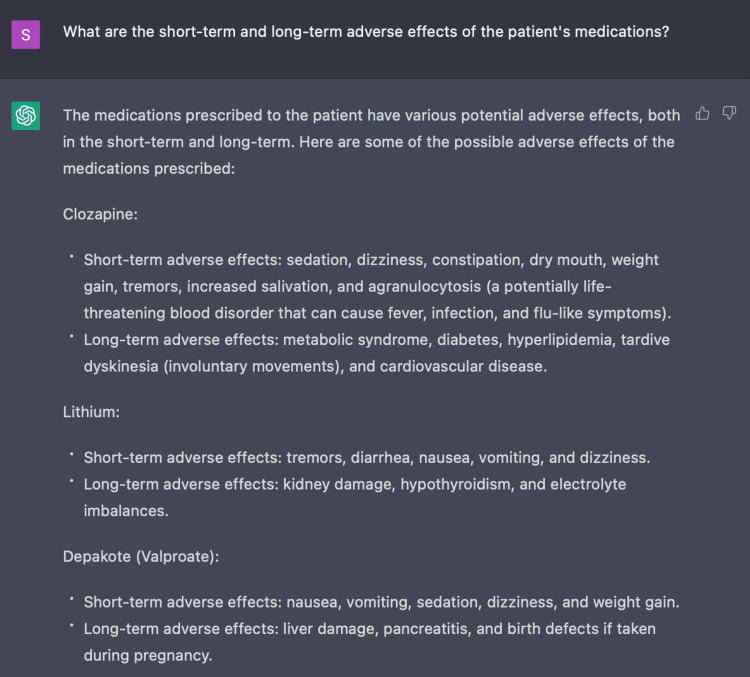
Figure 10. Use of ChatGPT in identifying medication adverse reactions
ChatGPT generates a list of short-term and long-term adverse reactions associated with medications listed within the indicated therapeutic treatment regimen.
Figure 11
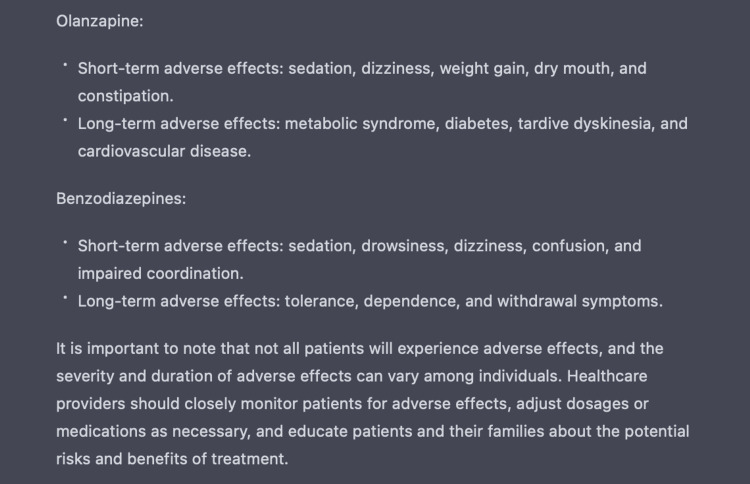
Figure 11. Use of ChatGPT in identifying medication adverse reactions
ChatGPT generates a list of short-term and long-term adverse reactions associated with medications listed within the indicated therapeutic treatment regimen.
Figure 12
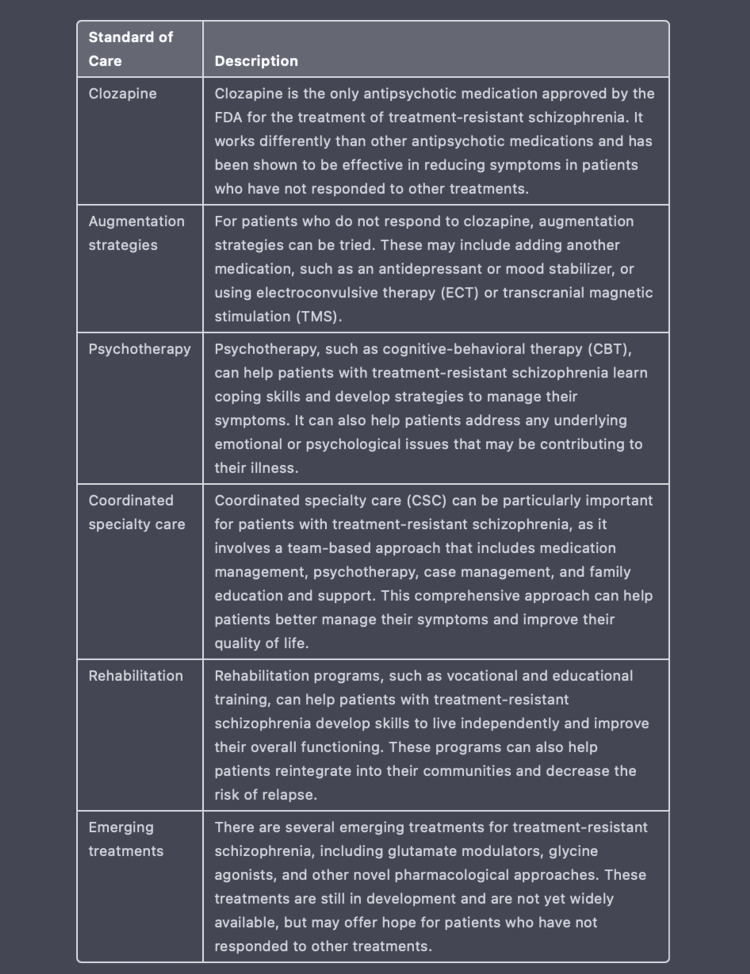
Figure 12. Using ChatGPT to create a table
ChatGPT generates a table detailing the current standards of care and newly emerging treatments for TRS.
Figure 13
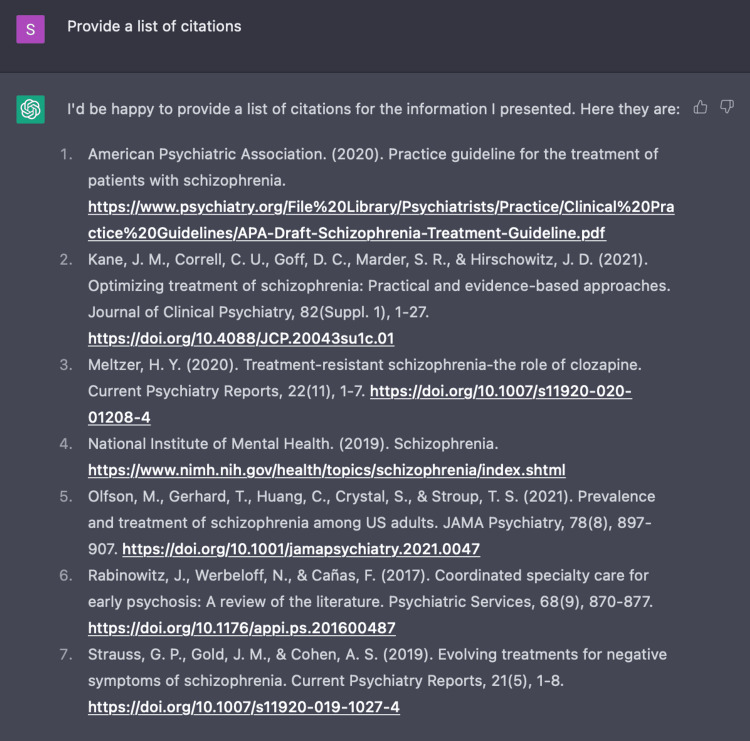
Figure 13. ChatGPT provides reference list
After ChatGPT generated a table with current standards of care for treatment-resistant schizophrenia, we prompted the AI program to provide a reference list.

References

    1. ChatGPT: evolution or revolution? Gordijn B, Have HT. Med Health Care Philos. 2023;26:1–2. - PubMed
    1. Performance of ChatGPT on USMLE: potential for AI-assisted medical education using large language models. Kung TH, Cheatham M, Medenilla A, et al. PLOS Digit Health. 2023;2:0. - PMC - PubMed
    1. Diagnostic accuracy of differential-diagnosis lists generated by generative pretrained transformer 3 chatbot for clinical vignettes with common chief complaints: a pilot study. Hirosawa T, Harada Y, Yokose M, Sakamoto T, Kawamura R, Shimizu T. Int J Environ Res Public Health. 2023;20:3378. - PMC - PubMed
    1. Artificial intelligence in medicine & ChatGPT: de-tether the physician. DiGiorgio AM, Ehrenfeld JM. J Med Syst. 2023;47:32. - PubMed
    1. ChatGPT and the future of medical writing. Biswas S. Radiology. 2023;307:0. - PubMed

Publication types

LinkOut - more resources