


High-throughput experimentation for discovery of biodegradable polyesters
- PMID: 37252959
- PMCID: PMC10266013
- DOI: 10.1073/pnas.2220021120
High-throughput experimentation for discovery of biodegradable polyesters
Erratum in
-
Correction for Fransen et al., High-throughput experimentation for discovery of biodegradable polyesters.Proc Natl Acad Sci U S A. 2024 May 14;121(20):e2321508121. doi: 10.1073/pnas.2321508121. Epub 2024 May 6. Proc Natl Acad Sci U S A. 2024. PMID: 38709936 Free PMC article. No abstract available.
Abstract
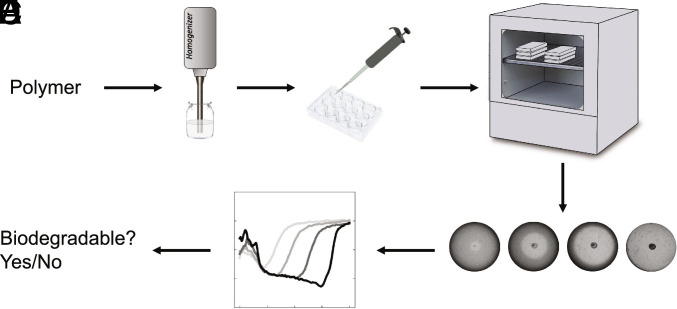
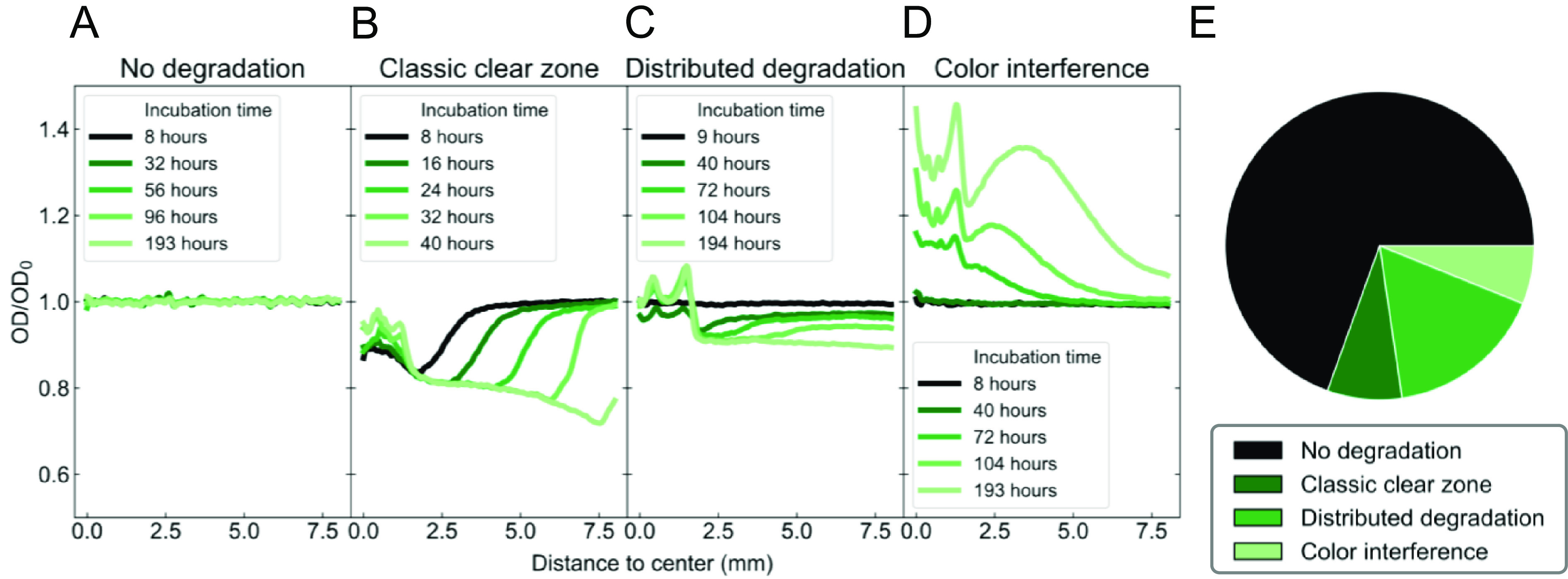
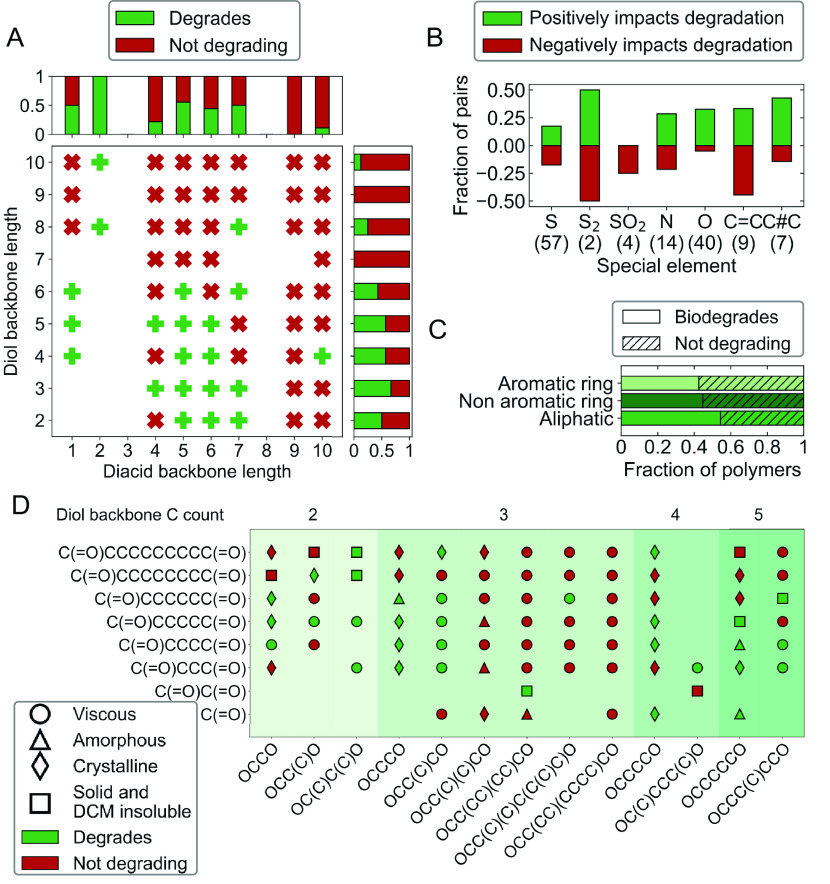
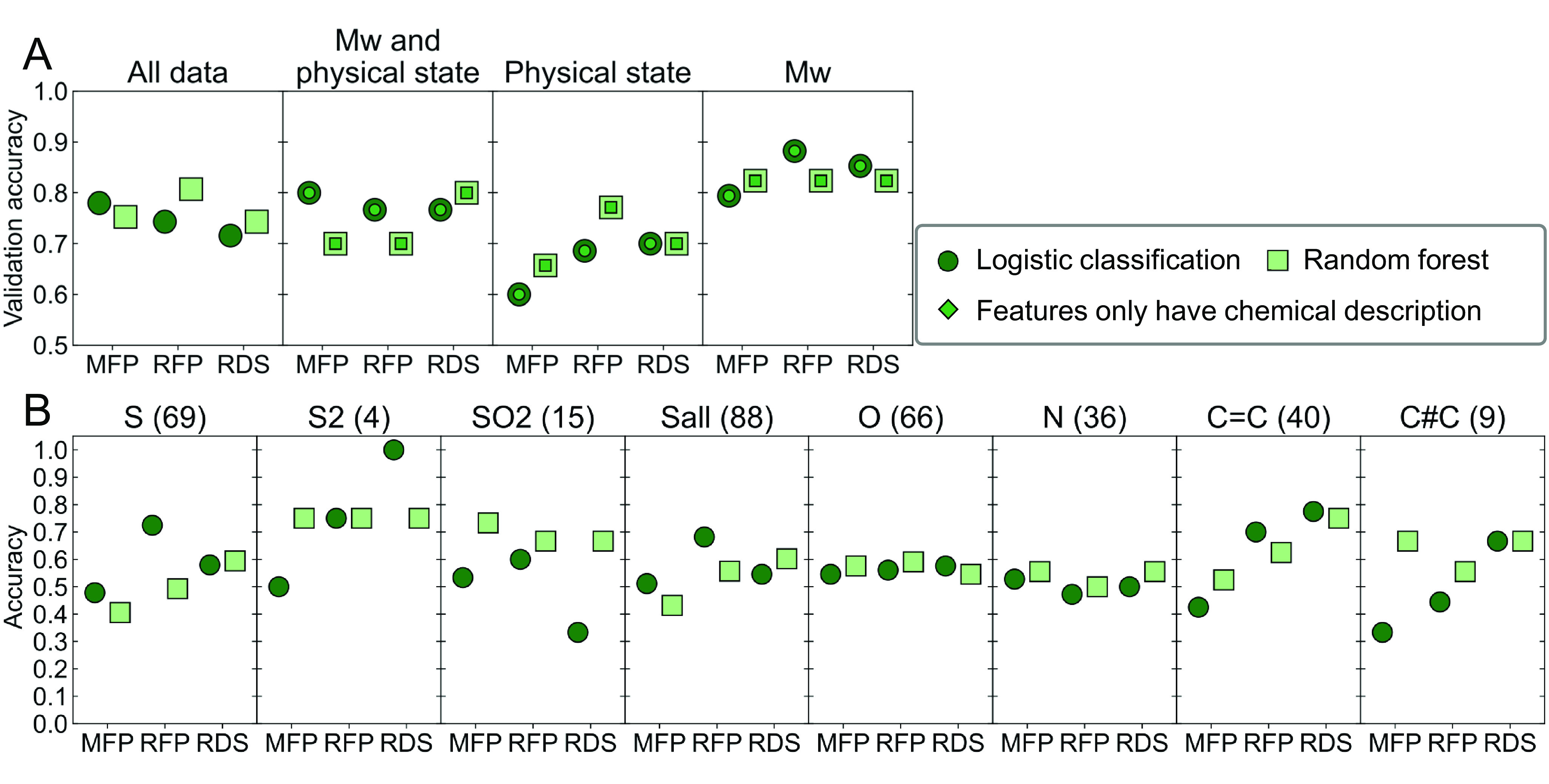
The consistent rise of plastic pollution has stimulated interest in the development of biodegradable plastics. However, the study of polymer biodegradation has historically been limited to a small number of polymers due to costly and slow standard methods for measuring degradation, slowing new material innovation. High-throughput polymer synthesis and a high-throughput polymer biodegradation method are developed and applied to generate a biodegradation dataset for 642 chemically distinct polyesters and polycarbonates. The biodegradation assay was based on the clear-zone technique, using automation to optically observe the degradation of suspended polymer particles under the action of a single Pseudomonas lemoignei bacterial colony. Biodegradability was found to depend strongly on aliphatic repeat unit length, with chains less than 15 carbons and short side chains improving biodegradability. Aromatic backbone groups were generally detrimental to biodegradability; however, ortho- and para-substituted benzene rings in the backbone were more likely to be degradable than metasubstituted rings. Additionally, backbone ether groups improved biodegradability. While other heteroatoms did not show a clear improvement in biodegradability, they did demonstrate increases in biodegradation rates. Machine learning (ML) models were leveraged to predict biodegradability on this large dataset with accuracies over 82% using only chemical structure descriptors.
Keywords: biodegradation; high-throughput; polymers; structure–property relationships.
Conflict of interest statement
The authors declare no competing interest.
Figures
References
-
- Shekhar A. R., Kumar A., Syamsai R., Cai X., Pol V. G., Is the plastic pandemic a greater threat to humankind than COVID-19? ACS Sustainable Chem. Eng. 10, 3150–3154 (2022). - PubMed
-
- López-Rubio A., et al. , Overview of active polymer-based packaging technologies for food applications. Food Rev. Int. 20, 357–387 (2004).
-
- Cao L., et al. , Synergistic reinforcement of silanized silica-graphene oxide hybrid in natural rubber for tire-tread fabrication: A latex based facile approach. Compos. B Eng. 161, 667–676 (2019).
-
- Safri S. N. A., Sultan M. T. H., Jawaid M., Jayakrishna K., Impact behaviour of hybrid composites for structural applications: A review. Compos. B Eng. 133, 112–121 (2018).
Publication types
MeSH terms
Substances
LinkOut - more resources
Full Text Sources
Other Literature Sources
