Hymenolepiasis Caused by Hymenolepis nana in Humans and Natural Infection in Rodents in a Marginal Urban Sector of Guayaquil, Ecuador
- PMID: 37254469
- PMCID: PMC10243089
- DOI: 10.12659/AJCR.939476
Hymenolepiasis Caused by Hymenolepis nana in Humans and Natural Infection in Rodents in a Marginal Urban Sector of Guayaquil, Ecuador
Abstract
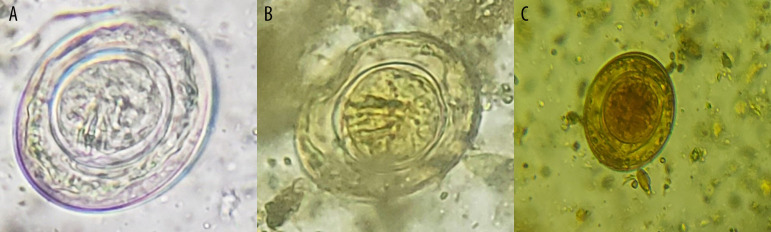
BACKGROUND Hymenolepiasis is a globally prevalent zoonosis of the monoxenic cycle. Humans acquire the disease through fecal-oral transmission by ingesting food or water with infective eggs from infected rodents. This report presents 3 cases of hymenolepiasis in children, due to zoonotic transmission from rodents and presumably associated with the consumption of powdered milk contaminated with infective eggs of Hymenolepis nana, and shows that awareness and early diagnosis contributed to timely treatment of the disease. CASE REPORT Three children, aged 9, 12, and 13 years, living in a marginal urban area of Guayaquil, Guayas province, Ecuador, presented symptoms of diarrhea, low body weight, abdominal discomfort, anorexia, paleness, and anal itching. Subsequently, their fecal samples were analyzed by direct coproparasitic methods, flotation and sedimentation with centrifugation using saline solution; the presence of H. nana eggs was determined. Blood biometry was performed. Further, 10 rodents were captured and necropsied to obtain intestinal contents. The powdered milk consumed by the children was analyzed, the same powder that contained rodent feces. Subsequently, these were studied with the above-mentioned coproparasitic methods. H. nana eggs were identified in the 6 trapped rodents, the powdered milk, and the feces of rodents found in the milk powder. CONCLUSIONS Hymenolepiasis can affect populations of endemic areas. In this case, the disease was identified in 3 children, who were diagnosed with eosinophilia and anemia. Additionally, the presence of H. nana eggs in captured rodents and in powdered milk was determined, indicating that the community was exposed to this zoonotic disease.
Conflict of interest statement
Figures

References
-
- Coello-Peralta RD, Martínez-Cepeda GE, Pinela-Castro D, et al. Presence of Hymenolepis nana and diminuta in rodents of the Las Pinas citadel, in Milagro, Ecuador, and its risk for public health. Rev Mex Cienc Pecu. 2020;11(4):961–70.
Publication types
MeSH terms
Substances
LinkOut - more resources
Full Text Sources