Review
. 2023 Feb 14;16(2):299.
doi: 10.3390/ph16020299.

Nitrogen Containing Heterocycles as Anticancer Agents: A Medicinal Chemistry Perspective

Affiliations
Review

Nitrogen Containing Heterocycles as Anticancer Agents: A Medicinal Chemistry Perspective

Adarsh Kumar et al. Pharmaceuticals (Basel). .

Abstract

Cancer is one of the major healthcare challenges across the globe. Several anticancer drugs are available on the market but they either lack specificity or have poor safety, severe side effects, and suffer from resistance. So, there is a dire need to develop safer and target-specific anticancer drugs. More than 85% of all physiologically active pharmaceuticals are heterocycles or contain at least one heteroatom. Nitrogen heterocycles constituting the most common heterocyclic framework. In this study, we have compiled the FDA approved heterocyclic drugs with nitrogen atoms and their pharmacological properties. Moreover, we have reported nitrogen containing heterocycles, including pyrimidine, quinolone, carbazole, pyridine, imidazole, benzimidazole, triazole, β-lactam, indole, pyrazole, quinazoline, quinoxaline, isatin, pyrrolo-benzodiazepines, and pyrido[2,3-d]pyrimidines, which are used in the treatment of different types of cancer, concurrently covering the biochemical mechanisms of action and cellular targets.

Keywords: FDA; anti-cancer; biological activity; heterocyclic; nitrogen-containing heterocyclic.


Conflict of interest statement

The authors declare no competing interest.

Figures

Figure 1
Figure 1
Correlation between molecular weight of nitrogen containing heterocyclic compounds with lop P.
Figure 2
Figure 2
Correlation of nitrogen containing heterocyclic compounds violating RO5 with biological activities.
Figure 3
Figure 3
Pyrimidine derivatives (111) as anticancer agents.
Figure 4
Figure 4
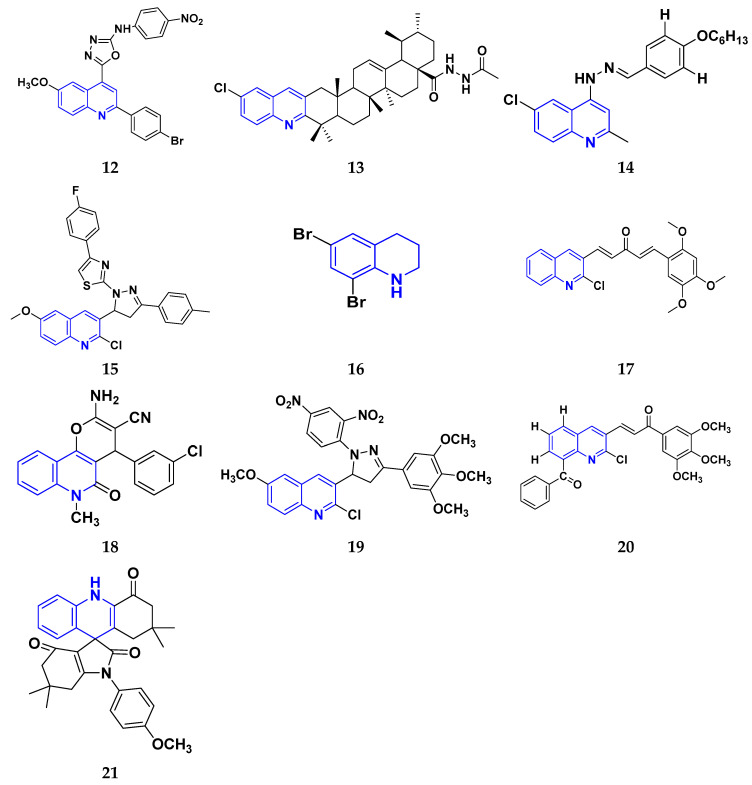
Quinoline derivatives (1221) as anticancer agents.
Figure 5
Figure 5
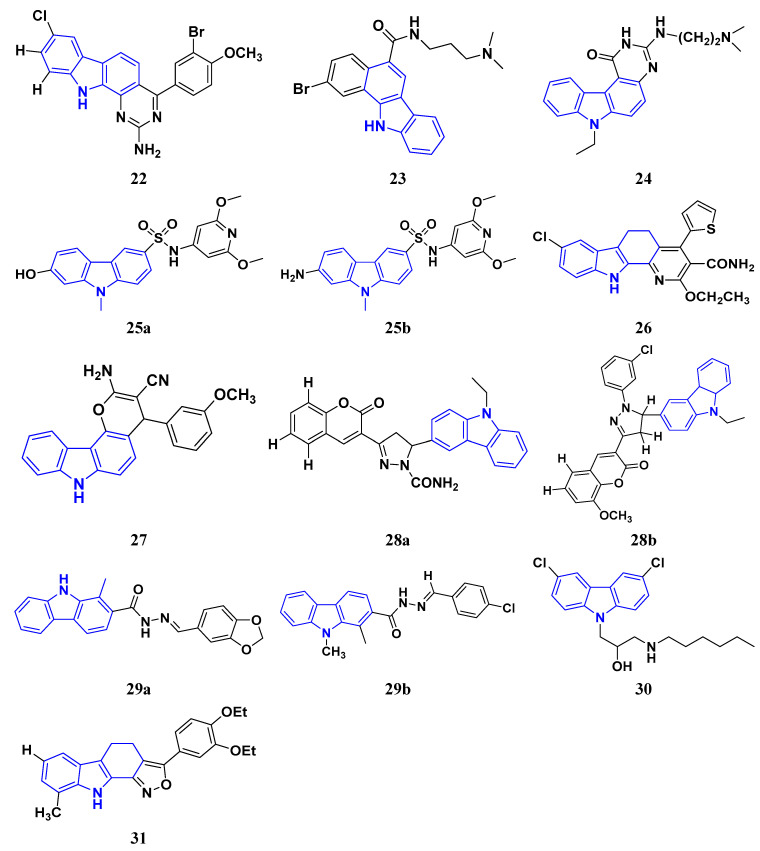
Carbazole derivatives (2231) as anticancer agents.
Figure 6
Figure 6
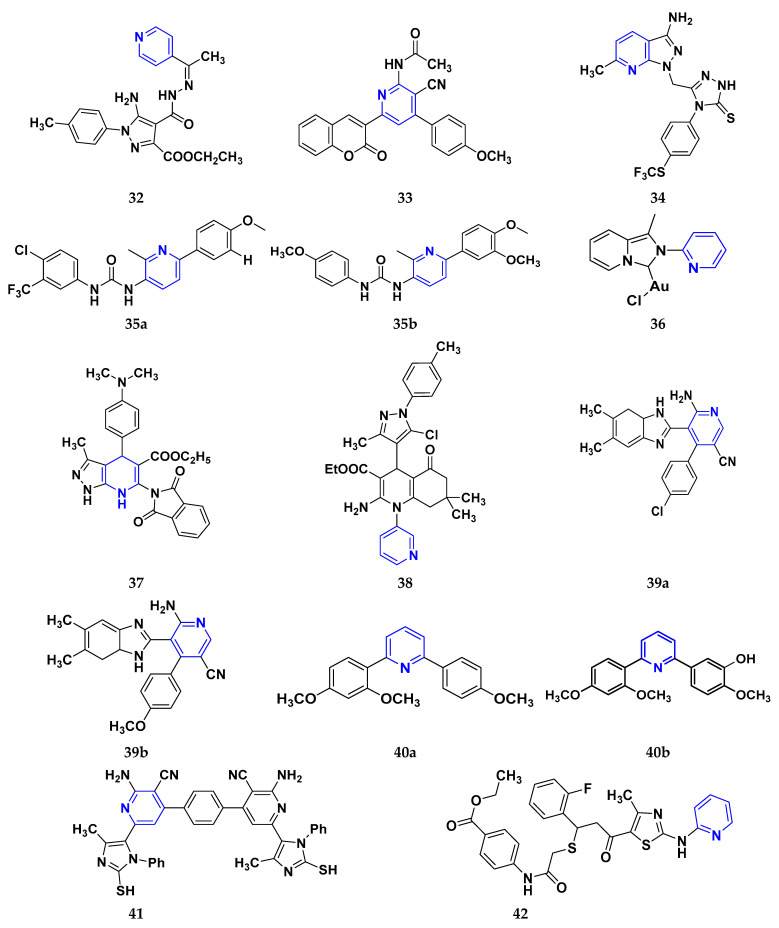
Pyridine derivatives (3242) as anticancer agents.
Figure 7
Figure 7
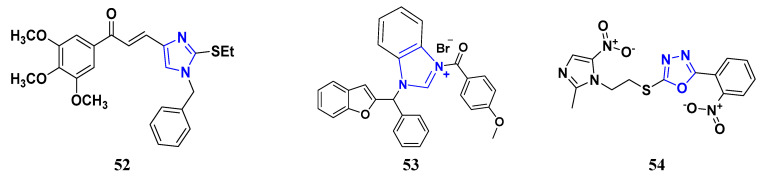
Imidazole derivatives (4354) as anticancer agents.
Figure 7
Figure 7
Imidazole derivatives (4354) as anticancer agents.
Figure 8
Figure 8
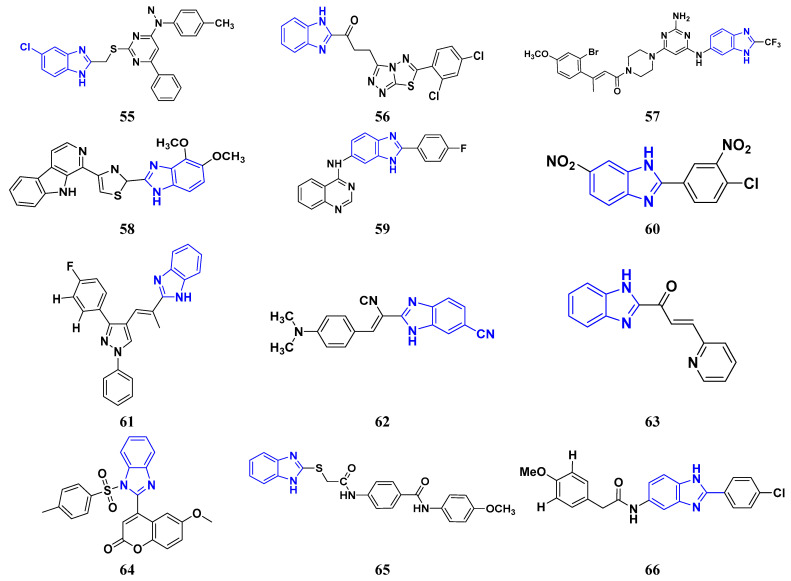
Benzimidazole derivatives (5566) as anticancer agents.
Figure 9
Figure 9
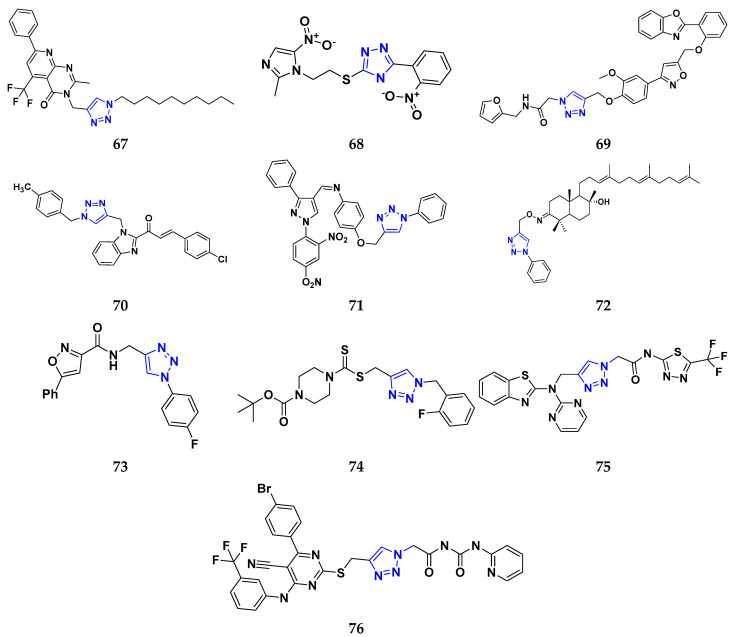
Triazole derivatives (6776) as anticancer agents.
Figure 10
Figure 10
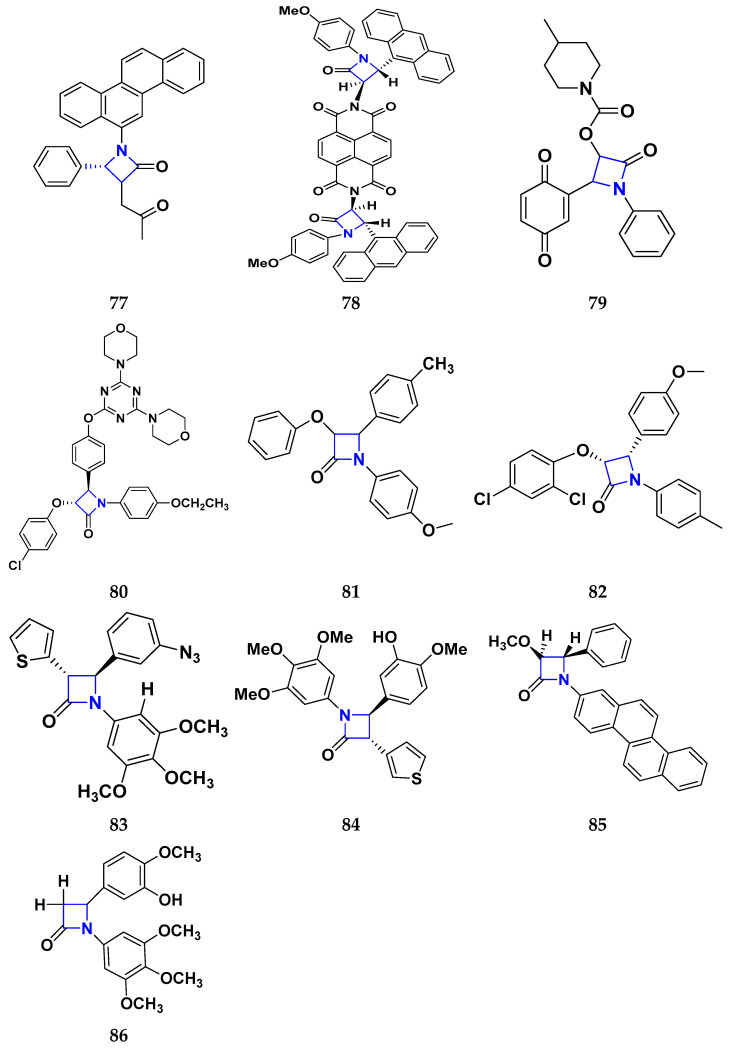
β-lactam derivatives (7786) as anticancer agents.
Figure 11
Figure 11
Indole derivatives (8797) as anticancer agents.
Figure 12
Figure 12
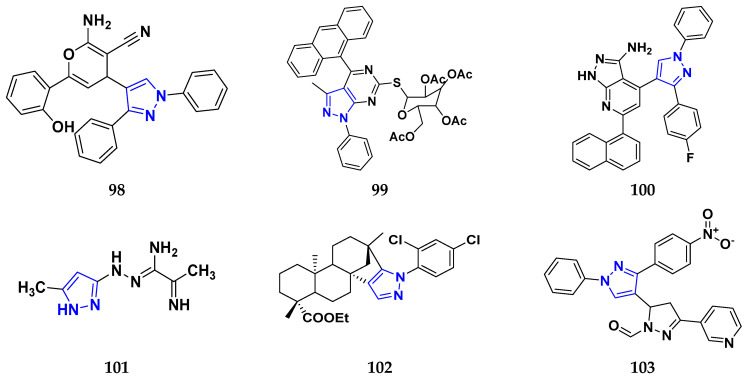
Pyrazole derivatives (98107) as anticancer agents.
Figure 12
Figure 12
Pyrazole derivatives (98107) as anticancer agents.
Figure 13
Figure 13
Quinazoline derivatives (108118) as anticancer agents.
Figure 14
Figure 14
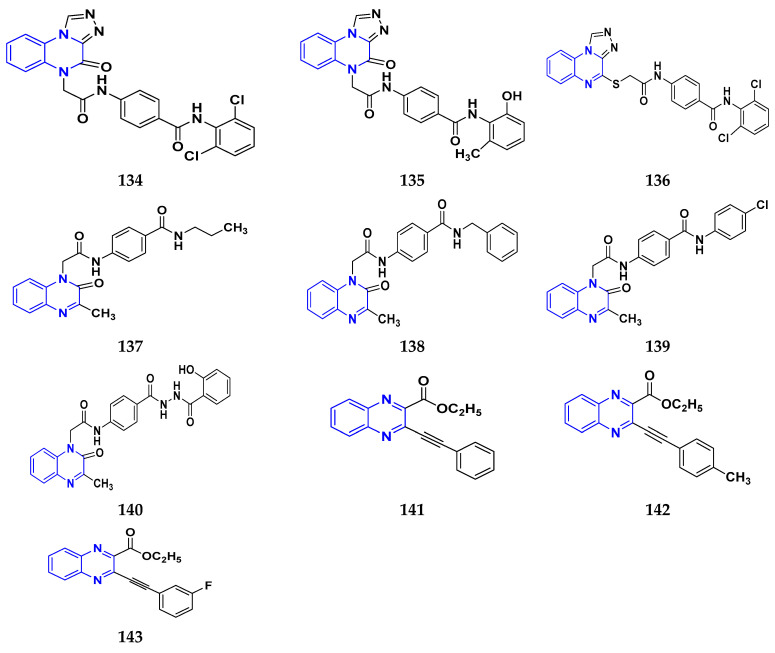
Quinoxaline derivatives (119143) as anticancer agents.
Figure 14
Figure 14
Quinoxaline derivatives (119143) as anticancer agents.
Figure 15
Figure 15
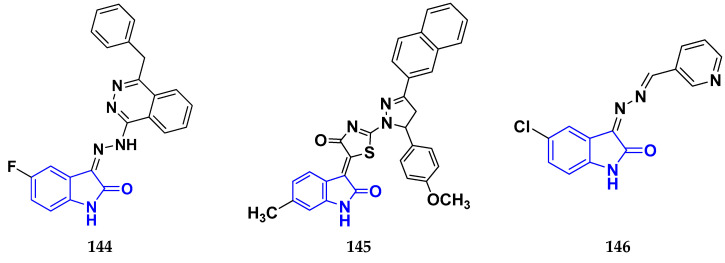
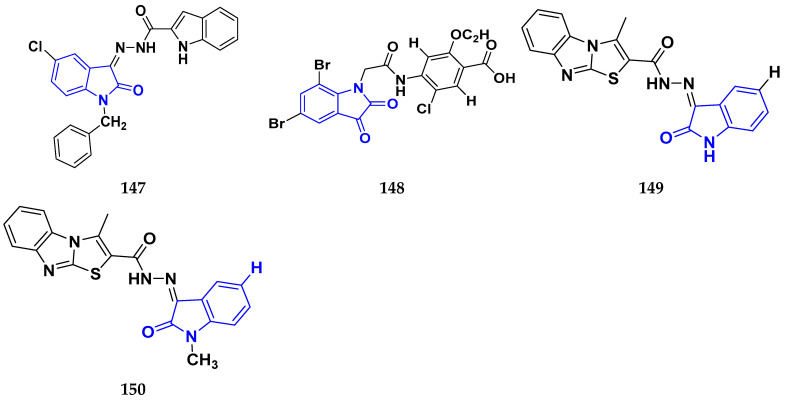
Isatin derivatives (144150) as anticancer agents.
Figure 15
Figure 15
Isatin derivatives (144150) as anticancer agents.
Figure 16
Figure 16
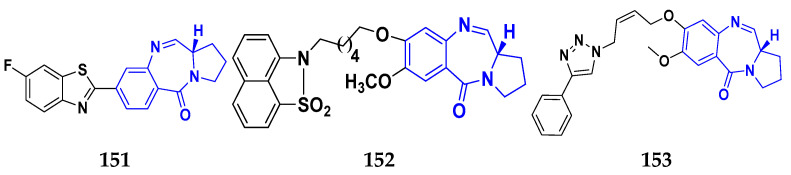
Pyrrolo-benzodiazepines derivatives (151153) as anticancer agents.
Figure 17
Figure 17
Pyrido[2,3-d] pyrimidine derivatives (154165) as anticancer agents.

References

    1. Angre T., Kumar A., Singh A.K., Thareja S., Kumar P. Role of Collagen Regulators in Cancer Treatment: A Comprehensive Review. Anti-Cancer Agents Med. Chem. 2022;22:2956–2984. - PubMed
    1. Sung H., Ferlay J., Siegel R.L., Laversanne M., Soerjomataram I., Jemal A., Bray F. Global cancer statistics 2020: GLOBOCAN estimates of incidence and mortality worldwide for 36 cancers in 185 countries. Cancer J. Clin. 2021;71:209–249. doi: 10.3322/caac.21660. - DOI - PubMed
    1. Gu L., Shan T., Ma Y.-X., Tay F.R., Niu L. Novel biomedical applications of crosslinked collagen. Trends Biotechnol. 2019;37:464–491. doi: 10.1016/j.tibtech.2018.10.007. - DOI - PubMed
    1. Bray F., Ferlay J., Soerjomataram I., Siegel R.L., Torre L.A., Jemal A. Global cancer statistics 2018: GLOBOCAN estimates of incidence and mortality worldwide for 36 cancers in 185 countries. Cancer J. Clin. 2018;68:394–424. doi: 10.3322/caac.21492. - DOI - PubMed
    1. Singh A.K., Kumar A., Thareja S., Kumar P. Current insights into the role of BRAF inhibitors in treatment of melanoma. Anti-Cancer Agents Med. Chem. 2022:1–7. doi: 10.2174/1871520622666220624164152. - DOI - PubMed

LinkOut - more resources